In Kenya, Members of County Assembly (MCAs) serve as the direct link between local communities and the county government.
While their key roles are like those of MPs to legislate, provide oversight of the Executive and represent their constituents, on a day-to-day basis, this is what they do.
They draft, debate and pass local laws that govern the county. These laws cover areas such as local business licensing, county transport, markets and sanitation. They monitor and oversee the county executive (the Governor and County Executive Committee Members). MCAs ensure that county resources are used responsibly, investigate mismanagement, and approve or reject executive appointments. They act as the voice of their wards. They bring the specific needs, grievances and priorities of their local voters to the attention of the County Assembly. They also manage the Ward Development Fund (where applicable) to spur local growth.
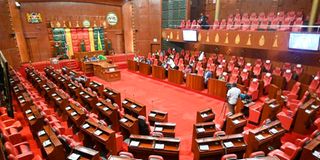
A County Assembly during a past session.
Photo credit: File | Nation Media Group
The majority of MCAs are elected directly by the electorate during a General Election, which is held on the second Tuesday in August every fifth year.
They are elected using a simple majority, where the candidate who gets the highest number of valid votes in a ward wins the seat.
According to Article 193 of the Constitution, for one to be cleared to run for an MCA seat, a candidate must:
Be a registered voter in the respective ward. Be a Kenyan citizen for at least 10 years before the election date. Be either nominated by a registered political party or run as an independent candidate supported by at least 500 registered voters from that ward. Satisfy the educational, moral and ethical requirements outlined under Chapter Six of the Constitution.
How MCA nominations works:
Nominations of MCAs in Kenya are conducted by political parties using party lists submitted to the IEBC ahead of a General Election, designed to fulfil constitutional requirements for marginalised groups.
It is governed by Articles 177 and 197 of the Constitution, as well as the Elections Act.
Unlike Parliament (Senate and National Assembly), County Assemblies achieve the two-thirds gender rule through a constitutional mechanism that allows them to top up numbers after a General Election.
Article 177 of the Constitution, for instance, allows the addition of special-seat members to each County Assembly so that no more than two-thirds of the Assembly's members belong to the same gender.
Political parties are allowed to nominate extra members, predominantly women, to bridge any gender deficit resulting from wards where voters frequently elect more men.
Nominated MCAs do not represent a specific geographic ward, but once sworn in, they enjoy equal rights, privileges and responsibilities as elected ward representatives, including voting on budgets, debating legislation and participating in Assembly committees.
Political parties prepare and submit lists of special-interest nominees to the IEBC before the General Election. These lists prioritise women, youth, persons with disabilities (PWDs), ethnic and religious minorities, and marginalised communities. They also contain nominees required to meet constitutional thresholds, such as the two-thirds gender rule. Party nomination lists are used to bridge any gender gaps resulting from single-ward elections.
Candidates are arranged in a strict, alternating order of priority, usually alternating by gender.
Nomination seats are shared out proportionally based on the total number of elected seats a party wins within the County Assembly. If any party qualifies for three nominated seats, the IEBC automatically selects the top three names exactly as they were ranked on the party's submitted list.
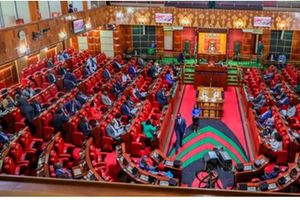
Members of Meru County Assembly follow proceedings during a past session.
Photo credit: File | Nation Media Group
Qualifications for a nominee:
Must be a registered voter. Must present a valid nomination certificate from a fully registered political party. Must meet leadership and integrity thresholds. Must pay a nomination fee to the IEBC (Sh5, 000 standard or Sh2,500 for youth, women and PWDs).
Why numbers matter in a County Assembly:
Having a majority of Members of County Assembly from the same political party or coalition as the Governor matters because it ensures smooth government operations, swift budget approvals, easy passage of county laws, control over impeachment motions against the Governor, and minimises political conflicts.