Nairobi Senator Edwin Sifuna is seeking to turn his break with the Orange Democratic Movement (ODM) into a broader political project, placing constitutionalism, public accountability and a people-centred economic agenda at the heart of his preparations for the 2027 General Election.
Mr Sifuna’s recently launched The Equitable Party (TEP) is set to undergo a major rebranding to Linda Mwananchi Movement following a resolution by its National Executive Committee (NEC) on October 8, 2026.
In a public notice on Saturday, the party announced its intention to change its name as it seeks to adopt the Linda Mwananchi identity that has featured prominently in Mr Sifuna’s recent political activities.
Besides the name change, the party plans to amend its constitution, change its official colours and symbol, and relocate its headquarters.
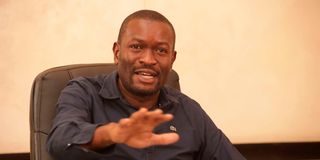
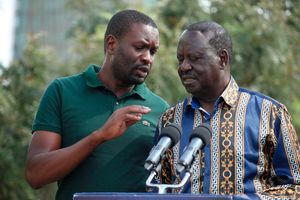
Nairobi Senator and The Equitable Party (TEP) leader Edwin Sifuna during a joint media engagement at Four Points By Sheraton Nairobi Hurlingham on October 9, 2026.
Photo credit: Evans Habil | Nation Media Group
The proposed changes signal an effort to reshape the party’s identity as Mr Sifuna positions himself in the emerging political contest ahead of the 2027 General Election.
But as he builds a new political identity outside the party he served for nearly a decade as secretary-general, Mr Sifuna faces a delicate question over how his record in the Senate, particularly his role in the impeachment of former Deputy President Rigathi Gachagua , will square with his efforts to unite an opposition seeking to unseat President William Ruto in 2027.
Mr Sifuna addressed the question directly during a media roundtable in Nairobi on Friday, offering a terse defence of his role in the proceedings against Mr Gachagua while declining to be drawn into the details of a future opposition coalition.
Asked how he would forge an alliance with Mr Gachagua, the Democracy for the Citizens Party (DCP) leader, whom he helped impeach in October 2024 over several charges, including divisive remarks about “shareholding” in government, Mr Sifuna said this should not stand in the way of building a united opposition.
He argued that defeating President Ruto would require leaders to look beyond past disagreements and find common ground.
Democracy for the Citizens Party (DCP) leader and former Deputy President Rigathi Gachagua.
Photo credit: Dennis Onsongo | Nation Media Group
“I have already impeached him for that. So, you cannot ask me what I think when I have already impeached him for his mistakes,” he said, invoking the principle that a person should not be punished twice for the same offence.
Mr Gachagua has already declared that he would be willing to deputise Mr Sifuna if the opposition found him best suited to defeat President Ruto.
However, he has also branded leaders, particularly those from the Mt Kenya region who participated in his impeachment, as tûkûnia (betrayers), promising to end their political careers for collaborating with President Ruto.
Mr Sifuna’s response during the media interview points to the competing demands of his emerging campaign: defending decisions made during his time in the Senate, establishing a distinct political identity after Raila Odinga’s death, and leaving room for negotiations with leaders whose political journeys have sometimes taken a different path from his own.
Mr Sifuna did not endorse a coalition partner or outline a formula for selecting a joint opposition flag-bearer. Instead, he insisted that those discussions would come later, arguing that his immediate task was to build a movement with a clear agenda and a national presence.
“Just hold your horses, those conversations will come way down the road,” he told journalists when asked about his ambitions and the best formula for the opposition to settle on a presidential candidate.
The answer leaves the central questions of the 2027 contest unresolved: whether his movement will seek to lead the opposition, negotiate a place within a wider alliance or support another candidate in exchange for an agreed political programme.
Mr Sifuna’s remarks on Mr Gachagua also came against the backdrop of one of the most consequential confrontations of the Ruto administration.
For the Nairobi senator, the impeachment episode is now part of a political record that could come under renewed scrutiny as the opposition reorganises ahead of the next election.
His brief answer did not amount to an endorsement of Mr Gachagua’s current political project, nor did it constitute an explicit rejection of future cooperation with the former Deputy President. Rather, it was a defence of a decision already made.
That distinction, analysts say, matters in a political landscape where leaders who once stood on opposing sides of a major dispute may eventually find themselves considering a common electoral platform.
“Gachagua’s removal remains a defining moment in his break with the President. Sifuna, meanwhile, must explain how his actions in the Senate fit into the political principles he now wants to make central to his movement,” argues advocate Nelson Osiemo.
Removed as ODM secretary general
Mr Sifuna’s argument, however, is that accountability cannot be separated from constitutionalism. During the roundtable, he also discussed his development plans.
He said presidential performance should not be judged solely by visible development projects, but also by whether the Government acts within the law.
“You bear true allegiance to the Constitution of the Republic of Kenya, and you will protect and defend that Constitution,” he said, referring to the presidential oath of office.
Addressing the country’s debt burden, Mr Sifuna cited public participation, transparency, access to information and lawful borrowing as obligations that should accompany government spending. Even a popular project, he argued, cannot excuse a failure to follow constitutional and legal requirements.
“You cannot just say that because Talanta has been built, a beautiful stadium, we should be clapping for you. No. We want transparency,” he said.
For Mr Sifuna, this is the framework through which voters should assess both the Government and those seeking to replace it. It also presents a test of consistency: whether constitutional principles can guide political decisions when alliances shift and former rivals begin discussing cooperation.
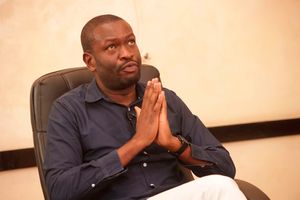
Nairobi Senator and The Equitable Party (TEP) leader Edwin Sifuna during a joint media engagement at Four Points By Sheraton Nairobi Hurlingham on October 9, 2026.
Photo credit: Evans Habil | Nation Media Group
Mr Sifuna’s political repositioning follows months of internal conflict within ODM over the party’s relationship with the broad-based government and its direction after Raila Odinga’s death.
The senator said he had made repeated attempts to reconcile rival factions but concluded that the party’s leadership was moving in a direction he could no longer defend.
He accused sections of the leadership of abandoning ODM’s distinct political identity by allowing its cooperation with the United Democratic Alliance (UDA) to undermine the party’s independence. He also disputed the process through which he was removed as secretary-general, saying the party had failed to follow its own constitution.
He nevertheless said he bore no grudges against former colleagues and wished ODM well, leaving the party’s future to the electorate.
“When we wake up after the election on 11 August 2027, I think that controversy will be settled by the people themselves,” he said.
He recalled that, before Mr Raila’s death, the former Prime Minister had insisted that ODM had not ruled out fielding its own presidential candidate in 2027.
Mr Sifuna credited Raila with giving younger leaders opportunities to rise through ODM, arguing that political parties should not reserve influential positions for established politicians.
On public finances, Mr Sifuna said his team was examining ways to reduce government wastage and ease the tax burden on households. He cited the possibility of reviewing expenditure and taxes affecting fuel and utilities, but said detailed proposals would be presented in the movement’s manifesto.
In education, he argued that the Government needed reliable data on learners, schools and teachers to strengthen oversight and reduce opportunities for the misuse of public funds.
In healthcare, he proposed faster settlement of legitimate claims to hospitals, alongside stronger action against fraudulent claims.
He said the manifesto was being developed with the help of experts and would be subjected to internal review before publication.