A fierce power struggle is brewing in Raila Odinga’s ODM as the party gears up for its October National Delegates Convention (NDC)—a meeting that could redefine its leadership, stance on a controversial deal with President William Ruto and strategy for the 2027 General Election.
The NDC, as announced by the ODM Central Committee, will elect new national officials, review party policies and deliberate on the March 2025 Memorandum of Understanding (MoU) between ODM and Dr Ruto’s United Democratic Alliance (UDA).
“The Central Committee set October 2025 as the month for convening the National Delegates Convention (NDC). The NDC will, among other matters, consider reports from party organs, review and adopt party policy positions, elect national officials, and chart the path forward in readiness for the 2027 General Elections,” ODM Secretary-General Edwin Sifuna said in a statement.
Edwin Sifuna, the ODM secretary general and a vocal critic of President Ruto, played a surprising role in the signing of the Ruto-Odinga pact.
Photo credit: File | Nation Media Group
The Central Committee also adopted the programme for the party’s 20th anniversary celebrations, dubbed ODM@20.
“These celebrations will take place across all counties, culminating in a major national event in October 2025, which will reflect on the party’s journey, achievements, and future direction,” Mr Sifuna added.
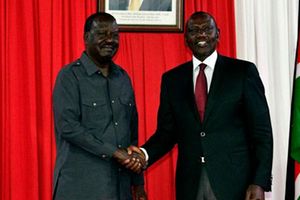
The ODM-UDA agreement, framed as a cooperation deal to address national challenges, has sharply divided Mr Odinga’s party.
While some senior ODM figures, including National Chairperson Gladys Wanga, Director of Elections Junet Mohamed, ODM trustee and Siaya Senator Dr Oburu Oginga, have warmed up to the Ruto-led administration, others, like Secretary-General Sifuna, Co-Deputy Party Leader Godfrey Osotsi, and a section of legislators, remain fiercely opposed, insisting that ODM is still firmly in the opposition.
Ms Wanga has taken a more cautious tone. While acknowledging that the implementation of the MoU has been far from perfect, particularly regarding extrajudicial killings, she maintains that the party will continue engaging within the cooperation framework.
“We have reviewed the MoU and another meeting is planned to evaluate the progress and address arising issues,” Ms Wanga said during an interview on NTV’s Fixing the Nation.
“We cannot say we are moving out because of one issue. However, we want areas like compensation and the right to peaceful protest addressed.”
Homa Bay Governor Gladys Wanga at a past event.
Photo credit: George Odiwuor | Nation Media Group
ODM Co-Deputy Party Leader and Vihiga Senator Godfrey Osotsi told Nation on Thursday that the issues in the ODM-UDA MoU are public and people-centred, having been part of both the Gen Z and Azimio demonstrations.
“It is the responsibility of the Kenya Kwanza government to implement them, as signified by the President’s signature to the agreement,” Mr Osotsi stated.
With the evident divisions in the party—and given the chaos that marred past ODM elections—analysts believe the October NDC could be equally turbulent.
In 2014, similar elections at Kasarani Gymnasium were disrupted by party-aligned youth clad in black suits dubbed the “Men-in-Black,” who forced the polls to end prematurely, preventing then Budalang’i MP Ababu Namwamba from ascending to the Secretary-General position. He would later be appointed after internal consensus.
Incumbent Secretary-General Sifuna, who has firmly opposed a working arrangement with President Ruto’s UDA, dismissed claims that ODM is part of a “broad-based” government and accused some party officials of betraying the party’s position.
“There is no government called broad-based. We have the Kenya Kwanza government, and all those who serve in it work for Ruto. Our MoU with UDA is merely a cooperation framework on shared interests—not a power-sharing deal or coalition agreement,” said Mr Sifuna.
Former ODM officials who joined the cabinet include Opiyo Wandayi (Energy), John Mbadi (National Treasury), Hassan Joho (Mining), Wycliffe Oparanya (Cooperatives) and Beatrice Askul (EAC).
However, Mr Sifuna maintains that despite their entry into government, “President Ruto cannot be trusted.”
His stance contrasts sharply with the behaviour of some top party officials who have been accompanying the president on nationwide tours.
Mr Odinga’s elder brother, Dr Oburu Oginga, has supported the broad-based government but recently warned that the deal could unravel if expectations are not met.
Teacher Albert Ojwang who mysteriously died in a police cell.
Photo credit: Pool | Nation
Speaking in the Senate, he expressed outrage over the death of Albert Ojwang’, a teacher and blogger, allegedly killed in police custody.
“This is a very serious situation. What am I going to tell the people of Homa Bay—that we are in a broad-based government, yet I cannot explain to them how their son was picked, jailed, and killed?” he asked.
“If we recognise that we worked well, we shall agree. If not, we shall part ways,” he said.
He also hinted that the Luo community could consider “repaying” Ruto for supporting Raila’s 2007 presidential bid.
“Ruto was instrumental in making Raila Prime Minister. He mobilized Rift Valley votes for him. That political debt should be acknowledged.”
Mr Osotsi, on his part, has criticised the Kenya Kwanza administration for failing to uphold the MoU’s spirit.
“We signed the MoU with the hope that the regime would prioritise the issues raised during Azimio and Gen Z protests. But we are deeply concerned by recent actions that are a slap in the face of the MoU,” he said.
The MoU’s 10-point agenda includes full implementation of the NADCO report, inclusivity in appointments, protection of devolution, youth empowerment and upholding constitutional freedoms such as the right to protest and press freedom.
Amid rising tensions, Mr Odinga has repeatedly appealed for calm and decorum within the party and has publicly defended Mr Sifuna, recognising him as ODM’s official spokesperson. He has acknowledged the internal debate over the UDA cooperation, noting that such discussions are normal in mature democracies.
“It is the position of the Party Leader that at the appropriate time, relevant organs of the party will harmonize the diverse views and come up with a unified position.”
Raila Odinga denied that he had a 'handshake' deal with President William Ruto and that he had benefited from the Gen Z protests over the Finance Bill 2024, which he said was necessary to prevent the country from descending into chaos.
Photo credit: File | Nation
Mr Odinga’s neutral stance has drawn criticism from some UDA lawmakers who view it as indecisiveness. They argue that the opposition leader must make a definitive choice—either back Ruto or walk away from the pact.
This sentiment was echoed by Senate Majority Leader Aaron Cheruiyot, a Ruto ally, who accused ODM of “blackmailing” the president.
Last week, when Mr Odinga criticised President Ruto’s shoot-to-maim order against protesters attacking government installations and police, it sparked backlash from UDA legislators.
“ODM should not threaten or lecture us on how to run government or human rights issues. They have never won any elections. If they’re uncomfortable in the broad-based government, then pack and go. Ask your ministers to resign, and then we shall take you seriously. Otherwise, shut up,” Nyaribari Chache MP Zaheer Jhand
Ruto: Attacking or raiding a police station is declaring war
At the heart of ODM’s internal strife is the 2027 question: Will the party field its own presidential candidate or endorse Ruto’s re-election?
In a recent radio interview, Dr Oginga said: “We agreed to support the government after wide consultations with our supporters. Even if they are staggering, let them stagger until elections.”
President Ruto, for his part, has praised Mr Odinga for embracing unity and collaboration.
“We want to work together and bring the country’s interest forward. There comes a time when unity, prosperity, and transformation must come first.”
Yet Mr Odinga has remained ambivalent, occasionally reaffirming ODM’s ambition to form the next government.
“When the elections come in 2027, ODM will be the party to form the next government. But this will only happen if our supporters are prepared,” he said during an event in Vihiga County.
With the NDC now just three months away, ODM is heading toward a defining moment that will determine not just its internal leadership but its broader political future.
Will the pro-Ruto faction within ODM carry the day and cement the party’s cooperation with the government? Or will dissenters led by Mr Sifuna force a break from the controversial deal and steer ODM back to its traditional opposition role?
Mr Sifuna has maintained that the state of the ODM party, however, remains strong.
“The MoU with UDA did not erode any of our values. It restated them. In fact, what many people don’t want to accept is that all the ten agenda of the MoU including cost of living, rule of law, democracy, justice and human rights, are Mwananchi issues that we have always championed.”
“That we got the leader of UDA to sign up to these issues is a big win for ODM because he has in the past downplayed them whenever the people brought them up. Lastly, the MoU explicitly states that it does not amount to a coalition agreement with UDA nor does it signal any realignments for the next general election.”
He insists that divergent views in the party were healthy, as it is a democratic outfit.
“ODM was founded on democratic principles including freedom of speech and the right to hold opinions contrary to others. As the leadership of the party we are amenable to criticism. As SG I welcome criticism of my style and leadership. We are a mass movement that cannot always sing in the same choir but at the end of the day we always find common ground and move forward together,” said Mr Sifuna.
“We have fielded a presidential candidate in all elections since the Party was formed and it is my belief that 2027 will be no different. We have previously worked with like-minded parties in this cause and I’m sure when the time comes, we may find the need to collaborate with others.”