National Assembly Speaker Moses Wetang’ula’s directive for MPs to deploy their staff for the collection and distribution of national IDs has raised security concerns and the risk of politicisation of public service.
Critics have described the directive as “extremely irresponsible and reckless” as the crucial document may end up in the wrong hands, thus compromising the country’s security.
The order, they added, also has the potential of compromising the ongoing voter registration since MPs are interested parties. By involving their staff in the collection of IDs and their distribution to applicants, there are fears that the MPs could exploit their role to facilitate areas they enjoy support while suppressing others.
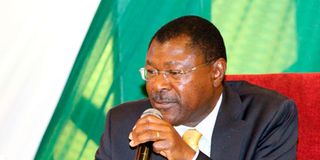
Speaking in the House on Tuesday, Mr Wetang’ula told MPs to take a more active role in ensuring IDs reach applicants.
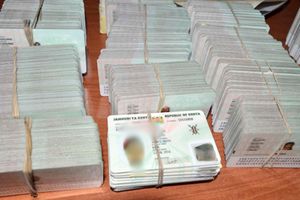
“As the Parliamentary Service Commission, I employ staff for you in your field offices. You have a duty to use the staff we pay to assist in delivering those IDs to your constituents,” Mr Wetang’ula directed. “We cry that there are no IDs, yet when they are issued, no one picks them up. They are piled up in the offices of assistant county commissioners and chiefs.”
He told the MPs to leverage their offices in identifying applicants whose IDs are ready and ensuring they are delivered promptly.
PS Kipsang: More than 400,000 new IDs remain uncollected
The Speaker’s directive was in response to a statement by Mandera South MP Abdul Haro, who complained of delays in the delivery of IDs. The MP said this risks denying thousands of youth the chance to register as voters.
But Law Society of Kenya President Charles Kanjama and Executive Director at the Centre for Multiparty Democracy Frankline Mukwanja described the directive as irregular and prone to abuse.
Law Society of Kenya president Charles Kanjama during an interview at his office in Nairobi on February 24, 2026.
Photo credit: Bonface Bogita | Nation Media Group
Mr Kanjama said the national government, through its well-established structures, should be allowed to handle the distribution of IDs. He said involving third parties is likely to compromise the integrity of the documents since they may end up in the wrong hands.
“It is very irregular. Applicants should collect the documents by themselves. There are known processes when collecting an ID; you are required to sign and prove that you are the owner of the document. It is to ensure it does not end up in the wrong hands,” said Mr Kanjama.
“They should not allow any other agents who are not within the provided structure because that would be extremely irresponsible and reckless,” he added.
Mr Mukwanja said direct involvement of MPs risks blurring the line between neutral service delivery and partisan political mobilisation. He observed that such initiatives are often seen as politically motivated, especially in a pre-election environment.
“MPs should not be operational actors in the process. When they or their staff directly ‘facilitate’ ID collection or registration logistics, they move from oversight into execution, which risks politicising what should be neutral, rules-based processes,” he said. He added that when access to IDs or registration appears to be mediated by politicians, it creates incentives for selective facilitation, favouring areas or groups seen as politically supportive.
“MPs are not neutral actors; they have direct electoral stakes. Their involvement introduces an inherent conflict of interest in processes that determine the election itself,” he said.
If citizens begin to believe that IDs or voter registration are contingent on political alignment, Mr Mukwanja explained, trust in institutions like the Independent Electoral and Boundaries Commission (IEBC) is likely to suffer.
Independent Electoral and Boundaries Commission Chairperson Erastus Edung Ethekon during the signing of a Memorandum of Understanding between IEBC and the Kenya Media Sector Working Group on March 27, 2026 at Pullman Hotel.
Photo credit: Francis Nderitu | Nation Media Group
IEBC Chairman Erastus Ethekon did not respond to our questions about the directive and the growing involvement of MPs in the issuance of IDs and voter registration. Aspirants have taken active roles in mobilising youth to register as voters. In some instances, they attempt to influence IEBC officials to ramp up the exercise in particular areas.
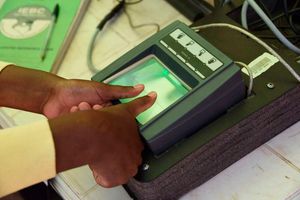
In the National Assembly, Mr Haro said that despite a recent directive by the Ministry of Interior and National Administration for ID processing within seven days, many applicants in northern Kenya have ended up waiting for more than six months.
“This delay raises serious concerns regarding equitable access to government services,” he said. “With the ongoing voter registration exercise by IEBC, these delays risk disenfranchising eligible youth and undermining their constitutional right to vote.”
Similar concerns were raised by Funyula MP Wilberforce Oundo, who dismissed official timelines as unrealistic, noting that in his constituency, applicants have ended up waiting for up to four months.
Kajiado North MP Onesmus Ngogoyo called for urgent intervention to align ID issuance with the ongoing voter registration exercise.
“Can we have a government policy requiring those who have not received their IDs to be called to pick them up within the next week so they can register as voters?” he asked.