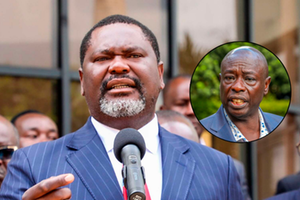
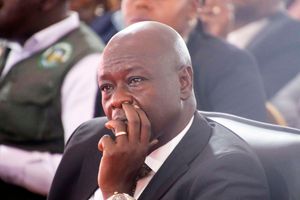
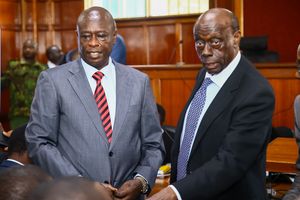
The Supreme Court will deliver its ruling tomorrow (Friday) in the impeachment case involving former Deputy President Rigathi Gachagua, marking the climax of a heated constitutional dispute over judicial authority.
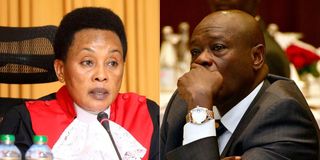
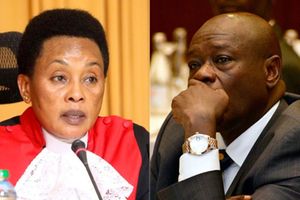
The decision will determine whether Deputy Chief Justice Philomena Mwilu acted within constitutional bounds when she empanelled judges to hear petitions challenging Mr Gachagua’s impeachment.
Central to the case is a Court of Appeal ruling that found Ms Mwilu lacked the authority to constitute an expanded High Court bench without exceptional circumstances.
The contested three-judge bench lifted conservatory orders blocking Mr Gachagua’s removal in November 2024, clearing the path for Prof Kithure Kindiki’s swearing-in as his replacement.
The appellate judges ruled that the power to empanel such benches is constitutionally reserved for the Chief Justice, except under limited conditions, and concluded that Ms Mwilu exceeded her authority in appointing the bench to hear impeachment-related petitions.
Dissatisfied with this finding, the National Assembly petitioned the Supreme Court to overturn the decision and validate Ms Mwilu’s actions.
In response, Mr Gachagua filed a cross-appeal and an application urging the apex court to summarily dismiss Parliament’s case. He accuses the National Assembly of abusing the judicial process by adopting inconsistent positions on the Deputy Chief Justice’s powers.
Mr Gachagua argues that Parliament previously contested the legality of a bench constituted by Ms Mwilu and cannot now reverse its stance for convenience.
He cites an earlier constitutional dispute where the National Assembly secured Court of Appeal orders suspending High Court proceedings related to Parliament’s dissolution—advised by retired Chief Justice David Maraga—over the failure to enact the gender rule.
"Parties are bound by their pleadings," state Mr Gachagua’s lawyers, Dudley Ochiel and Kamotho Njomo. "The doctrine of judicial estoppel bars parties from asserting contradictory positions to suit.
Therefore, the National Assembly cannot now challenge the Deputy Chief Justice’s authority under Article 165(4) of the Constitution after previously benefiting from her actions."
The lawyers warn that permitting such reversals would erode judicial integrity and public trust in the courts.
They accuse Parliament of manipulating constitutional interpretation opportunistically. Beyond seeking dismissal of the appeal, Mr Gachagua has requested the Supreme Court to suspend ongoing High Court proceedings pending resolution of his cross-appeal on the bench’s legality.
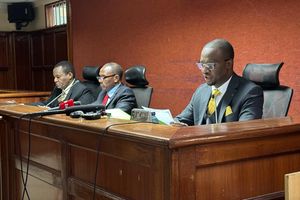
The disputed bench—comprising Justices Eric Ogolla, Anthony Mrima, and Fredah Mugambi—was assigned by Ms Mwilu to hear petitions filed at the Kerugoya High Court.
This bench discharged interim orders that had halted Mr Gachagua’s removal, a decision he insists was invalid due to jurisdictional flaws stemming from Mwilu’s unconstitutional appointment.
He criticizes the Court of Appeal for failing to order the bench’s reconstitution despite ruling that Mwilu acted without authority, asserting that judicial practice mandates a fresh bench when jurisdiction is contested.
Additionally, Mr Gachagua seeks to expunge documents introduced by the National Assembly during the appeal, alleging they were improperly added to the record without authorization.
His lawyers contend these materials were inserted to bolster Parliament’s case and would unfairly prejudice proceedings.
The National Assembly denies these allegations, maintaining that the Court of Appeal misinterpreted the Constitution.
Parliament argues that the Deputy Chief Justice retains the authority to empanel benches while deputizing the Chief Justice and that the Constitution does not require her to prove the Chief Justice’s medical or physical incapacity.
Its lawyers criticize the appellate court for inventing a standard of "electronic unavailability," asserting that judicial administration must continue seamlessly during the Chief Justice’s temporary absence.
The Court of Appeal had reasoned that the Chief Justice could empanel benches remotely, finding no evidence she was unreachable or unable to fulfill her duties at the time.
Parliament contends this ruling unjustly restricted the Deputy Chief Justice’s role and effectively amended the Constitution through interpretation.
The case has garnered national attention as it intersects with impeachment safeguards, separation of powers, and parliamentary accountability. It also raises critical questions about consistency in constitutional litigation.
On Friday, the Supreme Court’s ruling will clarify the scope of judicial authority and influence the trajectory of Mr Gachagua’s impeachment challenge.