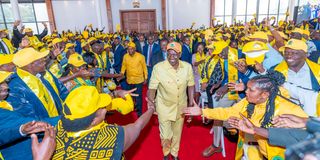
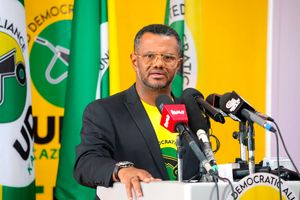
President William Ruto’s United Democratic Alliance (UDA) has rolled out the final phase of its grassroots elections ahead of the party’s National Delegates Convention (NDC), which is expected to ratify a pre-election coalition deal with the Orange Democratic Movement (ODM).
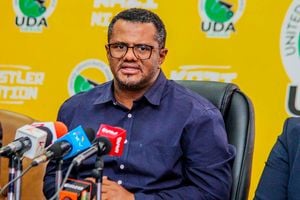
UDA National Elections Board chairperson Anthony Mwaura told the Daily Nation that the party plans to conclude the polls next month, ahead of the NDC scheduled for March next year.
The convention will elect national officials and provide a platform for members to ratify the proposed UDA-ODM coalition deal ahead of the August 10, 2027 General Election.
In January, UDA’s National Executive Committee mandated President Ruto to begin coalition talks with ODM leader Dr Oburu Oginga.
The two leaders have since appointed a 10-member technical team to draft a joint manifesto as part of efforts to establish the coalition.
President William Ruto and ODM leader Oburu Oginga at the UDA-ODM Joint Parliamentary Group meeting at KICC in Nairobi.
Photo credit: PCS
ODM nominated Isaac Wanuge, Mariam Abdulai, Leonida Kerubo Omosa, Engineer Kari Orege and Professor Bernard Mok. Kenya Kwanza nominated Emmanuel Nzai, Dr Daniel Mwai, Bramwell Simiyu, Mohammed Hassan and Dr Cecilia Ngetich.
The two leaders are also expected to establish an additional 10-member team to handle the coalition talks.
UDA is scheduled to hold grassroots elections in Samburu on October 16, followed by polls in Tana River, Vihiga, Mandera, Nakuru, Bomet and Tharaka Nithi counties on October 17.
The party held its grassroots elections in Mombasa last Thursday, following similar exercises in Kisii, Nandi, Kericho, Baringo, Bungoma, Isiolo, Marsabit and Wajir counties on October 3.
At the polling-centre level, UDA plans to elect 20 officials to represent different groups within the party.
A document titled Grassroots Election Guide shows that members will elect three representatives of religious groups, four traders, three professionals, four youth representatives, one representative of special interest groups, three farmers and two ordinary party members — one woman and one man.
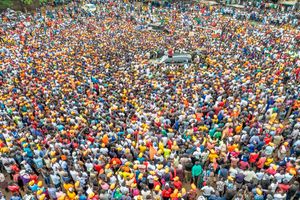
The grassroots elections and the UDA Aspirants’ Forum, which has attracted more than 12,000 hopefuls, form part of Dr Ruto’s re-election machinery ahead of the 2027 polls.
The initiatives are intended to build a nationwide grassroots network for the President’s re-election and assess the party’s strength ahead of the contest. They could also provide UDA with alternative campaign foot soldiers should some of its current elected leaders defect to rival political formations.
“As we build political machinery ahead of the 2027 General Elections, we remain indebted to West Pokot County for standing with UDA as our stronghold,” Mr Mwaura said during a recent meeting with leaders from the county.
He said the aspirants’ forum was designed to familiarise candidates with the party’s electoral processes and align them with UDA’s broader grassroots mobilisation strategy.
By February 4, a total of 12,353 politicians had applied to contest various seats on the UDA ticket, according to party data. They included politicians who lost in the 2022 elections and serving leaders seeking higher positions.
Of those who had applied, 149 were seeking the 47 gubernatorial seats, while 279 were eyeing the 47 Senate positions.
President William Ruto addresses 12,353 UDA aspirants for the 2027 General Election at State House, Nairobi on April 23, 2026.
Photo credit: PCS
Another 323 had applied to contest Woman Representative seats, while 1,372 were seeking nominations for the 290 constituencies. The largest number — 10,230 — were seeking the party ticket for the 1,450 ward representative positions.
Mr Mwaura said the high number of applicants pointed to growing interest in the party and predicted stiff competition for its tickets.
“There is a lot of interest in the party. We anticipate a fierce competition for party positions,” he said.
Turnout in the grassroots elections and the number of aspirants seeking party positions will be key indicators of UDA’s influence, particularly in Mt Kenya counties, where the ruling party is perceived to face hostility.
Party elections have previously triggered divisions and chaotic scenes, resulting in fallouts that have prompted many political parties to avoid competitive internal polls.
UDA launched its grassroots election programme in April 2024 but suspended the exercise following the June Gen Z protests. By then, it had completed polls in only Busia and Homa Bay counties, out of five initially scheduled in the first phase.
The party resumed the exercise in April this year, conducting grassroots elections in another 22 counties.