Former Deputy President Rigathi Gachagua’s call for tourists and investors to stay away from Kenya has triggered rare bipartisan backlash.
Over the weekend, Mr Gachagua urged foreign tourists and investors to postpone visiting Kenya until after the 2027 General Election, as he sought to pile international pressure on President William Ruto’s administration over what he described as worsening insecurity and political violence.
However, his remarks drew condemnation not only from the Kenya Kwanza administration and tourism stakeholders, but also from his own United Opposition camp.
The rare convergence of criticism has exposed the delicate line opposition politicians must walk when challenging the government over governance and security. It has also reopened an old debate in Kenya’s politics: should the economy ever become a weapon in the struggle for political power?
For many observers, Mr Gachagua’s remarks revived memories of previous opposition campaigns that sought to exert economic pressure on governments through consumer boycotts. However, critics argue that his appeal goes much further because it targets an entire sector—tourism—and Kenya’s investment climate, both of which are critical.
“We will all suffer. It is a sector that generates significant revenue for the country,” he said.
Seeking to reassure both local and international audiences, Mr Mwaura defended the government’s record in rebuilding tourism after years of global and domestic disruptions.
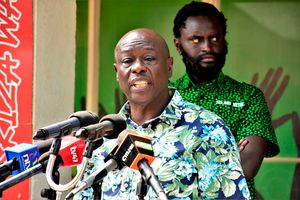
Outgoing Government Spokesperson Isaac Mwaura.
Photo credit: Pool
On the concerns raised by Mr Gachagua, the government insisted that security remained under control.
The Kenya Tourism Federation warned that confidence in a tourism destination takes years to build but can be destroyed within days through negative international publicity.
Federation chairman Fred Odek said: “Political competition is an essential feature of democracy. However, Kenya’s tourism brand should never become collateral damage in political disagreements.”
The Kenya Coast Tourism Association and the Lake Victoria Tourism Association echoed the federation’s concerns, warning that politics should never undermine an industry employing hundreds of thousands of Kenyans directly and indirectly.
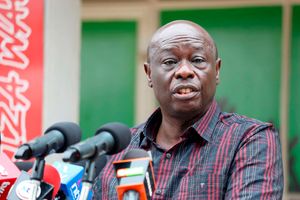
Tourism PS Julius Bitok at Nakuru
Photo credit: Boniface Mwangi | Nation Media Group
Leaders from the Coastal region where tourism remains the backbone of the local economy also weighed in. Cabinet secretaries Hassan Joho and Salim Mvurya led governors, senators, MPs and other regional leaders in condemning Mr Gachagua’s remarks.
“As leaders from the Coast region, we condemn in the strongest possible terms the reckless and unfortunate remarks made by Hon. Rigathi Gachagua,” the leaders said in a joint statement.
“Somebody is urging the international community not to visit Kenya; we now know he is somebody who cannot lead the country,” Mr Mvurya said.
While the opposition remains critical of the government’s handling of governance and security, there are differing views on how that criticism should be communicated.
Former President Uhuru Kenyatta’s Jubilee Party distanced itself from Mr Gachagua’s call, arguing that political competition should never come at the expense of Kenya’s economic interests. The party’s statement, signed by Secretary-General Moitalel Ole Kenta, carefully walked a political tightrope.
On one hand, Jubilee agreed with many of the concerns Mr Gachagua had raised about governance, including growing insecurity, shrinking democratic space, political intolerance and the infiltration of criminal gangs into politics. However, it rejected calls that could discourage tourism and foreign investment.
Rather than hurting those in power, Jubilee argued, any decline in tourist arrivals would disproportionately affect ordinary Kenyans.
Kitui Senator Enoch Wambua.
Photo credit: File | Nation Media Group
However, Kitui Senator Enoch Wambua defended Mr Gachagua, insisting that leaders have a responsibility to speak honestly about insecurity.
“Whether the DCP boss blows the whistle on insecurity in the country or he doesn’t, the facts don't change,” Mr Wambua said. “Kenya is internally more insecure today than it has ever been.”
He argued that tourists and investors ultimately make independent decisions based on available information.
People’s Liberation Party leader Martha Karua.
Photo credit: Wilfred Nyangaresi | Nation Media Group
People’s Liberation Party leader Martha Karua , without endorsing the tourism boycott, argued that persistent lawlessness itself is the greatest threat to tourism.
“Lawlessness on its own is a deterrent to tourists,” she observed.