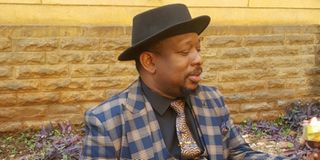
The High Court has lifted an order freezing more than Sh30 million belonging to former Nairobi governor Mike Sonko, which was frozen five years ago over suspicion of money laundering.
Justice Nixon Sifuna lifted the preservation order issued in February 2020, freezing the money in 10 bank accounts, saying there was no legal basis for ordering the forfeiture of the said funds to the government.
The judge blasted Assets Recovery Agency (ARA) for conducting shoddy investigations, saying such a probe should be ‘thorough, air-tight and water-tight’- since the findings lead to liability, whether civil or criminal.
“The evidence so far on record, is insufficient to support the assertion that the funds flagged by the applicant (ARA) and which are subject of these proceedings and are on various of the respondent’s bank accounts, are proceeds of crime,” said the judge.
The agency moved to court in 2020, stating that they had received information that Mr Sonko was involved in money laundering, using funds allegedly stolen from the city county government.
Mr Sonko was charged in December 2019 with conflict of interest and money laundering, among other offences.
The agency successfully sought orders to access, investigate and be supplied with the documents relating to the 10 accounts, which held funds in US dollars and Kenya shillings.
While seeking the orders, the agency alleged that the accounts received suspicious money, which is believed to be proceeds of crime from illegal financing, theft and money laundering activities from the Nairobi county government.
The agency stated that between August 2017 and December 2019, Mr Sonko allegedly received huge cash deposits in different bank accounts, depicting a clear case of money laundering.
In his defence, Mr Sonko had owned various businesses even before he joined politics. He said that, as a businessman, it was normal for his bank accounts to receive deposits. He said that he ran a matatu business, as well as nightclubs, restaurants and cyber cafés, and was also involved in real estate.
The former Nairobi governor said the agency rushed to court and obtained the freeze order before giving him an opportunity to explain the source of the Sh30.7 million.
According to him, some of the money was proceeds from the sale of properties, which were made in instalments.
The properties, he said, included several parcels of land in Kwale and Kajiado, which he allegedly sold for between Sh24 million and Sh175 million.
In his decision, the judge said the burden shifts to the respondent (Mr Sonko) after the agency establishes a prima facie case.
The judge said Mr Sonko had not only poked holes in the case against him but also fought off any suggestion that he was involved in crime or money laundering.
“Where the suspect has in his defence supplied documents to the investigator or the court, the investigator and the anti-corruption agency should endeavor to verify not only the authenticity but also the credibility of such documents as well as its contents,” said the judge.
The judge said ARA should have verified the titles of the properties which Sonko alleged to have sold, the sale prices, as well as the identity of the alleged purchasers.
“I am of the view that suspicion has to be founded on reasonable ground. Hence it cannot be just be from without,” said the judge.
Justice Sifuna added that being a public institution, ARA was under a public duty to provide in the proceedings, not only the evidence that incriminates a suspect but also that exculpates him if available. “Unfortunately, this was not the case here,” he said.