Kenyan police shot most of their 97 victims while they were fleeing, the Independent Medico-Legal Unit (IMLU) has revealed—exposing a pattern of unlawful killings during protests and routine operations.
In its annual report released on International Human Rights Day, IMLU says three out of every five extrajudicial killings involved shots fired from behind, indicating that the victims were fleeing and unarmed.
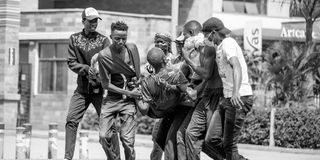
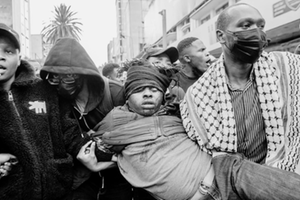
A majority of the killings occurred during protests, where terrified youths fled after police fired live ammunition into crowds.
Speaking during the release of their annual statistics on human rights violations in the country to mark International Human Rights Day, IMLU Executive Director Grace Wangechi said the targeted shootings at protestors signalled impunity and lack of accountability.
Drawing from medico-legal documentation, forensic investigations, survivor testimonies and nationwide monitoring, IMLU verified 97 extrajudicial executions, 18 deaths in custody, 72 cases of torture or ill-treatment, 49 protest-related injuries, more than 1,500 arbitrary arrests and five enforced disappearances.
These figures represent only what has been documented- many more remain hidden due to interference and intimidation that hinder evidence collection, IMLU cautioned.
“We have documented cases where protesters were shot as they ran for safety. They had their backs turned, they were retreating, yet the police still fired at them. Shooting a fleeing protester shows a total disregard for life and a complete failure to adhere to international standards,” she said.
Tension was high at the Roysambu roundabout, where police lobbed tear gas canisters in an attempt to disperse a crowd of young people trying to find their way to the CBD to participate in the nationwide protest on July 25, 2025.
Photo credit: Wilfred Nyangaresi | Nation
Ms Wangechi said that their experts’ forensic analysis documented close-range shootings and victims struck from behind; clear signs they were fleeing and posed no imminent threat when police fired.
Among such cases is Elvis Musave, a young demonstrator fatally shot in the back during the Saba Saba protests on July 7 last year in Kangemi, Nairobi County. Witnesses say he was helping another protestor escape after being injured by a bullet fired by the police when he too was fatally shot from the back.
Another victim, Evans Kiche, was shot in Kasarani as mourners viewed the body of opposition leader Raila Odinga. When police began shooting, Kiche turned to retreat — only to be fatally hit on the head.
“When you are shot from behind, you are not a threat to anyone,” the IMLU boss said.
Over the past year, 94 survivors received medical assistance, 345 individuals accessed psychosocial support, 20 legal and bail interventions were facilitated, and 14 emergency rescue operations were undertaken, many during violent dispersal of peaceful protests. The organisation also conducted 79 forensic autopsies to help bereaved families establish the cause of death and pursue justice.
The forensic evidence paints a chilling picture. Stephen Outa Mukoya, IMLU’s Monitoring and Evaluation officer, noted that the disturbing pattern was visible during protests on June 9, June 25 and during Saba Saba, where police deployed lethal and non-lethal weapons against mostly youthful crowds.
“More than 60 per cent of all recorded violations occurred in Nairobi, making the capital the epicentre of the state’s clampdown on free expression. Rather than protection, protesters are increasingly criminalised,” he said.
Mr Mokaya also noted that peaceful demonstrators and activists have been charged under anti-terrorism laws, a tactic she argued undermines due process and instils fear in civic spaces.
The repression has spilt beyond national borders. IMLU also highlighted forced deportations of activists and cross-border targeting of human rights defenders “aimed at neutralising civic activism”.
Media freedoms have also withered through intimidation, arrests of journalists and interference with newsroom operations, restricting public accountability and shielding security agencies from scrutiny.
Cases of custodial torture, including against minors, continue to surface. The report spotlights 17-year-old Felix Senet Takona, who suffered burn wounds and severe injuries allegedly inflicted by police in Naroosura, Narok, a reflection of deep-rooted brutality embedded in policing structures, IMLU said.
Mukoya noted that documentation efforts are increasingly obstructed, with monitors surveilled and blocked from gathering evidence.
“Access to bodies during autopsies, critical in suspected police killings, is frequently disrupted. Plain-clothes officers stationed in public morgues have been blocking our private pathologists from participating, in violation of the law. This is a deliberate effort to frustrate evidence collection,” he said.
On his part, Simon Malenya, Technical Lead, Advocacy at IMLU, decried how judicial directives requiring police to wear identifiable uniforms during operations are still disregarded. Hooded officers using unmarked vehicles remain active, a sign Malenya believes reflects deepening impunity.
“This is something they do because they can easily hide their identities. Up to 60 per cent of these killings were people shot as they retreated from police shooting at them,” Mr Malenya said.
One positive step, Mr Malenya noted, was the collapse of the Assemblies and Demonstrations Bill, 2024, in Parliament, which had proposed harsh restrictions reminiscent of colonial-era public order laws, when its sponsor, former Mbeere North MP, Geoffrey Ruku, joined Cabinet.
Kenya’s deteriorating human rights record has not gone unnoticed globally. During its Universal Periodic Review at the UN in May 2025, Kenya received 303 recommendations from fellow states. This reality, Ms Wangechi said, pointed to a very "serious" issue in Kenya.
To avert further crisis, William Omondi, IMLU’s Technical Lead, Psychological Rehabilitation, said that these concerns must translate into urgent reforms to safeguard freedoms of expression, assembly and political choice, end misuse of anti-terror laws, strengthen the Independent Policing Oversight Authority, operationalise the National Coroners Service Act, criminalise enforced disappearances, and ratify key torture-prevention protocols.
“As the world marks International Human Rights Day, IMLU underscores that human rights are everyday essentials, central to dignity, accountability and constitutionalism,” he said.