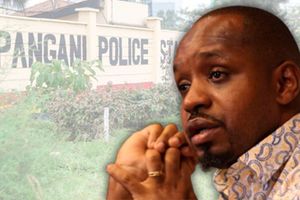
With the arrest and arraignment of activist Boniface Mwangi, civil society organisations —long regarded as the guardians of justice and democracy— now feel the walls closing in. The democratic space, they warn, is shrinking fast, with the State not only seeking to silence their voices, but also cripple their finances.
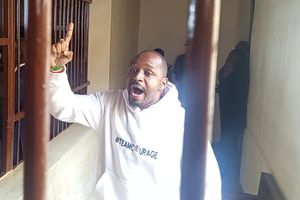
Activist Boniface Mwangi in court, denies terrorism charges
Beyond their growing concern for the country, a deeper, more personal fear is setting in: human rights defenders are no longer just chroniclers of State repression, but they are also becoming its victims.
Mr Mwangi’s arrest is the latest in a string of State action against activists in the wake of widespread protests. Yesterday, he was charged with unlawful possession of ammunition — two unused tear gas canisters and one blank bullet — and was granted Sh1 million personal bond. But the story of State repression bears tell-tale signs.
It all began when President William Ruto publicly accused the Ford Foundation of funding anarchists in Kenya. What followed was Foreign Affairs Principal Secretary Korir Sing’oei writing to the organisation seeking an explanation for their funding of civil society organisations across the country.
Dr Sing’oei singled out 16 rights groups that received over Sh800 million from the foundation and linked this to the June 2024 anti-Finance Bill protests. But it did not end there.
The Directorate of Criminal Investigations (DCI) also swung into action, writing to several civil rights groups inquiring about their sources of funds.
“This office is inquiring into allegations that your institution received grants from the Ford Foundation, which were allegedly utilised to fund and mobilise protests during the Anti Finance Bill 2024 and as a result led to loss of lives and massive destruction of properties as well as comprising peace and security of the country,” reads one of the DCI letters.
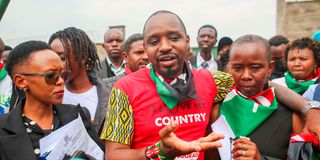
Activist Boniface Mwangi’s lawyer Njanja Maina (second right) speaks to journalists flanked by Mwangi's wife Njeri and other activists outside Pangani Police Station in Nairobi on July 20, 2025.
Photo credit: Billy Ogada | Nation Media Group
And things have gotten worse, according to activists, and they are now warning that the country is regressing into authoritarian rule. Mr Wilfred Olal, convener of the Social Justice Centres Working Group, sees this as a systematic erosion of constitutional rights.
“The country is really clawing back to a dictatorship that we passed a long time ago during the rule of former President Daniel Arap Moi,” he says, citing the arrest of Grace Njoki after she expressed frustration with the Ministry of Health.
“Instead of responding to the issues she raised as a patient, they responded by trying to arrest her. And look at the issue of the right to protest, which Kenya had clearly indicated in the 2010 Constitution that we have a right to protest, to picket, to present a petition,” says Mr Olal.
Kenya National Civil Society Centre Suba Churchill Executive Director said, “The civic space is shrinking under the Kenya Kwanza government”.
“It has not helped that those suspected to be responsible for these acts of violations and abuses, seem to enjoy supernumerary powers that not even the Inspector-General of the Police and other security agents established under the law can question,” Mr Churchill says.
Yet, amid this repression, there is hope. The resilience of young people is growing, not diminishing, and Mr Olal sees this as a turning point. Mr Churchill says concerns have been raised about instances of threatening phone messages being made and of surveillance, physical or sexual assaults, as has happened to a number of perceived government critics.
“Smear campaigns labelling civil society actors as ‘enemies of the State’, ‘traitors’, or as working for ‘foreign interests or masters’ as did happen to Ford Foundation, forced disappearances, torture, and extra-judicial killings,” are serious concerns, he says.