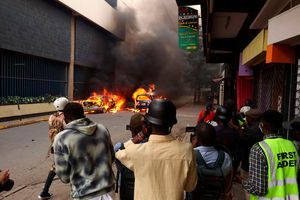
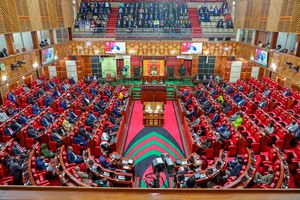
The protests by Kenyan Gen Zs against punitive taxation measures, which culminated in the storming of Parliament for the first time in history on June 25, 2024, left a lasting impact on how future budgeting processes will be executed.
The Gen Z protests, which left over 50 Kenyans dead — a majority of them young people — did not amount to nothing, as the Finance Bill 2024 fell through after President William Ruto declined to sign it into law.
The fall of the Bill, which is enacted annually to partly finance the national government budget, was fought under the pretext that it proposed a punitive taxation regime. Appeals from Kenyans to their MPs in the National Assembly to delete the offensive clauses were ignored.
Governance expert Mr Barasa Nyukuri says that “at least the Gen Zs’ efforts to fight against the imposition of excessive taxation did not yield nothing.”
Mr Nyukuri noted that the current budget-making regime is an improvement from previous processes, which he says were shrouded in secrecy.
“Previously, the government did not bother about the views of Kenyans on key policy and legislative matters like the imposition of taxes. Decisions were made through executive fiat, and it was upon you to get along. But since last year, we are seeing change in terms of budget-making,” says Mr Nyukuri.
According to the Institute of Economic Affairs (IEA), Gen Zs, with their digital fluency and strong opinions, have significantly impacted budgeting and governance.
“They've demonstrated the power of collective action through social media, influencing policy decisions like the Finance Bill 2024 in Kenya. They are also known for their financial literacy and budgeting skills, often using social media to inspire saving and smart spending habits,” IEA says in a document.
“Their skepticism towards traditional institutions and increasing awareness of economic disparities have led to calls for more transparent and accountable governance,” says IEA.
Following the events of June 25, 2024, National Assembly Clerk Samuel Njoroge announced that future Finance Bills will undergo public participation in the country’s 290 constituencies to enlighten Kenyans from the furthest corners of the country on the contents of the Bill.
Immediately after the budget estimates for the 2025/26 financial year and the Finance Bill were tabled in the National Assembly, National Treasury Cabinet Secretary John Mbadi urged Kenyan Gen Zs to take their time and read the two documents.
“Before you defeat this budget, please take a keen interest in the budget estimates and the Finance Bill 2025. I want you to take your time and understand what is in it,” CS Mbadi said during an interaction with Gen Zs on the 2025/26 budget.
“The economy can only grow in an environment that is secure and peaceful. This Bill will help the economy grow,” the National Treasury CS said.
CS Mbadi’s counsel to the young people followed similar advice by National Assembly Speaker Moses Wetang’ula to MPs, warning them against misleading Kenyans on the contents of the Bill to avoid a repeat of last year’s developments that saw Parliament stormed.
“Members, I encourage you — when these documents are tabled or these Bills are published — read them, analyze them, debate them in this House. Helpless villages in funerals and public places out there will not help you debate and pass appropriate budgeting processes in this House,” Speaker Wetang’ula told the MPs.
“So, avoid the temptation to stand before helpless nursery school kids and tell them that you are opposing a Bill that you are supposed to debate in this House. I have seen this happen in many places. You don't look good when you do that,” the Speaker warned.
To prevent any negative attitude towards the Finance Bill 2025, Leader of Minority in the National Assembly Junet Mohamed (Suna East) warned against misinformation on the contents of the Bill.
“The real Finance Bill 2025 has now arrived in Parliament. For the last two months, there has been a Finance Bill circulating, with people discussing it in public forums and claiming a number of taxation measures,” said Mr Junet.
“We want to urge Kenyans from the floor of this House that the real Finance Bill 2025 is with us now. There should be no misinformation, disinformation, or misrepresentation to the public,” said Mr Junet.
The budget-making process is such that once the estimates and the Finance Bill are presented and tabled in the National Assembly, they undergo several processes.
While the estimates are committed to departmental committees for stakeholder engagement, the Finance Bill is handled by the Finance and National Planning Committee.
The departmental committees have 21 days to consider the estimates through open sessions and feed into the Budget and Appropriations Committee (BAC), which makes recommendations to the House for adoption.
BAC is required to discuss and review the budget estimates and make recommendations to the House, “taking into account the recommendations of the departmental committees, views of the Cabinet Secretary for the National Treasury, and the general public.”
Once the budget estimates are approved by the National Assembly, they form the basis for the annual Appropriation Bill.
“The Departmental Committees are required to engage with relevant stakeholders to ensure participation of all players in the process,” the Speaker directed.
The Finance Committee, on the other hand, has to consider the Finance Bill and make recommendations to the House, taking into account views from stakeholders and other Kenyans.
According to the Public Finance Management (PFM) Act, the Appropriation Bill and the Finance Bill must be signed into law by June 30th every year to take effect on July 1st, the start of the country’s financial year.
IEA notes that Gen Zs' collective action “is the concerted effort of individuals or groups to achieve a common political or economic goal.”
“This goal frequently entails influencing government policy or modifying economic structures to benefit the group. In political economy, collective action differs from a broad notion of collective action,” notes IEA.