Despite President William Ruto’s glowing scorecard, several critical issues in the education sector were conspicuously missing from his State of the Nation address on Thursday.
They include the looming transition to Senior School (Grade 10), persistent infrastructure gaps, unresolved ghost learner audits, capitation shortfalls, and the slow reintegration of school dropouts.
President Ruto's third state of the nation address
While the government successfully scrapped the 8-4-4 system at the primary level, the rollout of CBC remains uneven. Primary schools have adapted gradually, but junior schools are the system’s most troubled link.
With teachers threatening strikes in January, the Kenya Kwanza administration now faces a crucial test of its reform agenda.
Invigilators distribute Kenya Junior School Education Assessment papers at St Mary's Girls Comprehensive and Junior School in Nakuru County on October 27, 2025.
Photo credit: Boniface Mwangi | Nation Media Group
The President highlighted the hiring of 76,000 teachers but did not clarify that most serve on contract under the controversial internship programme — a status that has triggered protests, court battles, and pressure for their immediate confirmation. The additional 24,000 teachers he pledged to recruit by January 2026 will also be interns, leaving the longstanding staffing crisis unresolved.
Delayed capitation crisis
In his 2024 address, he noted that 56,000 teachers had already been hired with another 20,000 expected by January — a target largely met. Still, reliance on interns remains a major sticking point. During campaigns, President Ruto pledged to hire 116,000 teachers within his first two years — a promise yet to materialise.
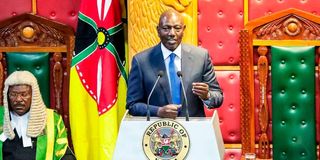
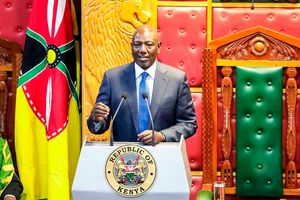
President William Ruto (centre) arrives at Parliament Buildings in Nairobi for the State of the Nation address on November 20, 2025.
Photo credit: Lucy Wanjiru | Nation Media Group
Junior schools will continue to struggle: most are set to receive only one new teacher each, despite the roughly 23,000 junior secondary schools nationwide.
For the second year in a row, the President sidestepped the troubled Free Day Secondary Education programme. Funding has dropped from the stipulated Sh22,244 per learner annually to about Sh15,192 this year. He also did not address the delayed capitation crisis that paralysed public basic education last term, forcing some schools to shut early or send learners home after months without government support.
President William Ruto greets scouts outside Parliament Buildings in Nairobi shortly after delivering the State of the Nation address on November 20, 2025.
Photo credit: Dennis Onsongo | Nation Media Group
Head teachers warn the situation could recur in January unless arrears are cleared. Underfunding has severely squeezed many day schools that depend entirely on capitation. Some have been sued by suppliers over unpaid bills, while others have resorted to charging parents illegal levies to stay afloat.
Similarly, the President made no reference to the proposed new teachers’ medical insurance scheme expected to take effect on December 1, 2025. Unions have rejected the plan, citing concerns over transparency, benefits, and lack of consultation.