History favours nations that dare to reimagine themselves. President William Ruto has declared that Kenya must journey towards First World status. We in the energy sector have mapped reforms anchored on energy that is affordable, clean and inclusive to power this vision.
From the early electrification drive to our current position as Africa’s renewable energy leader, we have laid a strong foundation for success. We already generate over 90 per cent of our electricity from renewable sources, and our geothermal capacity ranks among the top 10 globally. We have proven that sustainability and growth can coexist, and that Africa needs not imitate, but innovate.
What we are now building is a new energy architecture that transforms existing strengths into engines of industrial power. It is a bold investment to underpin President Ruto’s quest to lift Kenya into the First World.
A nation where energy no longer just lights homes, but drives factories, fuels exports and creates wealth at every level of society.
For too long, success in energy has been measured by access rates. That era is ending. Our next frontier is to measure economic productivity per kilowatt. To ensure every megawatt produced translates into value, jobs and competitiveness. This calls for deeper coordination between energy and industry. A new national alignment mechanism will bring together the ministries of Energy, Trade and Industry, and Agriculture to ensure that new power generation directly supports economic clusters, from manufacturing parks to agro-processing zones and logistics corridors.
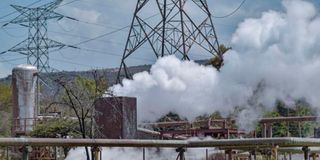
The new energy architecture envisions carbon-free manufacturing zones, beginning with Olkaria as a global pilot for green exports. Here, geothermal steam will not only generate power, but also power production, demonstrating that sustainability can be a source of profit.
To sustain this growth, we will seek ways to blend domestic savings with concessional and carbon finance, ensuring the private sector becomes a partner, not a passenger, in the journey to net zero. This aligns with our national priorities with the Africa Green Industrialisation Initiative and global climate commitments made at COP28.
Kenya’s energy system seeks to reward productivity, not merely consumption. Our vision is to transition to a smart pricing model that encourages industrial performance, rewards efficiency, and empowers communities to produce and trade energy locally.
Through peer-to-peer trading and decentralised systems, communities with solar, mini-hydro, or wind capacity should be able to sell surplus power into the grid. This is Ubuntu in action: prosperity that is shared becomes prosperity that endures. At the national level, smart tariffs will ensure that firms creating jobs, exports, and innovation pay less per unit of energy used, while those wasting it pay more. Such fairness will make energy both an enabler and a discipline.
Policy without data is guesswork. That is why we are working to reinforce the national digital command hub by integrating real-time data from generation, transmission and consumption. Using artificial intelligence, it will forecast demand, enhance grid stability, and optimise investment decisions. This innovation engine will also incubate youth-led start-ups in electric mobility, battery storage and smart metering. When we embrace data, we empower decisions; when we empower youth, we power the future.
The Olkaria green fertiliser project has proven that energy can drive food security. By using geothermal steam instead of fossil fuels, we are producing affordable, low-carbon fertiliser at scale. This approach must now extend to other value chains. Our goal is simple: at least one-third of Kenya’s agricultural exports should be processed using renewable energy. When the farmer, the factory and the financier are connected by clean power, national resilience follows.
Digital-grid technologies
Kenya’s energy transformation will succeed only if it is human-centred. That is why our energy architecture prioritises skills, inclusion and ownership. We have to train at least 10,000 technicians annually in geothermal, hydrogen and digital-grid technologies. Beyond skills, we have to deepen community equity and participation in renewable projects. Locals will not only host clean energy projects, they will own them. As the Akan say, “Wisdom is like a baobab tree; no one individual can embrace it.” Progress must be participatory.
Kenya’s leadership in clean energy is continental. We seek to host the 2029 World Geothermal Congress in Nairobi, and through it we will give Africa a stronger voice in shaping global energy policy. From this platform, we will advance an African Geothermal Development Compact, a cooperative model through which Eastern African nations can pool resources, share infrastructure and build regional value chains. This is Harambee at a continental scale—shared growth, shared prosperity.
Energy must no longer be seen as a cost centre but as a strategic investment in Kenya’s First World future. Every shilling spent must yield measurable productivity, every project must strengthen resilience, and every innovation must inspire inclusion.
This new energy architecture builds on what works, fixes what doesn’t, and imagines what could be. It stands as Kenya’s contribution to a world searching for sustainable growth, a model of how industrialisation, equity, and environmental stewardship can coexist.