A fund established over a decade ago by the State to resettle the landless has spent Sh1.6 billion with nothing to show for it, according to a damning report by the Auditor General.
In the report covering the financial year ending June 30, 2024, Auditor General Nancy Gathungu has revealed that the Land Settlement Fund, created in 2012, three years after the infamous 2007/2008 post-election violence, has failed in its core mandate to purchase and allocate land to displaced and landless Kenyans.
The fund was set up mainly to help settle thousands of people who were displaced after the post-election polls chaos that rocked the country.
However, the report shows, despite huge expenditure in the purchase of land in different parts of the country, thousands of Kenyans remain landless.
"Despite the huge expenditure, no Kenyan has been resettled on the land acquired using these funds. In the circumstances, the objective for which the parcels were acquired and value for money had not been achieved," states Ms Gathungu in the report.
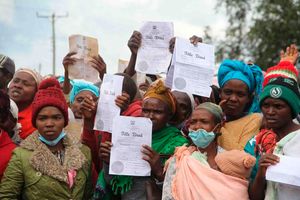
The delays have left thousands of Kenyans, including internally displaced persons (IDPs), squatters, and families living in extreme poverty, in a state of limbo.
“The continued failure to settle people not only undermines justice for the displaced, but also deepens generational poverty among landless communities,” Gathungu further noted.
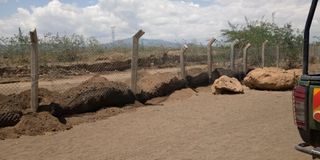
The audit shows four major land parcels were acquired using millions, but still lying idle, several years later.
For instance, it emerged that the fund, in October 2012, purchased 1,112 acres of land in Kisima, Njoro in Nakuru County for Sh396.9 million, to settle victims of the 2007/2008 post-election violence, but twelve years later,
"At the time of the audit in November 2024, the land in Njoro had not been surveyed or sub-divided, and the beneficiaries had not been settled twelve years later," reads part of the report.
In April 2020, the government used Sh377 million to purchase land measuring 91 acres in Mikanjuni Farm in Kilifi, for the resettlement of informal settlers.
However, years later, the land remains unoccupied, despite the existence of a verified list of beneficiaries.
"In November 2024, the farm was still listed as undistributed by the Fund. No justification was given for not allocating and settling the informal settlers," stated the report.
Similarly, only a portion of the larger Mazrui Farm, purchased in 2022 for Sh445.4 million, has been distributed to informal settlers.
"The 1,497-acre Mazrui farmland in Kilifi was purchased on July 21, 2022, for the resettlement of informal settlers. However, as of June 30, 2024, the distribution of the land to the intended beneficiaries had not been completed," said the report.
"In the circumstances, the objective for which the parcels of land were acquired and value for money had not been achieved," further reads the report.
Meanwhile, the Kadza Ndani plot in Mombasa, bought for Sh378 million, is yet to host the informal settlers it was intended for.
The Kadza Ndani land, measuring a total of 28.4 acres, was bought in September 2020 for the resettlement of informal settlers.
Although a list of beneficiaries was provided by the Land Adjudication and Settlement Officer in Mombasa, at the time of the audit in November 2024, the land was still listed as unallocated.
The Auditor General has put the fund’s management on the spot for systemic weaknesses, including a failure to implement past audit recommendations and a lack of accountability.
"The issues about resettlement remain unresolved, and management did not provide an explanation for the failure to implement recommendations,” it states.
Ms Gathungu flagged Sh6.6 billion in outstanding loans, with accrued interest reaching Sh5 billion. “Management did not have a clear policy on the evaluation and management of accounts receivable,” she warned.
This comes when President William Ruto announced that the government has purchased a total of 10,000 acres of Kedong ranch at the border of Nakuru and Narok counties for the resettlement of landless members of the Maasai community.
While on a tour of Narok County last week, President Ruto said the move is part of the government's decision to expand land ownership for residents.
The expansive Kedong Ranch, part of which hosts critical infrastructure, such as the Naivasha Inland Dry Port, has been at the center of long-standing disputes.
“You told me you wanted a share of Kedong Ranch. I have now used government money and purchased 6,000 acres to add to the 4,000 acres you already had, bringing the total to 10,000 acres,” said Ruto.
“Bring me the names of the intended title deed holders, and I will issue the documents once the list is complete. Within one week, the title deeds will be with you,” he pledged.
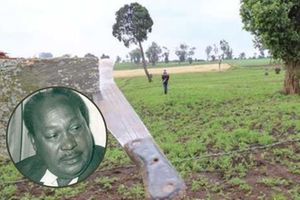
The Kedong Ranch has for years been a source of contention, with local leaders accusing powerful figures from previous administrations of attempting to grab the land.