The wave of unrest in schools across the country has caught the attention of the country's top security officials, who are expected to meet today (Monday June 8, 2026) to deliberate on the escalating crisis.
Among the issues expected to dominate the National Security Advisory Committee (NSAC) meeting is the alarming rise in school fires, students unrest and closures that have swept through learning institutions over the past three weeks.
“The NSAC will be meeting on Monday, even though the IG does not set the agenda, we know that the issue of unrest in schools will feature prominently because that is a national security matter,” a source at the Office of the Inspector General of Police, who spoke in confidence, told the Daily Nation.
NSAC acts as the advisory committee to the National Security Council which is headed by the President. It comprises the Head of Public Service (who frequently chairs the meetings), the Cabinet Secretary for Interior and National Administration, the Chief of the Kenya Defence Forces (KDF), the Director-General of the National Intelligence Service (NIS), the Inspector-General of the National Police Service (NPS), the Attorney-General and the National Security Advisor (who serves as the Secretary to the NSC).
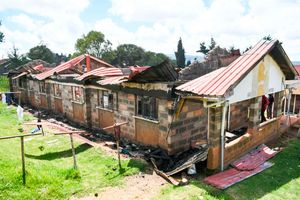
Debris and damaged property at a storage facility following a fire at Alliance High School in Kikuyu, Kiambu County on June 4, 2026. School operations were suspended indefinitely as investigations into the incident continued.
Photo credit: Lucy Wanjiru | Nation Media Group
The Daily Nation has also established that deliberations on possible interventions, including whether schools should be forced into an early half-term break to stem the spread of unrest, will depend on the outcome of the crisis meeting. The Ministry of Education has scheduled the half-term break to start on June 24 and end on June 28, 2026.
The discussions come amid growing anxiety among parents following a series of fires, destruction to property and the closure of tens of schools across the country.
As NSAC meets, the Kenya Secondary Schools Heads Association (KESSHA) has called for students linked to school unrest and arson attacks to be removed from boarding schools and transferred to day schools as part of measures aimed at restoring discipline in learning institutions.
KESSHA national chairman Mr Willie Kuria said learners found culpable of participating in unrest should continue with their education under the supervision of their parents and guardians at home instead of remaining in boarding institutions.
According to the principals’ body, boarding schools are increasingly coming under pressure from coordinated incidents of indiscipline, some of which spread rapidly through peer influence and social media platforms.
The association argues that transferring such learners to day schools would not only help restore calm in boarding institutions but also reduce congestion currently being experienced in many schools.
“The boards of management should be empowered to deal with students according to the law. There are many forms of punishment that were abolished after being termed anti-children, but we are not saying we should go back there. We are simply saying schools must be allowed to take meaningful disciplinary action,” said Mr Kuria.
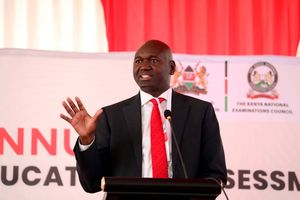
The national chairman of Kenya Secondary Schools Heads Association Willie Kuria speaks during the Muranga County Conference in Mombasa on April 15, 2026.
Photo credit: Kevin Odit | Nation Media Group
Mr Kuria, who is also the Chief Principal of Murang’a High School, noted that some learners resort to strikes, arson and destruction of school property instead of adjusting to boarding school regulations, a situation he said has, in some cases, led to loss of lives.
“Students who engage in unrests, destroy property and even cause deaths in schools should not continue staying in boarding schools. Let them stay with their parents where they can receive closer supervision,” said Mr Kuria.
He also cautioned parents against forcing children into boarding schools against their will. He further faulted the Ministry of Education for frequently overturning disciplinary decisions made by Boards of Management, arguing that school administrators should be trusted to make decisions that safeguard learning institutions.
“If a board of management feels that a learner is not fit for boarding school, then that decision should be respected. The Ministry of Education appoints these boards, so their decisions should not always be quashed,” he said.
Mr Kuria maintained that strengthening day schools could also help the facility attract more learners.
“Every village now has a day school. Let destructive learners continue with education there instead of destabilising boarding schools,” he said.
Presidential aspirant Fred Matiang’i has called on President William Ruto to convene an all-political parties’ forum to address challenges facing the education sector, warning that it was facing imminent collapse.
Dr Matiang’i, who is the former Cabinet Secretary for Education, said he would persuade his colleagues in the United Opposition to set aside their differences and accept to caucus with President Ruto on the education sector.
Jubilee Presidential hopeful Dr Fred Matiang'i in Borabu, Nyamira County on April 24, 2026.
Photo credit: Ruth Mbula | Nation Media Group
Speaking at Meru Town Seventh Day Adventist (SDA) Church on Saturday, Dr Matiang’i expressed concern over rising cases of school unrest and deaths, funding and curriculum implementation challenges.
“I urge the President and the education minister to admit that we have a crisis. You don’t have to be arrogant and deny what everyone can see. The sector has been badly mismanaged," Dr Matiang'i said.
"We should not only spend time calling each other names and blaming one another while our children are suffering. We may have political differences but we must agree on this issue of education."
"I hope the president will see a sincere need for an all-parties conversation. If this is not done, the crisis will blow up sooner than we think," the Jubilee deputy party leader said.
Former Meru Governor Peter Munya said some cases of school unrest could be linked to funding challenges in the education sector.
"Some of the schools may be inciting their learners to go on strike because of lack of funds," Mr Munya said.
The Kenya Union of Post Primary Education Teachers (KUPPET), Mr Omboko Milemba said boarding schools are grappling with congestion, which has worsened following increased demand for boarding spaces under the 100 per cent transition policy.
So far, however, the Ministry of Education has ruled out an early closure. Basic Education Principal Secretary Julius Bitok, while speaking during a prize-giving ceremony at Kenya High School on Thursday, insisted that learning remains uninterrupted in majority of schools and that there was no justification for altering the academic calendar.
Basic Education Principal Secretary Prof Julius Bitok addresses the media outside Utumishi Girls Senior School on May 29, 2026.
Photo credit: Boniface Mwangi | Nation Media Group
“From our records, less than one per cent of schools have experienced unrest. The rest are continuing with learning normally, so there is no justification for closing schools early,” said Prof Bitok.
The directive, however, comes against the backdrop of one of the most troubling waves of schools’ unrest Kenya has witnessed in recent years.
At the centre of the crisis is the tragedy at Utumishi Girls Academy in Gilgil, Nakuru County, where a midnight dormitory fire claimed 16 lives and left 79 other students injured.
Evidence gathered by sleuths suggested that the fire may have been deliberately started, and upon review of CCTV footage, nine students were arrested and arraigned.
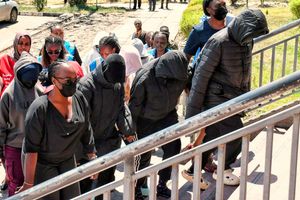
Students arrested on suspicion of arson over a fire at Utumishi Girls' Academy Senior School in Gilgil that killed 16 students and injured 79 others, arrive at the Naivasha Law Courts on June 2, 2026.
Photo credit: Reuters
On Tuesday, the suspects, appeared before the Naivasha High Court with investigators being allowed to hold them for 21 days as investigations continue.
Just days before the tragedy, Maranda High School in Siaya County had been closed on May 25 after a suspected arson incident on a dormitory that was linked to student unrest.
On May 30 and 31, a dormitory at St Paul's Githakwa Secondary School in Nyeri County was destroyed by fire. Police launched investigations into suspected arson.
On June 1, another dormitory fire broke out at Tarakwa High School in Bomet County, causing extensive property damage.
The same day, a fire at St Joseph's Seminary Senior School in Molo destroyed property worth thousands of shillings.
Also on June 1, Lenana School in Nairobi was forced to close indefinitely after students staged unrest linked to grievances surrounding the organisation of the school's annual Maroon Festival.
By June 2, the unrest had spread to Loreto High School Limuru in Kiambu County, where learning was disrupted following student protests.
At around the same time, Naivasha Girls High School and Nakuru Girls High School in Nakuru County were forced to send students home amid growing tensions and unrest.
St George's Girls Secondary School in Nairobi was also temporarily closed as administrators sought to contain unrest and prevent destruction of property.
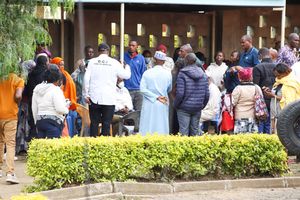
Students leave Alliance High School in Kikuyu, Kiambu County on June 4, 2026 after the institution announced an indefinite closure following a fire that destroyed a storage facility within the school compound.
Photo credit: Lucy Wanjiru | Nation Media Group
In Kakamega County, Ingotse Boys High School suspended learning after students reportedly damaged school property during protests.
Most recently, Upper Hill School in Nairobi closed on June 4 after administrators detected signs of growing restlessness among students.
In a notice to parents, the school said the decision had been taken purely as a precautionary measure.
“Due to the unrest currently being experienced in some schools across the country and signs of restlessness within our school, parents and guardians are advised to pick their sons from school today as a precautionary measure to ensure their safety and well-being,” the notice read.
On the same day, Mang’u High School was also temporarily closed and all students released after the administration detected rising tension among a section of learners.
In a communication dated June 4, Principal Bernard King’ah said the school had observed growing tension within a small group of students, which culminated in an attempted disturbance around 7:15 pm, but was quickly contained. He assured parents that all students were safe.
Following consultations between the Board of Management, Parents Association and the school administration, it was decided that all students would be released as a precautionary measure.
In the night waking to Thursday, still on June 4, a fire broke out in a store at Alliance High School, prompting police to arrest 10 students as investigations got underway.
Although no casualties were reported, the incident heightened fears that the unrest may be spreading to more schools.
Emmanuel Manyasa, the Executive Director of Usawa Agenda, has called for a deeper examination of the root causes of school unrest, warning against punitive responses that may worsen the problem. He noted that indiscipline among a small group of learners and poor school management practices are key contributors to unrest in schools.
“One of them is indiscipline, where you have a few learners who do not want to stay in school and want to create trouble so that schools can close,” he said.
Dr Manyasa added that some students act out under extreme academic pressure, especially Form Four candidates. He called for reforms to protect learners’ well-being and address systemic stress in schools.
Education officials, however, insist that the incidents remain isolated and manageable.
Prof Bitok said many of the disturbances appear to be linked to examinations and disciplinary issues, adding that schools have been encouraged to adopt dialogue and counselling rather than confrontation.
“We are urging principals to be alert to early warning signs. In some cases, rather than forcing students to sit examinations, schools can consider postponing them. We have also intensified audits, dialogue and consultations,” he said.
Reporting by Steve Otieno, Winnie Atieno and David Muchui