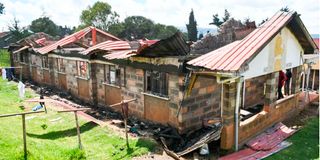
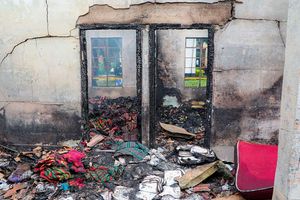
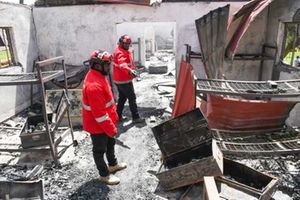
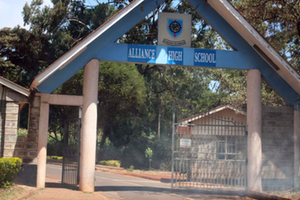
The series of events following Utumishi Girls School fire that claimed 16 lives exposes deeper policy, financial, structural and administrative weaknesses in secondary schools. A number of schools across the country — including top institutions such as Alliance High School, Lenana, Loreto Limuru and Mangu — have reported cases of student unrest, forcing them to close.
Strikes are not a new occurrence – they often recur in second term – attributed to academic pressure and anxiety over examinations. However, their resurgence and growing intensity this time round point to a deeper and more complex challenge that extends beyond the simplistic explanations and solutions being touted around.
Secondary schools are underfunded and poorly resourced. Most of them are not well-managed and facilities are stretched to the limit as the government implements the 100-per cent policy of transiting learners from primary to secondary schools, but without commensurate resources, infrastructure and staffing.
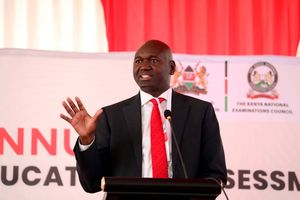
On its part, the Education Ministry has not provided leadership. Apart from a handful of appearances, Education Cabinet Secretary Julius Ogamba, has left more questions than answers in its handling of various situations.
Education Cabinet Secretary Julius Ogamba.
Photo credit: Lucy Wanjiru | Nation Media Group
The Directorate of Quality Assurance and Standards responsible for inspecting schools is severely constrained due to inadequate staffing and funding, limiting its ability to regularly visit schools and effectively execute its oversight role.
So far, Education Principal Secretary Julius Bitok has directed that all schools be inspected within two weeks and for a good measure, stated that the Quality Assurance Directorate has been strengthened to enable it to carry out its mandate. But that is the typical knee-jerk reaction that serves to mask a festering wound instead of addressing the root cause. A more strategic and carefully thought plan is required to bring sanity to schools.
Causes of school unrest are well documented. Since the 1990s, the government has set up several taskforces and commissions to investigate the causes of schools’ strikes, generating wide range of recommendations aimed at addressing the phenomenon.
In 1991, the government appointed a Presidential Committee on Student Unrest in Schools chaired by veteran politician Lawrence Sagini, which duly investigated the menace and made recommendations. The commission followed the shocking incident at St Kizito School in Meru, where boys invaded the girls’ dormitory, set it on fire and killed 19 female students.
Seven years later, in 1998, following the tragic fire at Bombululu Girls in the then Coast Province that led to the deaths of 26 students, the government appointed a task force under the Methodist Bishop Lawi Imathiu. A report was done and submitted to authorities.
The worst case happened in 2001 when some students set ablaze a dormitory at Kyanguli Secondary School in Machakos, killing 67 students.
President Daniel arap Moi set up a task force under the Director of Education, Naomy Wangai, to investigate the cause of the shocking bloodbath and a report containing 168 recommendations was done and handed over to the government. In recent years, the government established another taskforce on schools strikes in 2016 chaired by former provincial administrator Claire Omolo and similarly, again to investigate causes of a wave of strikes that had engulfed schools, and a report was filed complete with several recommendations.
However, recommendations of those numerous reports remain unimplemented, highlighting preoccupation with drama rather than real action.
The Utumushi Girls Academy fire comes just two years after the Endarasha inferno in 2024 that claimed the lives of 21 children and signals an inability to curb the menace.
A drone footage of Hillside Endarasha Academy in Nyeri County with the burnt dormitory at the centre.
Photo credit: Nation Media Group
The point is that boarding schools are increasingly becoming dangerous places for learners. But abolishing them is not the solution. The starting point is to address structural, financial and infrastructural challenges facing schools.
Secondary education remains one of the underfunded sectors with declining capitation and a fee caveat that remains stagnant, yet costs continue to rise steeply.
Government capitation has stalled at Sh22,244 since 2018, and even then, that amount is never disbursed in full. On average, schools receive Sh16,000 annually, far below the benchmark. And even then, the disbursement is irregular, affecting proper financial planning and forecasting. On the other hand, the government has kept the fee limit at Sh53,544 annually for boarding schools since 2014, yet inflation keeps rising as the cost of living skyrockets.
The consequence is that schools are severely underfunded. They are unable to operate optimally and often survive with huge debts. Many charge levies to keep themselves afloat, in itself, a window for corruption.
In 2018, the National Assembly Committee on Education conducted an inquiry in the wake of rampant cases of student unrest and among others, confirmed that poor funding was hurting the institutions. Consequently, it called for a review of the fees structures that had been set up through a task force led by Dr Kilemi Mwiria in 2014. Paradoxically, the same committee has not done much since, to push for increased allocations for secondary education.
Significantly, a review of secondary education landscape reveals serious policy gaps and inconsistencies. The government’s policy of achieving 100-per cent transition from primary to secondary school is noble and laudable. However, it is never matched with resource allocation. The result is that many schools are overcrowded, making them stressful and hostile environments for learners. For example, top national and extra-county schools have more than 2,000 students against established capacity of 800 learners. Dormitories, dining halls and classrooms are congested undermining proper teaching and learning as well as social welfare of learners.
Thus, the question is, how safe are our learning institutions? The Education Ministry developed Safety Standards Manual for Schools in Kenya years ago, with clear guidelines on architectural designs and administrative norms. Among others, the guidelines require that schools build dormitories with adequate spaces for ease of movement, emergency exits, doors that open outward and fire extinguishers.
Additionally, schools are required to conduct regular fire drills, formulate disaster readiness plans, secure school grounds, and check students’ safety on a regular basis. Teachers and school committees also have specified roles in enforcing safety standards.
However, because of high numbers, dormitories are congested with little spaces for manoeuvres. Hardly do schools conduct fire drills and disaster assessments due to lack of resources and technical capacity.
Administratively, running of schools is concentrated in the office of principals, deputies and some heads of departments, leaving out majority of teachers and non-teaching staff. Communication is largely one-way and directive, rather than inclusive, participatory and based on consensus.
Staffing shortfall remains a perennial crisis in schools. Available statistics show that the country has a shortfall of more than 50,000 teachers, which impacts teaching, learning and psycho-social support.
Matters are worse for non-teaching staff, a majority of whom are employed by school boards of management. Most institutions have few support staff – matrons or hostel wardens, as well as security personnel – due to inadequate funding. The end result is that hostels are inadequately safeguarded, security within school compounds is compromised, and students' welfare is often neglected.
Given the mounting challenges in the education sector, from the chaotic placement of Grade 10 learners earlier this year to the ghost schools and capitation scandal, and now the wave of student unrest, there is a compelling case for President William Ruto to shake up leadership at the Education ministry.
The sector requires a team that can provide strategic leadership, strengthen accountability, and restore public confidence in the country's education system.