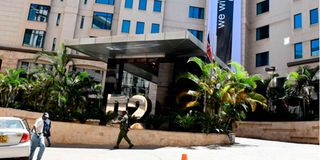
In Nairobi’s upscale Riverside neighborhood, the 14 Riverside building stands as a symbol of luxury and controversy.
The iconic Dusit D2 Hotel, nestled within the property, attracted guests with its five-star amenities, including a swimming pool, gym, spa, multiple restaurants, and 101 rooms and suites spread across a ground-plus-seven-floor hotel block.
Surrounding it are office blocks, a parking silo, a food court, and landscaped gardens.
Yet behind its glimmering façade lies a decade-long legal battle that has traversed nearly every level of Kenya’s courts—from the High Court to the Supreme Court.
Dusit D2 at the Riverside 14 complex on January 31, 2019.
Photo credit: File | Nation Media Group
The saga began in 2011 when Cape Holdings and Synergy Industrial Credit Ltd entered into verbal and written agreements for the purchase of two blocks in the under-construction building.
Initially, Synergy planned to buy both blocks but later scaled back to one. The agreed price was Sh703.2 million. There are claims that not the entire amount was paid.
Cape Holdings claims that Synergy made part of the payment and requested changes to be made to the building. A dispute arose when Synergy allegedly terminated the agreement later in 2011, citing project delays, and demanded a refund.
When the dispute went to arbitration in 2015, the arbitrator ordered Cape Holdings to refund Sh1.66 billion, almost three times the price of the block in question, covering the principal, interest, opportunity cost, and foreign exchange losses, with a compound interest of 18 percent per annum.
Cape Holdings challenged that outcome in the High Court which, in 2016, quashed the award on grounds that the arbitrator had overstepped his mandate. Foreign exchange loss, the court added, should not have been considered for deal struck using the Shilling.
Synergy then moved to the Court of Appeal, only for the case to be dismissed. Undeterred, the firm escalated the dispute to the Supreme Court, which ruled that some arbitration disputes could bypass the High Court in exceptional circumstances.
Ultimately, in 2020 the appellate court found the High Court erred in quashing the award.
Meanwhile, the High Court calculated the award at Sh4.5 billion. But with the 18 percent annual compound interest applied, estimates now place the total at Sh10.7 billion.
Cape Holdings has argued that the judgment, if enforced, could harm other secured and unsecured creditors.
“It is unlawful to aggregate the various damages awarded and apply a flat rate of 18 percent commercial interest rate when penal damages could not attract such a penal rate of interest,” the company stated.
They also cite the Limitation of Actions Act, which limits interest to six years, asserting that public policy prevents unjust enrichment through prolonged interest.
Attempts by the Chartered Institute of Arbitrators to join the case in 2024, citing the far-reaching implications for arbitration, were rejected.
Dusit D2 Hotel Nairobi General Manager Michael Metaxas with athlete David Rudisha, led by a Scottish bag piper, arrive with the Dusit D2 Hotel flag alongside the Kenyan flag at the Riverside 14 Complex on July 31, 2019 ahead of Dusit D2 Hotel re-opening on August 1, 2019.
Photo credit: File | Nation Media Group
I&M Bank also sought to intervene, claiming its Sh2.82 billion loan to Cape Holdings was secured against other blocks on the property, but the court dismissed the bank’s application.
“The prohibitory order having been registered on 5th January 2022, the attachment of the said property was complete, and so was the execution,” the judges ruled.
The court also rejected I&M Bank’s plea to reinstate administrators over the property. “It cannot be apprehensive of what may happen to a property that has already left its hands and has been executed against,” said the court.
In March this year, the Court of Appeal rejected Cape Holdings' proposal for the property to be sold by private treaty and the proceeds be deposited in an interest earning account, pending the taking of accounts and debts owed to Synergy Industrial Credit ltd, I&M Bank and other creditors.
According to the court, the issues the company raised have been litigated all the way to the Supreme Court and cannot be reopened.
Cape Holdings went to the Court of Appeal in December, 2025 asserting that the High Court erred in declining to review earlier decisions in a manner that effectively shut out consideration of the taking of accounts under section 34 of the Civil Procedure Act.
In the firm's view, the rejection amounted to a miscarriage of justice because the court declined to interrogate issues relating to limitation of interest, the in duplum rule, and the statutory restriction on recovery of penalties.
The company maintained that the amount has since escalated dramatically due to what it termed unconscionable and unproven interest.
In rejecting the claim, the court noted that the decree issued in March 2021 in favour of Synergy Industrial Credit was issued in line with an “arbitral award that has survived challenge at every judicial level”.
Further, the court said that all other issues raised, including interest and the in duplum rule, should have been raised when the matter was at trial stage.
Dusit D2 at the Riverside 14 complex on January 31, 2019.
Photo credit: File | Nation Media Group
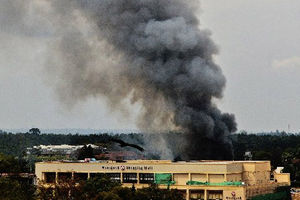
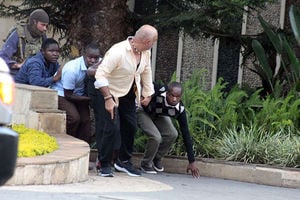
Adding to Cape Holdings’ troubles, 14 Riverside was the scene of a 2019 terror attack when a suicide bomber struck the Dusit Hotel, killing 22 people and causing massive structural damage.
Synergy alleged that these funds were not used to refurbish the hotel after the attack, and has subsequently sought orders to stop sale or transfer of other residential properties owned by directors of Cape Holdings and their family members. Synergy claims renovation funds were diverted to the other properties in Spring Valley in Nairobi, and Kajiado County.
While the High Court struck out Synergy’s application to lift the corporate veil and go after these private properties in March 2026, the prohibitory orders remain in place.
Valuations by Knight Frank in 2025 put the disputed block at just over Sh1 billion, and the entire property at Sh7.5 billion, with a forced sale market value of Sh5.4 billion. That is below the Sh10.7 billion being pursued by Synergy.
From Sh703 million to Sh10.7 billion, the arbitration saga has raised some concerns on whether arbitration, a now popular dispute resolution model, is guaranteed to deliver proportionate justice.