Efforts by allies of Nairobi Senator and Linda Mwananchi leader Edwin Sifuna to secure the United Democratic Party (UDP) as a vehicle for his 2027 presidential bid have run into fresh resistance, with senior officials formally challenging the leadership and rebranding plans. This comes days before Mr Sifuna’s planned October 3 launch of the political party he hopes to use for the top seat.
Two objections were placed before the Office of the Registrar of Political Parties (ORPP) on Monday, September 28, raising questions over the legality of an emerging attempt to reshape the party following the death in December 2025 of its founder and leader, former Lugari MP Cyrus Jirongo.
The latest challenge comes as Mr Sifuna’s allies, led by Trans Nzoia Governor George Natembeya, prepare to unveil the political vehicle he will use in the 2027 presidential race. Linda Mwananchi has already endorsed the Nairobi senator as its presidential candidate.
In one of the letters received by the Registrar, UDP vice-chairperson Adow Mohammed Abukar objects to the reported appointment of Mukasa Mwambu Muliro as interim party leader.
Mr Abukar says the reported new leadership structure was not known to the duly elected party leadership as per the February 24, 2022 meeting when the party last held its National Delegates Convention (NDC).
“The individual who has reportedly been appointed to serve as interim Party Leader is not known to the duly elected leadership structure of the Party and was not part of the duly elected Party leadership,” Mr Abukar says in the letter.
He wants the Registrar, Mr John Cox Lorionokou, to establish which party organ approved the appointment, when and where the meeting took place, who attended, whether there was quorum and where the minutes and resolution authorising the change are.
Linda Mwananchi settles on Sifuna as its 2027 presidential candidate
The second objection, submitted by UDP National Executive Council (NEC) member and former Jirongo personal assistant Manasse Kuria Kweya, raises broader questions over succession, the status of existing party officials and plans to change the party's name, logo and colours.
Mr Kweya’s submission, says the death of Jirongo on December 13, 2025 triggered a succession mechanism contained in the party constitution.
Article 8.6(a) of the UDP constitution, he says, provides that following the death or resignation of the party leader, the National Chairperson assumes the role of Acting Party Leader pending an Extra-Ordinary Congress, which should be held within one year.
The objection therefore asks why the substantive National Chairperson has not assumed the acting role.
“There is a substantive National Chairperson,” Mr Kweya says. “It is therefore necessary to establish the constitutional basis upon which that office has not assumed the role expressly provided for under Article 8.6.”
The objections strike at the heart of the reported plan, publicly declared by Mr Natembeya, to turn UDP into the political vehicle for Mr Sifuna ahead of the 2027 General Election.
Jirongo, who led UDP, died in a road crash at Karai along the Nairobi-Nakuru highway. With the veteran politician gone, the party has become the subject of interest among politicians looking for established outfits ahead of the next election.
Mr Kweya argues that the transition cannot simply be achieved by installing new officials without following the party constitution.
He particularly questions what happened to the existing Deputy National Chairperson, alleging that the office appears to have been displaced in favour of another individual who has since featured in the proposed interim arrangement.
The document asks whether the former deputy resigned, was removed or whether the office was declared vacant.
“If so, under what provision of the Constitution?” Mr Kweya asks, demanding written evidence of the resignation or decision creating the vacancy.
The Political Parties Act provides a formal process for changes to party officials, including notification to the Registrar. It also requires changes to party names, symbols, slogans and colours to go through a prescribed notification process.
The regulations further provide for notification of officials who have left office and those appointed or elected to replace them.
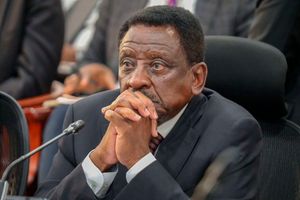
Registrar of Political Parties John Cox Lorionokou.
Photo credit: File | Nation Media Group
This makes the documentation of the internal decisions particularly important as the rival sides seek recognition from the Registrar.
Mr Kweya has also challenged the reported plans to rebrand UDP, demanding evidence of the NEC meeting at which the proposed new name, logo, symbol and colours were considered and approved.
He does not dispute that the party constitution may give NEC powers over such matters. Instead, he questions whether a properly constituted NEC exercised those powers.
He wants the Registrar to establish the date and agenda of the meeting, attendance, quorum, deliberations, minutes and resolution.
Under Section 20 of the Political Parties Act, a fully registered party intending to alter its constitution, officials, name, symbol, slogan or colours must notify the Registrar. The Registrar is then required to publish notice of the intended change in the Gazette, while the party must also publish the notification in two national newspapers.
The law provides a public process for proposed changes, while the UDP objectors are insisting that the internal constitutional process must also be demonstrated.
Mr Kweya argues that this is especially significant because the changes are being contemplated less than a year before the 2027 election.
The objections also invoke the rights of party members to participate in the affairs of the organisation and receive information about decisions affecting its leadership and electoral identity.
Nairobi Senator Edwin Sifuna.
Photo credit: File | Nation Media Group
The fresh objections come at a delicate moment for Mr Sifuna, whose allies have been searching for an established party through which he can formalise his presidential campaign.
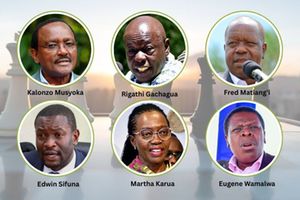
The UDP option appeared attractive because it is already a registered political party, but the plan became complicated after the ORPP rejected an attempt to change its name to Ukombozi People’s Party, citing similarity with The Ukombozi Alliance associated with Wiper leader Kalonzo Musyoka.
Mr Natembeya had previously indicated that the team had settled on another vehicle, while Vihiga Senator Godfrey Osotsi said the senator would soon disclose the party he intends to use.
But a high-ranking member of the Sifuna team, who spoke in confidence as he is not allowed to publicly on Linda Mwananchio strategy, told the Daily Nation on Tuesday that the senator was deliberately keeping his plans private.
The official said several political parties had expressed interest in offering Mr Sifuna a platform, but that the Nairobi senator would personally announce his new political vehicle.
“There are several parties that have expressed interest in having Sifuna vie on their ticket. But Sifuna will make the announcement himself. He is keeping his cards close to his chest and will tell Kenyans, at the appropriate time, which political vehicle he has chosen, so, just relax,” the official said.
The political pressure surrounding the party question has nevertheless intensified after Linda Mwananchi formally endorsed Mr Sifuna as its presidential candidate.
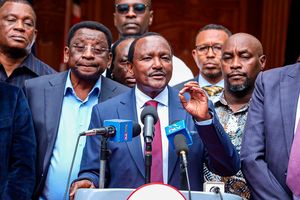
At a retreat attended by several senior figures in the movement, including, Embakasi East MP Babu Owino, Kakamega Senator Boni Khalwale, Kisii Senator Richard Onyonka, Mr Natembeya, Senator Godfrey Osotsi and Suba South MP Caroli Omondi, the group declared Mr Sifuna its presidential candidate.
Nairobi Senator Edwin Sifuna addresses residents during a Linda Mwananchi rally in Butula, Busia County, on August 7, 2026.
Photo credit: Alex Odhiambo | Nation Media Group
The endorsement came despite Siaya Governor James Orengo, another prominent figure associated with the movement, being absent from the meeting.
Mr Orengo had previously argued that competing presidential ambitions should be subjected to a credible nomination process rather than one candidate being imposed.
The endorsement has consequently increased the urgency around the question of the party through which Mr Sifuna will contest.
His allies have rejected suggestions that he could deputise Mr Musyoka, insisting that the senator intends to pursue the presidency.
Linda Mwananchi team members during the endorsement of Nairobi Senator Edwin Sifuna as the outfit’s presidential candidate for the 2027 General Election on September 27, 2026.
Photo credit: Pool
Political analysts argue that the ORPP's role in the UDP dispute is potentially significant as the Registrar is empowered to register and regulate political parties, maintain the register of parties and symbols, and investigate complaints.
For Mr Sifuna's team, the immediate issue is not simply finding a party, but finding one whose leadership, officials and electoral identity can withstand challenges before the 2027 contest.
And with Mr Sifuna expected to make a major announcement on his political vehicle, the battle over who controls the party and whether its leadership changes were constitutionally sanctioned could become an important test of his presidential campaign even before the campaign formally begins.
If Mr Sifuna's camp succeeds in securing UDP's constitutional machinery, the party could become his political vehicle. If objecting officials retain control and resist the transition, the political calculation could shift towards another party or a new organisation.
The commission's official election calendar shows that preparations are already under way, with political parties facing their first major deadline on October 15, 2026, when they are required to submit the names and specimen signatures of their authorised officials.
The commission also says that political parties must have their nomination rules certified by the Registrar of Political Parties by Friday, October 30, 2026, and submit them to the Commission by Friday, November 6, 2026.