Parliament has pressured the National Social Security Fund (NSSF) into waiving Sh102 million in penalties and interest arising from the delayed remittance of former MPs' contributions.
The lawmakers have cornered the Fund, essentially blackmailing the management into doing this as a condition for a series of proposed amendments to the NSSF Act to be passed.
National Assembly Speaker Moses Wetang'ula has directed the NSSF Managing Trustee, David Koross, to waive the penalties imposed on Parliament for failing to remit Sh24.8 million in deductions from former MPs.
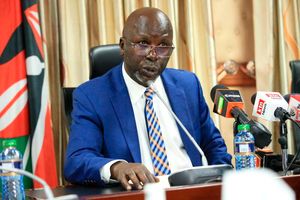
Managing Trustee of the National Social Security Fund (NSSF), David Koross, makes his presentation during the 2026 Legislative Retreat for Members of the National Assembly, at Lake Naivasha Resort in Naivasha, Nakuru County, on January 28, 2026.
Photo credit: Boniface Mwangi | Nation Media Group
Mr Wetang'ula said that since Parliament had paid the outstanding principal amount of Sh24.8 million, the NSSF should now waive the interest and penalties, which had accumulated to Sh102 million.
“There were unpaid dues of Sh24 .8 million that had attracted interest of Sh102 million. I instructed the Clerk who paid the principal of Sh24.8 million and if you are looking for Sh102 million in penalties, it must be a quid pro quo,” Mr Wetang'ula said.
“The law allows you to waive penalties and interest as we consider your legislative proposals. This is unfair penalties and interests. Can you here now give us a commitment that you will waive the penalties given that we paid the principal as a responsible institution?”
Addressing MPs during the 2026 Legislative Retreat in Naivasha on Wednesday January 28, 2026, Mr Koross said the NSSF is considering such requests on a case-by-case basis.
“I gave an example of a few cases we have sorted by consultation. Let me engage the Clerk, the answer is positive. It is an issue of a formality that needs to be followed up. It is doable, we will do it,” Mr Koross said.
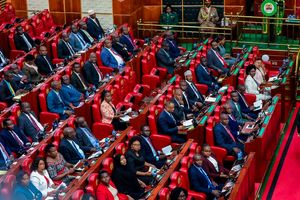
MPs take a group photo during day one of the four-day 2026 Legislative Retreat for Members of the National Assembly, at Lake Naivasha Resort in Naivasha, Nakuru County, on January 27, 2026.
Photo credit: Boniface Mwangi | Nation Media Group
Mr Wetang'ula directed the Clerk of the National Assembly Samwel Njoroge to quote the outcome of the retreat deliberation and motion the NSSF Managing Trustee “to do what he has said he will do.”
Ugenya MP David Ochieng who chaired the session on the NSSF presentation told Mr Koross to ensure that “before you bring amendments to Parliament, make sure you waive the penalties and interest.”
Mr Koross had appealed to MPs to amend the NSSF Act, 2013 to among other things extend the term of the board and managing trustee from the current three years to five years.
“For the first time, we are feeling the impact of NSSF, we are on the way to the Sh1 trillion fund value mark. Allow board members to serve a full term when appointed by deleting section 9 of the Act to increase the term to five years from the current three years,” Mr Koross said in a presentation to lawmakers.
“Three years is a short period to undertake any meaningful project, five years is adequate time to do something.”
In a presentation titled Reforming the National Social Security Fund, Legislative Progress and Outstanding Actions, Mr Koross said there is a problem in the NSSF Act which has fragmentation of member benefits due to opt-out provisions.
“We have an Act that fragments benefits. Section 20 of the Act provides for opt-out. The section clearly says contribution will be in two tiers,” Mr Koross said.
“These tiers are what we are having a problem with. The bulk of the money is in Tier 2 which can go anywhere through members exercising an opt-out. This opt out of contributions can go to three different companies. How will the contributor collect it? This creates untidiness.”
Mr Koross said the NSSF is proposing amendments sections 4(b) and section 21 to ensure that there is one level of contribution without splitting into tiers for employee pensions.
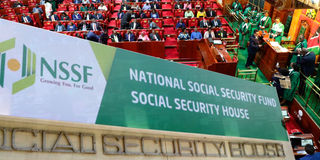
National Social Security Fund building in Nairobi
Photo credit: Sila Kiplagat | Nation Media Group
“Currently there is confusion among employees at retirement, they don’t know what contributions are with which scheme,” he said.
Mr Koross wants MPs to amend the NSSF Act to allow all additional voluntary contributions to be made under the Provident Fund. He said the law currently does not allow such an arrangement.
He wants the law changed to allow contributions to be pegged on six percent employee and six percent employers after year five as indicated in Schedule Three of the NSSF Act.
The NSSF boss wants MPs to amend section 34 of the NSSF Act to allow withdrawal of 50 percent of benefits when an employed member losses employment as well as to include funeral grant for voluntary contributions.
The NSSF also wants the House to approve four pending regulations that are critical to implementation of the Act.
The regulations are Member Contribution, Mandatory Registration, Voluntary Regulations, and Claims and Payment of the Provident Fund Benefits.