Hello

Your subscription is almost coming to an end. Don’t miss out on the great content on Nation.Africa

Ready to continue your informative journey with us?

Hello

Your premium access has ended, but the best of Nation.Africa is still within reach. Renew now to unlock exclusive stories and in-depth features.

Reclaim your full access. Click below to renew.

Caption for the landscape image:

Suicide or murder? Families seek answers over deaths in police cells

Scroll down to read the article

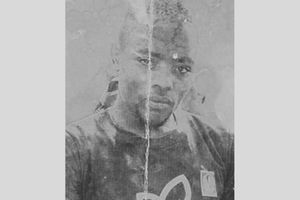
Charles Ndung’u (left) and Jack Leon Maloba who died while in police custody .

Photo credit: Lucy Wanjiru and Evans Habil | Nation Media Group

Jack Leon Maloba was arrested on the night of December 11, 2025, and by morning, he was dead.

The young boda boda rider had been taken to Kawangware Police Post following a dispute over a motorcycle.

According to his family, they were not informed of any danger, distress or medical emergency. When dawn broke, they went looking for him and were told his case had been transferred to Muthangari Police Station. It was there, inside a holding room, that police officers informed them Maloba had died barely an hour after being booked.

The explanation was swift and familiar: Maloba, they were told, had hanged himself inside the cell using his T-shirt. Officers said they heard a commotion, rushed in, and tried to take him to Kenyatta National Hospital. He died on the way.

But when Maloba’s uncle, Elphas Amakobe, found his body at Nairobi Funeral Home days later, the story began to unravel. Maloba was still fully dressed in his boda boda rider’s clothes.

“If he used his T-shirt to hang himself, how was he found dressed? Did he die and then put his clothes back on?” Mr Amakobe asked.

More confusion followed at the post-mortem. The police account changed. Maloba had not used a T-shirt, officers now said. He had hanged himself using a shoelace.

His family says his shoes were outside the cell.

Jack Leon Maloba

Jack Leon Maloba.

Photo credit: Evans Habil | Nation Media Group

Maloba’s mother, Phyllis Nandwa, was inconsolable. She revealed that days before her son’s arrest, the complainant in the motorcycle dispute had come to her home with several young men.

“They said they did not want dialogue,” she said, adding that there were threats.

When she went to the police station the morning after his arrest, she was told her son had not even lasted an hour in custody.

“The only one who knows the truth is God. How does a child die immediately after arrest?” she said.

Maloba’s death is now under scrutiny by human rights groups, with calls for investigations by the Directorate of Criminal Investigations (DCI) and the Independent Policing Oversight Authority (IPOA).

His family lawyer, SGI Oriaro, has raised questions about gaps in the official timeline, including who was on duty, who declared Maloba dead, and why mortuary records do not align with police accounts of when he was taken to the hospital.

Maloba’s story is not an isolated tragedy. It is part of a grim and growing list of Kenyans who have entered police custody alive and left in coffins.

Three months earlier, on the night of September 2, 2025, 23-year-old Charles Ndung’u, a boda boda rider from Kiamaiko in Mathare, made a phone call that would be his last. He called his elder sister, Rinah Wanjiku, sounding terrified.

“He told me the police had arrested him, and they wanted money. He said he only had Sh400,” she said.

She could hear officers in the background. Charles promised to call back once they “agreed on something”. He never did.

When his phone went off, the family panicked. They reported his disappearance at Kayole Police Station. Officers denied holding anyone by that name. For weeks, the family searched police posts, hospitals and mortuaries across Nairobi’s Eastlands.

A month later, after Charles’ disappearance was reported in the media, the family received a call from the same police station.

“They told us the OCS wanted to see us. They took us straight to Mama Lucy Kibaki Hospital mortuary,” Ms Wanjiku said.

Charles’ body had deep cuts on the forehead and bruises on the face. A post-mortem revealed internal bleeding. He had been lying at the mortuary for nearly a month, tagged as an “unknown male”, even as his family repeatedly visited the facility searching for him.

Charles was buried in late October 2025. His motorcycle, his only source of income, was later found parked inside the same police station that had denied arresting him.

“We want justice. He went into their hands alive,” Ms Wanjiku said.

According to data compiled by the Nation from the Independent Medico-Legal Unit (IMLU) and official government disclosures, at least 25 people died in police custody between December 2024 and October 2025.

IMLU documented 18 deaths during that period. Interior Cabinet Secretary Kipchumba Murkomen told Parliament that at least 10 deaths had occurred, though three overlapped with IMLU’s records. Adding Maloba’s case brings the total to at least 26 in under 10 months.

The deaths span the country, from rural patrol bases to major urban stations.

Among them is Albert Omondi Ojwang’, who died at Nairobi’s Central Police Station in June after being arrested for allegedly publishing false information. His death sparked nationwide protests.

Albert Ojwang

A photo of teacher and blogger Albert Ojwang, who died while in police custody.

Photo credit: Pool

Douglas Simiyu Barasa allegedly hanged himself with a vest at Kakamega Central Police Station. Joseph Otieno Oduor reportedly used a shirt to hang himself at Ukwala Police Station in Siaya. Benard Mwanthe Kivinda died of strangulation at Eastern Mitaboni Police Post.

In Nanyuki, 24-year-old Julia Njoki collapsed and died after officers allegedly dismissed her pleas for medical care as drama. In Murang’a, Peter Mburu Mwangi was found hanging from cell grills hours after his arrest.

In most cases, police explanations are strikingly similar — suicide by hanging using clothing.

But forensic investigations tell a different story.

IMLU, an independent human rights organisation that documents torture and deaths in custody, has independently verified 18 of the deaths through post-mortems. The findings reveal a disturbing pattern — cardiorespiratory failure linked to multiple injuries, blunt force trauma, severe head injuries, internal bleeding, asphyxiation and medical neglect.

“These are not isolated incidents. We are seeing the same causes and the same explanation every time — that the person hanged themselves,” IMLU executive-director Grace Wangechi said.

IMLU’s October 2025 brief notes that most custodial deaths occurred within 48 hours of arrest, often before suspects were charged or produced in court.

“This is the most dangerous window. That is when excessive force is used, and medical needs are ignored,” Ms Wangechi said.

In August 2025, Interior Cabinet Secretary Kipchumba Murkomen appeared before Parliament to answer questions on deaths in custody. He acknowledged at least 10 cases between March and August and promised reforms.

“Daily cell inspections are now being conducted by senior officers to ensure the safety and welfare of detainees. No suspect can be admitted without the OCS being informed,” he said.

He said officers were undergoing continuous training on humane treatment and that detainees showing distress would have access to mental health professionals.

Human rights groups remain sceptical.

“It’s not a hygiene issue, it’s a brutality issue,” Ms Wangechi said.

Eight years after Parliament passed the National Coroner Services Act to ensure independent investigations into suspicious deaths, the law remains unimplemented. As a result, deaths in police custody are still investigated by the same system under whose watch they occurred.

“Operationalising the Coroner Services Act is no longer optional. It is a moral and legal imperative,” Ms Wangechi said.

IPOA, the body mandated to investigate police misconduct, faces its own challenges. In mid-2025, IPOA chairperson Ahmed Issack Hassan said the authority had received over 20 cases of custodial deaths. Investigations have been hampered by limited resources, non-cooperation from police commanders and evidence tampering.

Nevertheless, some accountability has been achieved. According to IPOA’s publicly available convictions register, more than 30 officers have been convicted since 2011 for offences ranging from murder and manslaughter to assault and neglect of duty. In 2021, four officers were jailed for torturing and killing British national Alexander Monson at Diani Police Station.

But Mr Hassan says convictions alone are not enough.

“The culture in the police has not changed,” the IPOA boss said at a public forum in October 2025. “Without political will and real civilian oversight, nothing will change.”

During an interview with the Nation in November, the Inspector-General of Police, Douglas Kanja, acknowledged growing public fear of police stations amid deaths in custody, insisting that police facilities should be places of safety.

Douglas Kanja

Inspector-General of Police Douglas Kanja.

Photo credit: File | Nation Media Group

“The loss of even a single life in a police cell is unacceptable…Kenya has several police stations, around 1,209, handling thousands of cases daily. Nevertheless, every death in custody must be thoroughly investigated, and any officers found responsible held to account,” he said.

The police boss also conceded that there was a deep trust deficit between the police and the public, which he said the service was seeking to address through continued investment in policing, the modernisation of stations, and the installation of CCTV cameras to monitor cells and reduce “darkness” in police operations.

Behind every statistic is a family left navigating grief, poverty and unanswered questions. Many cannot afford private autopsies or lawyers. Some spend months searching for loved ones, only to find their bodies labelled “unknown” in public mortuaries.

“These families are denied truth, justice and closure. Their loved ones die twice — first in the cell and again in the silence that follows,” Ms Wangechi said.

As debate continues in Parliament and reform promises are repeated, families like Maloba’s and Ndung’u’s say time has already run out.

In Mathare, one boda remains parked and unused. In Nairobi, a mother, Ms Nandwa, still waits for answers. “I still imagine seeing him again. He went into that cell alive. That is all I know.”

Follow our WhatsApp channel for breaking news updates and more stories like this.