The planned United Democratic Alliance (UDA) grassroots elections in Mt Kenya are shaping up to be a major popularity test, with the potential to trigger further political fallout ahead of the 2027 General Election.
The ruling party is scheduled to conduct the grassroots polls in the populous Mt Kenya region on January 10, 2026, at a time when President William Ruto has lost several key allies in the area.
The outcome is expected to serve as a barometer of UDA’s influence in a region that played a decisive role in sweeping Dr Ruto to power in the 2022 election. Voter turnout and the number of aspirants seeking party leadership positions will be closely watched, amid growing perceptions that Mt Kenya has become increasingly hostile to the ruling party.
Several of Dr Ruto’s former allies in the region have since declared allegiance to former Deputy President Rigathi Gachagua, who is aggressively marketing his Democracy for the Citizens Party (DCP) as the new political home for Mt Kenya.
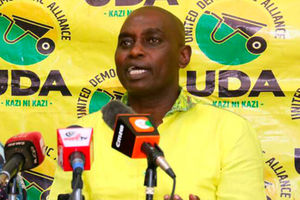
“The National Elections Board of the United Democratic Alliance (UDA) hereby issues this formal notice to all stakeholders, party members and aspiring candidates regarding the extension of the Phase III grassroots registration deadline,” UDA National Elections Board chairperson Anthony Mwaura said in a statement.
UDA national elections board’s Chairman Anthony Mwaura.
Photo credit: File | Nation Media Group
“Please be informed that the registration deadline, initially set for December 23, 2025, has been extended to December 31 at 11.59pm. This extension has been granted to allow additional time for eligible members and aspiring candidates to complete the registration process.”
Mr Mwaura cited the Christmas holiday as the reason for the extension. However, the Daily Nation established that the party had failed to attract enough aspirants by the initial deadline.
The polling centre-based elections will be conducted in Embu, Kiambu, Kirinyaga, Laikipia, Meru, Murang’a, Nyandarua, Nyeri and Tharaka-Nithi counties.
In the Rift Valley, the polls will take place in Baringo, Bomet, Elgeyo-Marakwet, Kericho, Nakuru, Nandi, Trans Nzoia, Uasin Gishu and Samburu counties, while Kakamega and Vihiga will represent Western Kenya.
Several UDA leaders perceived to have fallen out with President Ruto — and who could be on their way out of the party — include Kiharu MP Ndindi Nyoro, Nyandarua Senator John Methu, Murang’a Senator Joe Nyutu, Kiambu Senator Karungo Thang’wa, Embakasi Central MP Benjamin Gathiru (Mejja Donk), Embakasi North MP James Gakuya, Kirinyaga Senator James Murango and Laikipia Senator John Kinyua.
In Kakamega, Senator Boni Khalwale has also fallen out with the president and was recently removed as Senate Majority Whip.
In a recent interview with the Daily Nation, Mr Mwaura said the party had no intention of blocking members from contesting for leadership positions, but noted that those who have publicly declared support for Mr Gachagua should not expect to run for UDA offices.
“Those associating with other political parties should do the honourable thing and resign from the party. They should not attempt to run for UDA positions,” Mr Mwaura said.
President William Ruto (left) and Democratic Citizens Party (DCP) leader Rigathi Gachagua.
Photo credit: Boniface Mwangi and Bonface Bogita | Nation Media Group
Some UDA leaders who are now backing Mr Gachagua had, before his impeachment in October 2024, expressed interest in vying for top party positions. Mr Gakuya, who had declared interest in the Nairobi branch chairperson’s position, is among Mr Gachagua’s perceived allies.
Mr Mwaura also announced that UDA would conduct party nominations on January 10, 2026, for four by-elections scheduled for February 26, 2026.
The Independent Electoral and Boundaries Commission (IEBC) has declared Isiolo South Constituency, Muminji Ward, Evurore Ward and West Kabras Ward vacant. Isiolo South fell vacant following the death of MP Mohamed Tubi, while the three MCA seats became vacant after the incumbents resigned to contest parliamentary seats during the November 27 mini-polls.
“Notice is hereby given that the United Democratic Alliance (UDA) party nominations shall be held on Saturday, January 10, 2026. Interested candidates are encouraged to apply through the party portal at www.uda.ke,” Mr Mwaura said.
Apart from concerns about low turnout, President Ruto is also keen to ward off external interference, which has historically made political parties wary of conducting grassroots elections for fear of infiltration by rival interests.
Party elections in Kenya have often turned divisive and chaotic, leading to major fallouts. As a result, many parties have opted for consensus-building or electoral college systems to pick officials.
In 2014, an attempt by former Orange Democratic Movement (ODM) leader Raila Odinga to hold party elections at Moi Sports Complex, Kasarani, collapsed after a group of youths — famously called the “men in black” — stormed the venue and disrupted the polls. It later emerged that the youths were allegedly hired by senior party officials to block what they claimed was an external takeover attempt.
President Ruto’s decision to push ahead with UDA elections despite these risks is widely seen as part of his re-election strategy, aimed at aligning the party’s grassroots leadership with current political realities ahead of the 2027 campaigns.
UDA launched its grassroots polls in April 2024 but was forced to suspend them following the nationwide Gen Z protests in June, after completing polls in only Busia and Homa Bay counties. In April this year, the party held elections in 22 additional counties, bringing the total to 27.
The party had initially appeared reluctant to hold elections in Mt Kenya following the bitter fallout between President Ruto and Mr Gachagua.
However, UDA’s victory in the Mbeere North by-election seems to have renewed confidence in its support base in the region.
That win was widely viewed as a boost to President Ruto’s re-election bid, particularly after the November 27 mini-polls were interpreted as a referendum on his administration amid declining public support following the June 2024 Gen Z protests.
The mini-polls were also seen as a test of political realignments in Mt Kenya after the Ruto–Gachagua fallout.
By proceeding with the grassroots elections, President Ruto is signalling his determination to retain Mt Kenya as a key pillar of his support base. The region’s 10 counties, together with seven from the North Rift, delivered him about 4.5 million votes — roughly 63 per cent of his total tally — in the 2022 election.
The 10 Mt Kenya counties alone accounted for nearly 3 million votes, with the seven North Rift counties contributing an additional 1.6 million.