The Supreme Court judges have withdrawn their appeal in a legal battle over the ban imposed on Senior Counsel Ahmednasir Abdullahi over his social media posts 'ridiculing' the apex court.
This effectively ends the proceedings at the Court of Appeal and shifts the focus back to the High Court, where the judges last year lost a bid to have the case dismissed due to an alleged lack of jurisdiction.
A three-judge bench comprising Justices Luka Kimaru, Lucy Njuguna and Dr Johnson Okello on Wednesday marked the appeal as withdrawn after the appellants signalled they no longer wished to pursue it.
The appeal had been filed by the Supreme Court, its registrar and the seven judges challenging a June 2024 High Court ruling that allowed a constitutional petition questioning the legality of the ban imposed on Ahmednasir in January 2024.
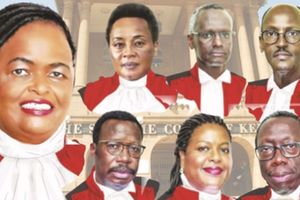
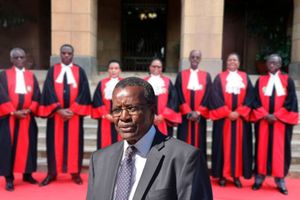
The Supreme Court in Nairobi.
Photo credit: Reuters
Senior counsel Ochieng Oduor, appearing for the appellants, told the court the matter had been overtaken by events and no longer raised a live controversy. This is because the apex judges had lifted the ban in January 2026 and allowed Mr Ahmednassir to resume practice before them.
“We must respect the hierarchy of courts. The Supreme Court has already dealt with the issue. There will be no practical effect in sustaining this appeal,” he said.
Senior Counsel Paul Muite, leading lawyer Issa Mansur for Mr Ahmednasir, supported the withdrawal, arguing the appellate court could not revisit orders made by the apex court.
“There is no need to proceed with the appeal. The issues raised can be fully addressed at the High Court,” Mr Muite said. “Courts do not act in vain.”
The appellate bench agreed, noting that the appeal belonged to the appellants and could not be sustained against their wishes.
“If the appellant feels he wants to withdraw the appeal, we are limited,” Justice Okello observed, with Justice Njuguna adding that a party cannot be compelled to proceed.
The court subsequently marked the appeal as withdrawn, bringing to a close a dispute that had tested the boundaries between judicial authority and the legal profession.
However, the withdrawal did not pass without contest.
The Law Society of Kenya (LSK), through senior counsel Wilfred Nderitu, raised concerns about unresolved constitutional questions arising from the dispute, urging the court not to ignore substantive issues.
He argued the case went beyond jurisdiction and touched on critical questions about the judiciary’s powers and accountability.
“This matter relates to the order of January 23, 2024 when Ahmednasir was banned. There are issues that require to be resolved,” Mr Nderitu said.
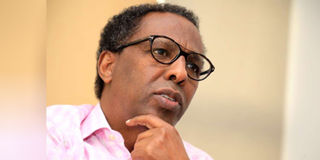
Senior Counsel Ahmednasir Abdullahi.
Photo credit: Francis Nderitu | Nation Media Group
He outlined concerns, including whether judges can lawfully bar an advocate from appearing before them, whether judicial immunity is absolute or qualified, and how the LSK should respond to allegations of disrespect toward judges.
Mr Nderitu also pointed to broader claims of corruption within the judiciary and the need to address them transparently, saying the dispute raised matters of public interest that should not be “swept under the carpet.”
He further questioned the process leading to the attempted settlement, stating that the LSK had not been part of the related proceedings cited by other parties.
“We were not invited to participate in that matter. We cannot use it to record a consent,” he said, adding that the LSK was open to dialogue but insisted on preserving key legal questions.
Mr Nderitu clarified that the LSK was not opposing the withdrawal itself but was distancing itself from the consent process adopted by other parties.
“We have no problem with the appeal being withdrawn. We are not participating in that consent process,” he told the court.
The dispute stems from a controversial decision by the Supreme Court in January 2024 to deny Mr Ahmednasir audience over what judges described as disrespectful public remarks. The ban extended to advocates working at his law firm.
The LSK later moved to the High Court, arguing the decision violated fundamental rights, including the right to a fair hearing, and raised questions about whether judicial immunity could shield such actions.
In June 2024, the High Court dismissed preliminary objections by the Supreme Court judges and allowed the petition to proceed, prompting the appeal that has now been withdrawn.