Before a Kenyan can officially don a Russian uniform, they must first survive one of the most exhaustive bureaucratic screening imaginable — a 39-section questionnaire approved by Presidential Decree No. 870 on October 10, 2024.
Filed by applicants for public and municipal service across the federation, it is the gateway through which foreigners enter the ranks (excluding those enlisted under the Federal Security Service).
At first glance the document looks like a routine application. It opens with the basics: surname, given name, patronymic, and any previous names and reasons for change.
From there it becomes an audit of a life: date and place of birth, passport or ID details, citizenship (past and present), and residence permits abroad, and even tax and medical insurance numbers.
Education is probed in fine detail — level, specialisation, diplomas — followed by additional professional training and foreign language competence.
Applicants must disclose military service history, the status of draft liability, and any clearance for access to state secrets (including the authority and year it was granted). The form collects contact details for every valid passport held and asks explicitly about property and relatives abroad, political affiliations, employment history, awards, and any criminal or administrative record.
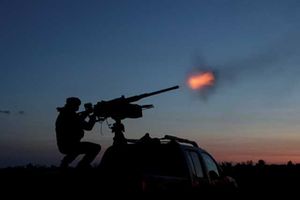
Ukrainian serviceman from mobile air defence unit fires a machine gun towards a Russian drone in Kharkiv region.
Photo credit: Sofiia Gatilova | Reuters
Family and relationships are not spared. Recruits must list spouses, parents, siblings and children — names, dates of birth and places of work or study — placing entire households under administrative scrutiny. The final sections demand a declaration of compliance with service restrictions and consent to personal data processing.
Attached to this questionnaire is a compulsory Autobiography (Appendix No. 2 to Minister of Defence Order No. 310 of July 7, 2020). Written in the applicant’s own hand, it must narrate the recruit’s life in free form: education periods, employment history with reasons for leaving, any prior military service or reasons for exemption, awards, marital history, close relatives, foreign stays and their purposes, and any prosecutions involving the applicant or close family.
Even fields marked optional — such as nationality — are routinely completed by African recruits with entries like “Kenyan.”
For many of the Kenyans we spoke to, the form was their first deep contact with the Russian state: a stack of questions that felt intimate and final. One returnee told the Nation , “They wanted everything about me — my parents, where I worked, even who I had dated. By the time I signed, I felt like Russia knew me better than Kenya ever did.”
Ukrainian soldiers ride a top of infantry fighting vehicles in Novoselivka, on September 17, 2022, as the Russia-Ukraine war entered its 206th day.
Photo credit: Juan Barreto | AFP
The paperwork does more than record identities. Once lodged, an applicant’s details enter Russia’s military registry — a data trail that ties names to contracts, clearances and, ultimately, deployment records. It is through this administrative apparatus that the Kremlin has integrated thousands of foreigners into its armed forces — offering pay and a possible fast-track to citizenship in exchange for service, while binding them legally to terms that can keep them in uniform “until the end of the mobilisation period, the termination of martial law or the expiration of wartime.”
For recruiters, state officials and would-be recruits alike, the form is the fine print behind a life-altering decision. For the families left behind in Kenya, it is the paper that turned a job offer into a new nationality, or into a nightmare.