You will not be allowed to repatriate the body of your loved one who has died of Ebola outside the country for burial if Parliament approves the new Public Health (Ebola Disease) Rules, 2026, currently before the House.
The new rules presented by Health Cabinet Secretary Aden Duale, if passed by Parliament, will facilitate timely and appropriate public health measures to prevent and control the transmission of Ebola.
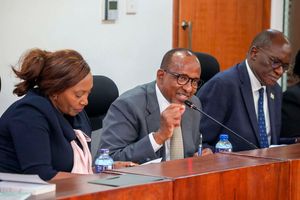
Mr Duale presented the new regulations before the National Assembly committee on Delegated Legislation, which is expected to review them and either approve or reject them through a report to the House.
Appearing before the committee to defend the new regulations, Mr Duale told the lawmakers that the new rules are meant to prevent and control transmission of Ebola.
“The rules seek to facilitate implementation of timely and appropriate public health measures to prevent and control transmission of Ebola while ensuring that such measures are proportionate to the public health risk and respect of human rights and freedoms,” Mr Duale told the committee.
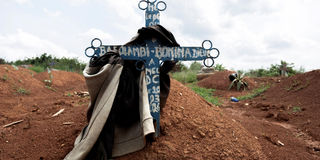
Red Cross workers wearing personal protective equipment (PPE) place in a coffin the body of Dr Tibenderana Katho Blaise who worked at the Centre Medical Evangelique (CME) in Hoho commune and died of Ebola virus, as aid agencies intensify efforts to contain a new Ebola outbreak caused by the Bundibugyo virus, ahead of his burial in Bunia town, Ituri province, Democratic Republic of Congo, May 26, 2026.
Photo credit: Reuters
The regulations presented to the committee include a ban on the repatriation of the body of an Ebola victim who died outside the country.
“A person shall not transfer or repatriate the body of a person who has died of Ebola disease outside the Kenya,” reads part 21 (2) of the regulations.
The regulations provide for a safe and dignified disposal of the body of a person who has died in the country.
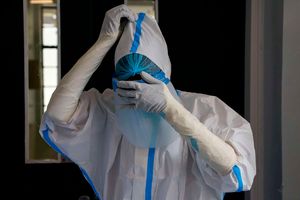
According to the regulations, the body shall be handled only by trained personnel using appropriate protective equipment, placed in a sealed, leak-resistant body bag bearing an identification reference and, where storage is necessary, kept in a secure designated area.
The regulations provide that the body shall not be washed or embalmed, or redressed for funeral purposes.
Although most cultural practices require relatives to wash or prepare the body for burial, this is not permissible for patients who have died from Ebola because of the risk of infection.
“A sealed body shall not be opened except for an examination or specimen collection authorised by law and undertaken using appropriate infection prevention and control measures,” read the regulations.
In the Democratic Republic of Congo, which is the epicentre of the Ebola outbreak, cultural practices for burial rites have been a major impediment to containing the disease.
Scholars have identified contact during preparation of the body, such as washing and rinsing by family members, as one of the reasons for the rapid spread of infections.
A team of funeral agents specialised in the burial of victims of the Ebola virus put a body in a grave at the Fing Tom cemetery in Freetown, on October 10, 2014. A UN health worker has died of Ebola in Germany as the international community prepared to hold talks on the crisis on October 14, 2014. FILE PHOTO | AFP
The regulations also provide that medical officers of health shall ensure decontamination of affected premises and equipment, safe disposal of contaminated waste and assessment and follow-up of personnel exposed during body handling or burial.
According to the regulations, the burial of a person who has died of Ebola shall be arranged by a medical officer within 24 hours at a site suitable on public health grounds.
Mr Duale, however, said relatives of the deceased will be allowed during the burial but shall be guided by the public health protocols.
“If the person is a Christian, the burial will be conducted according to their customs, if the person is a Muslim, the rules shall apply, that is what we mean by giving the person a dignified burial,” Mr Duale said.
The regulations provide that the medical officer of health shall consult with the next of kin on burial arrangements and permit family participation and religious or cultural observances inconsistent with the control measures.
According to the Safe Dignified Burial established by the World Health Organization (WHO), the inclusion of family members and following religious rites are part of essential safe burials.
In case of an identified or unclaimed body, the regulations provide that a medical officer of health shall coordinate with relevant authorities to establish identity, locate the next of kin and preserve identification records before burial.
Mr Duale called on Parliament to fast-track consideration of the regulations and facilitate their passage due to the urgent need to facilitate effective implementation of the measures necessary to prevent and control the spread of Ebola in the country.
The committee will now scrutinise the regulations as presented by the Ministry before making its recommendations to the House on whether to approve them in their current form or propose amendments.
Established under Standing Order 210, the Delegated Legislation Committee, chaired by Ainabkoi MP Samuel Chepkonga, is mandated to consider any statutory instruments submitted to the National Assembly in order to establish whether they are in accord with the provisions of the Constitution.
Gravesite of Kenya’s first Ebola patient, who travelled from the Democratic Republic of Congo through Uganda before arriving at Jomo Kenyatta International Airport in Nairobi.
Photo credit: Screen Grab
On October 7, 2026, Kenya buried its first Ebola patient at Lang'ata Cemetery under tight security, and there was no viewing or touching of the body by relatives.
However, three weeks later, the Ministry of Health announced that the country had gone 10 days without recording a new infection following interventions to contain the virus.
The government has targeted November 11 to complete the release of all remaining contacts under quarantine and surveillance.