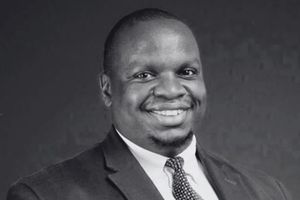
For decades, Macharia Gaitho has built a career on asking the questions those in power would rather avoid. He has built his reputation on challenging politicians, exposing uncomfortable truths and refusing to retreat when authority comes knocking.
That defiance earned the Nation Media Group editor, Daily Nation columnist and Weekly Review writer recognition from a generation increasingly vocal about power, rights and accountability.
The veteran journalist was inducted into the 2026 Katiba Roll of Honour for his decades-long defence of constitutional freedoms on Thursday, August 27, 2026.
The award, presented by the Youth Congress and its partners during a Katiba Day event in Nairobi, recognised Mr Gaitho for what organisers described as his relentless pursuit of truth, willingness to ask difficult questions and determination to hold power to account.
Speaking during the award ceremony, Gaitho recalled a time in the late 90s when expressing a political opinion in Kenya could cost one their freedom.
“A newspaper column could bring trouble to your doorstep,” the Daily Nation columnist said. “A lecture in the university could attract the attention of security agents.”
"Speaking too loudly against the government could mean being picked up, detained and, in the darkest cases, tortured."
According to him, Kenya has made significant progress since the dark days of the Nyayo era, which entailed authoritarian rule. However, it still has a long way to go. His concern was that some of the freedoms Kenyans fought for, and which were eventually entrenched in the 2010 Constitution, were once again being treated as privileges that could be restricted whenever those in power found them inconvenient.
“The freedoms Kenyans fought for and secured in the 2010 Constitution,” he said, “cannot become privileges that those in power can restrict whenever they become inconvenient.”
Mr Gaitho's credentials as a constitutional freedom defender stretch back decades before the promulgation of the 2010 Constitution.
Veteran journalist Macharia Gaitho displays his Katiba Roll of Honour award during the Youth Congress award ceremony at Alliance Française in Nairobi on August 28, 2026. Gaitho was among the individuals honoured for championing the 2010 Constitution.
Photo credit: Bonface Bogita | Nation Media Group
He is a veteran journalist who served as an editor at NMG and a seasoned writer for the ‘Weekly Review,’ one of Kenya’s most influential political publications that is now published in the Sunday Nation. The magazine became known for its in-depth analysis of Kenyan politics and social issues at a time when political dissent was heavily constrained. Mr Gaitho remains a Weekly Review contributor to date.
The day the journalist became the story
He recalled how, on July 18, 2024, just three days after his 65th birthday, he was on his way to work when his journey took an alarming turn.
“My son was driving me to work; on our way, we got blocked by unknown cars,” Gaitho recalled. “Before I knew it, I saw a Subaru, and that was when I knew we were in trouble.”
What followed was an attempted detention that quickly drew widespread public attention, with footage of the confrontation capturing the veteran journalist's encounter with authorities. His Gen Z son had just obtained his driving licence two months earlier. However, when the confrontation unfolded, he began recording the incident and ensured the footage reached the public.
“He was the one who took the videos, which were immediately shared online,” he recalled.
Veteran journalist Macharia Gaitho at the Independent Policing Oversight Authority offices after he was abducted on the morning of July 17, 2024.
Photo credit: Sila Kiplagat | Nation
The videos quickly spread across social media, bringing widespread attention to the incident.
“I was eventually released over what was described as a case of mistaken identity, which I considered a lame excuse,” he recalled.
The episode offered an extraordinary snapshot of how Kenya's struggle for civil liberties has changed.
“During my generation, resistance to State power often meant underground organising,” he said, “brave newspaper articles, whispered conversations and the personal risk of detention.
For Gaitho, the 2024 incident also marked the beginning of an unexpected bond with a generation that has embraced digital activism as a powerful tool for holding authority to account.
He noted that, unlike in the past, today’s young people have a powerful weapon in their hands, including a phone camera and an internet connection capable of turning a confrontation with authority into evidence viewed by millions within minutes.
His experience brought him closer to the generation. After the 2024 ordeal, Gaitho recalled sitting with friends at a local pub when a waitress brought him a beer he had not ordered. Curious about who had bought it, he asked the waitress, who pointed to a young woman sitting across from them.
The woman told him she had seen the police confrontation and wanted to recognise him for what he had gone through.
“She told me she had seen what I went through,” Gaitho recalled.
Veteran Journalist Macharia Gaitho at the Independent Policing Oversight Authority offices after he was abducted and released on July 17, 2024.
Photo credit: Sila Kiplagat | Nation Media Group
“From today, you are a Gen Z.”
According to Gaitho, the encounter marked the beginning of his unofficial association with the younger generation. He said he is now referred to in some circles as an “honorary Gen Z.”
“I have won quite a few awards in my life,” he said, “but to be awarded by the youth, I think, is the highlight for me.”
Raphael Obonyo, the Chief Executive Officer, said that the Constitution promised Kenyans a fundamental break from the past.
“Our 2010 Constitution expanded the Bill of Rights, strengthened the independence of institutions and explicitly protected freedoms including expression, association and peaceful assembly.” He explained.
He further added that for many Kenyans, especially those who lived through the one-party era, the 2010 Constitution represented the culmination of decades of struggle.
“Gaitho was part of that history,” he said.
Gaitho’s concern is that restrictions on constitutional freedoms can begin subtly, through rhetoric, regulation and attempts to redefine the boundaries of acceptable expression, before becoming something much harder to reverse.
“I am looking at the wider question of whether the Constitution's guarantees remain meaningful when they become inconvenient to those wielding political power,” he said.
For Gaitho, journalism has always been more than producing news.
Sixteen years after its promulgation, Kenya has built institutions and legal protections that were difficult to imagine during the era Gaitho remembers.
However, constitutional guarantees, he argued, cannot survive on paper alone.
“Constitutional guarantees require citizens willing to defend them.” He emphasised, “they require institutions willing to enforce them and a generation prepared to recognise when hard-won freedoms are being narrowed.
According to the Youth Congress, the recognition connects Kenya’s history of constitutional struggle with the voices shaping its future.
“By honouring Gaitho, we sought to preserve the stories of those who pushed for a more open society,” Obonyo said, “while inspiring young people to remain active participants in defending the country’s democratic gains.”