The cases that were laid bare in the ongoing grilling of governors by the Senate County Public Accounts Committee add to the long list of major plunder of public resources at both the national and county governments.
Counties and national institutions like Parliament, the Judiciary, the National Police Service, among others, have become dens of corruption and bribery. Some of the institutions have become notorious for demanding bribes before offering any service to the public.
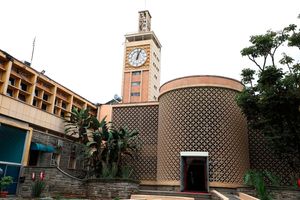
Members of Parliament, for instance, have been in the spotlight for extortion and for demanding bribes from witnesses appearing before the House, as well as before they can support a bill.
“I get a lot of complaints of some of us bullying members of the executive who appear before us, some of us constituting welfare officers in our committees, and all those kinds of things, which I discourage you from doing,” Mr Wetang’ula told the lawmakers.
“Whenever there has been a pending employment process within our public institutions, the heads of those institutions are repeatedly invited to appear before multiple committees on the same matter,” Mr Wetang’ula said.
Speaker of the National Assembly Moses Wetang'ula, makes his address during the Legislative Retreat for lawmakers in Naivasha on January 27, 2026.
Photo credit: Bonface Mwangi | Nation Media Group
“There is something happening in Parliament that must be called out. There is money being demanded from executives, from governors, from people in the executive, especially those who are for accountability.”
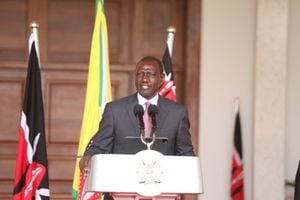
“It cannot be that committees of Parliament demand to be paid for them to write reports or look the other way,” said President Ruto.
Since 2013, county governments have been allocated revenues amounting to Sh4.67 trillion, comprising an equitable share of Sh4.14 trillion, conditional grants from the national government of Sh203.5 billion, and loans and grants from development partners of Sh324.7 billion.
But the big dream of the framers of the Constitution of decentralising services to the people has turned into devolved corruption, with billions of funds meant for development diverted to line the pockets of county officials and well-connected individuals, leading to the birth of instant village millionaires.
The counties have largely been marred by cases of corruption and cronyism, with several county governors and top officers implicated in blatant theft of public funds. Several governors, some with their children, are currently battling graft cases running into billions of shillings, with hundreds of county officials charged in court over public funds pilferage and assets worth billions acquired through embezzlement frozen.
In the financial year ending June 2024, the Auditor-General queried Sh87 billion, which in a financial year is probably 24 per cent of the money sent to counties. The verdict, in essence, means that 24 per cent of the money sent to counties is being misused.
The 4th annual devolution conference report indicated that the Ethics and Anti-Corruption Commission (EACC) was handling 200 reported cases of corruption in counties, with two governors awaiting rulings on corruption, six county secretaries, and three county speakers under investigation.
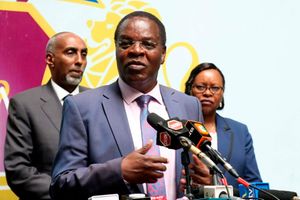
Council of Governors Chairman and Wajir County boss Ahmed Abdullahi did not respond to our queries on what the counties are doing to contain runaway corruption in the devolved units.
Despite the June 2024 anti-tax protests that were triggered by punitive tax policies, theft of pub-lic resources, and extravagant lifestyles of those in positions of power, the country continues to lose billions of shillings through major corruption scandals.
At the national level, some of the recent major theft of public resources includes the fraudulent Sh11 billion Social Health Authority (SHA) claims by hospitals, Sh6.6 billion irregular importation of edible oil and rice, the botched Sh3.7 billion tender for the supply of treated mosquito nets at the Kenya Medical Supplies Authority (Kemsa), and the Sh10 billion substandard fertiliser sold to farmers.
Other high-profile scandals include Teachers Service Commission (TSC) jobs that have been used to swindle desperate job seekers , as well as being exploited for political campaigns by be-ing dished to government-aligned Members of Parliament; Grade 10 placements where parents were forced to bribe to secure admission for their children; the Sh17 billion fuel import circus under the infamous government-to-government agreement; and the Sh9.2 billion World Bank loan in 2017 that ended up in the pockets of ghost youths, among other corruption scandals.
Top government officials, including President Ruto and his predecessor Uhuru Kenyatta, have publicly admitted cases of rampant theft of public funds.
In February 2021, Mr Kenyatta told Kenyans that at least Sh2 billion was stolen daily , in a statement that outraged the country and highlighted a nation that has resigned itself to the theft of public funds.
“Even those talking about the cost of a referendum, I don’t know where they are getting those figures from. These people are misleading the public that Sh2 billion will be spent, yet what they steal every day is more than Sh2 billion,” said Mr Kenyatta while drumming support for the botched Building Bridges Initiative (BBI).
A similar admission was made in 2016, when then Ethics and Anti-Corruption Commission Chairman Philip Kinisu announced that about Sh600 billion was lost to corruption every year. This was equivalent to Sh1.6 billion a day.
Mr Kinisu said at the time that a third of Kenya’s budget was routinely being stolen. In the 2025/26 financial year, Kenya has a Sh4.3 trillion budget, implying that Sh1.4 trillion would be lost to graft by the end of this financial year.
On April 17, 2003, then Planning and National Development Minister, Prof Anyang’ Nyong’o, told Parliament that “We know for certain that we have been losing about Sh68 billion through corruption and mismanagement. That is close to about a third of the national budget.”
Transparency International Kenya (TI-Kenya) notes that “corruption in Kenya manifests itself not as a series of isolated incidents, but as a systemic, entrenched, and multifaceted problem that permeates all levels of society and government.”
“The prevailing perception is not just that corruption exists, but that it has evolved into a sophisticated, resilient system. For the public, there has been a growing apathy and resignation towards the fight against corruption. The continuous emergence of corruption scandals, with few high-profile convictions to show for, continues to exacerbate the challenge as many offenders go unpunished, perpetuating impunity,” TI-Kenya said in a response to the Daily Nation over corruption trends in the country.
State House Spokesperson Hussein Mohammed highlighted interventions by President William Ruto’s administration in fighting graft. Mr Mohammed said Dr Ruto’s approach departed from the traditional fixation on reacting after public funds have already been stolen.
“Instead, he pledged to eliminate opportunities for corruption before they occur. Throughout the campaign, the President stated that if elected, there would be ‘no money to steal.’ Core government systems have been redesigned to eliminate cash handling, discretion, opacity, and excessive human interface — the very conditions under which corruption thrives.”
“The most far-reaching reform has been the digitisation and automation of government services. More than 23,000 services are now available on the e-Citizen platform, up from just 325 a few years ago. Cash payments historically associated with bribery, leakage, and rent-seeking have been virtually eliminated.”
He also highlighted the government’s commitment to digitise public procurement, noting that the rollout of end-to-end e-procurement marked a historic shift in public finance management, placing procurement processes on a transparent digital platform accessible to oversight institutions and open to public scrutiny.
“President Ruto has been clear that the fight against corruption is ongoing. He fully supports rigorous, evidence-based prosecutions without fear or favour. No office, no title, and no individual is above the law. At the centre of the President’s vision is the belief that integrity is patriotism in action. Corruption is not merely the theft of money; it is the theft of opportunity, hope, and national destiny.”
Health Cabinet Secretary Aden Duale recently admitted that SHA lost Sh11 billion between October 2024 and April 2025, with private hospitals submitting the bulk of fake claims.
Health Cabinet Secretary Aden Duale (left) and the SHA Headquarters in Upper Hill, Nairobi. The authority lost Sh11 billion in six months.
Photo credit: Nation Media Group
“This is when the real theft took place. We will recover this from your reimbursement since we have a very good programme running. We are in the process of recovering.
“The biggest fraud is in private facilities, though not all are culpable. It extends to referral hospitals as well, which have had claims rejected. Much of the fraud identified by the system involves the deliberate conversion of outpatient services into inpatient claims,” Mr Duale told Nation in a recent interview.
In another case, counties were made to sign multi-billion-shilling deals with the Ministry of Health for the lease of medical equipment from mystery suppliers.
Under the National Equipment Service Project (NESP), suppliers were to lease the medical equipment to county-owned facilities. The NESP is the successor to the controversial Medical Equipment Services (MES), which saw Kenyans part with Sh63 billion in deals that remain shrouded in secrecy to date.
President Ruto launched the new initiative in August 2025 at State House, where he said, “Our private sector partners will bear the cost of installation, servicing and maintenance, placing no financial burden on public health facilities.”
In January, trained teachers seeking employment with the TSC lost a staggering Sh46 million to a cartel hawking fake appointment letters purported to be official documents from the commission.
The job seekers reportedly paid between Sh400,000 and Sh700,000 each to the cartel. The scandal involved senior employees of the commission and teachers. TSC jobs have also become a tool for political competition. Instances of TSC employment letters being issued outside the official channels have become common. Government-aligned Members of Parliament have confessed to being handed employment letters at State House to give to their supporters.
Still in the education sector, parents were in January forced to part with money to secure admission for their children in Grade 10. Parents revealed how they were allegedly forced to bribe school administrators to secure admission, particularly in Tier 1 schools. Some parents were asked for as high as Sh50,000 per slot.
In the edible oil scandal, former Kenya National Trading Corporation (KNTC) Managing Director Pamela Mutua is facing graft charges linked to non-compliance with procurement laws, in which taxpayers could have lost billions of shillings in the importation and distribution of edible oil, rice and other essentials.
Former Kenya National Trading Corporation Managing Director Pamela Mutua.
Photo credit: Pool
Ms Mutua is accused of failing to report to the Public Procurement Regulatory Authority after awarding a contract to Purma Holdings Limited and starting bulk procurement without the necessary approvals. The offence was committed between November and December 2022. Other suspects in the case have since been left off the hook at the request of the Director of Public Prosecutions (DPP) last year.
The scandal started when the government resorted to import 150,000 tons of edible oil against an annual demand of 600,000 tons in an effort to bring down local prices.
In the fertiliser subsidy programme, a report by the Ethics and Anti-Corruption Commission (EACC) revealed how cartels and unscrupulous traders exploited loopholes to supply substandard fertilisers, leaving thousands of farmers exposed.
The report details how government agencies bungled oversight, creating opportunities for profiteers to infiltrate the subsidy chain, from registration of farmers to procurement, warehousing, distribution and sales. A total of 69,070 bags of NPK 10:26:10 fertiliser were supplied by a company anonymised in the report as XXX Chemicals Ltd during the March–May 2024 long rains season.
The Kenya Bureau of Standards (Kebs) later confirmed the fertiliser did not meet the declared nutrient levels. By then, 67,761 bags had already been sold to 13,633 farmers. In a separate case, 27,518 bags of fertiliser supplied by a different firm were seized by KEBS after being found to have a dangerously short shelf life.
In 2023, Kenyans were again treated to a major circus of Sh17 billion fuel import under the infamous government-to-government deal. At the centre of the circus was little-known Ann Njeri Njoroge, who claimed ownership of the Sh17 billion diesel import . Ms Njoroge was the sole owner of Anns Import and Export Enterprises Ltd. The scandal emerged following an agreement that Kenya signed with the United Arab Emirates and three oil marketers — Gulf Energy, Galana Energies and Oryx Energies.
Businesswoman Ann Njeri Njoroge at the Mombasa Law Courts on November 14, 2023.
Photo credit: Wachira Mwangi | Nation Media Group
A 2017 initiative to create jobs for 90,000 youth through a Sh9.2 billion World Bank loan also morphed into a major corruption scandal. The Kenya Youth Employment Opportunities Program (KYEOP) flopped as the government burned billions of shillings.
By the time KYEOP ended in June last year, Sh15 billion had been pumped into it, with the Sh9.2 billion loan said to have benefited 87,432 youth through business start-up grants, business development services, and business plan competitions. Some 248 youth got Sh3.6 billion grants each, 435 received Sh900,000 grants, and each of the 78,000 youth got Sh40,000.
Auditors could not trace the majority of these beneficiaries, as they were unreachable by phone or refused to give auditors directions to their premises, raising doubts that much of the money may have gone to ‘ghost beneficiaries’.
Recent audit reports have also exposed how millions allocated for county bursaries to support needy students may be vanishing into the pockets of corrupt officials. Cases of inflated beneficiary lists and duplicated admission numbers have become major avenues for stealing money meant to support needy students.
Anti-corruption legislation
TI-Kenya notes that corruption in Kenya continues to persist despite many efforts to address the vice. It observes that, despite the existence of robust anti-corruption legislation and institutions, glaring gaps continue to be witnessed, particularly in enforcement.
“Anti-corruption and other key governance and public finance oversight institutions have been largely muzzled by poor funding and executive and political interference in the execution of their functions, limiting their effectiveness in implementing anti-corruption laws.”
Further, the non-governmental organisation involved in pushing for accountability says that the majority of Kenyans fear reporting corruption due to the absence of a comprehensive whistleblower protection law.
The Kenya Bribery Index 2025, a report by the organisation, indicates that “When asked to state their most-preferred contribution to fight against corruption, 42 per cent of Kenyans interviewed in the study mentioned they would vote for good leadership.”
Homa Bay Senator Moses Kajwang'.
Photo credit: Dennis Onsongo | Nation Media Group
Senate County Public Accounts Committee chairman Moses Kajwang’ and his Public Investments and Special Funds Committee expressed frustrations at the slow pace at which investigative agencies are handling corruption cases. They cited the Ethics and Anti-Corruption Commission (EACC), Directorate of Criminal Investigations (DCI) and the Office of the Director of Public Prosecutions (ODPP) as some of the weakest links in the fight.
“Senate has no powers to prosecute. It can only make recommendations to various agencies. We have made several reports. EACC and ODPP need to up their game. In our reports, we have always recommended ODPP to take action. In the near future, we may be forced to summon ODPP and EACC to tell us why cases cannot be prosecuted and people charged,” Mr Osotsi told the Daily Nation.
Mr Kajwang said most Kenyans feel like the waste in the country is not being contained, with those involved always going scot-free.
“In certain parts of the country, there is very little to show for the billions that have been sent there. But you see people’s lives changing, particularly those who run counties. And yet the common mwananchi, actually, their lives don’t seem to change.
“So, there has always been the perception that the easiest way to become a millionaire at the grassroots is to work for the county government. We think that our partners like the EACC, DCI and ODPP can do much more.”
He added, “I think that one of the weaknesses has been that recommendations of Parliament have not been made in a timely manner, and so it has been difficult for these agencies to take seriously what Parliament is doing. I am happy that right now, my committee is considering the most recent financial statements.”
The Daily Nation reached out to the EACC for a response on the perception that they are the weakest link in the fight and on the challenges the commission faces in discharging its duties. EACC Spokesperson Stephen Karuga referred us to the commission’s annual reports and the commission’s Chief Executive Officer Abdi Mohamud’s remarks on 8 December 2025, when he launched the 2024/2025 annual report.
In the report, EACC cited the filing of 79 new cases in court seeking recovery of corruptly acquired assets. Through these cases, the commission seeks to recover illicit assets valued at approximately Sh4.8 billion.
During the same period, the Commission successfully recovered assets worth Sh3.4 billion, up from Sh2.9 billion in the previous year.
“This positive trend extends to other critical areas, including: 54 cases were finalised in court, compared to 45 in the previous year; convictions also saw a remarkable increase from 12 to 33; among others. As a preventive measure, the Commission heightened its intelligence capabilities, resulting in disruptions that averted loss of Sh16.5 billion worth of public assets,” said Mr Mohamud.
“While we celebrate these successes, it must not be lost on us that the fight is far from over. Corruption remains a dynamic and persistent threat that adapts to our defences.”