Five members of the African Brotherhood Church (ABC) who were expelled and stripped of their leadership positions have won a temporary reprieve after the High Court stopped the church from barring them from worship and other congregational activities.
Justice William Musyoka suspended the church's decisions to expel the five, ruling that questions had been raised about the fairness of the disciplinary process that led to their removal.
The ruling allows Stanley Makau, Sylvester Muthama, Peninah Mbithi, Brian Kimeu and Sylvester Kalulu to continue enjoying ordinary church membership, worship, fellowship and participation in congregational activities as their case awaits a full hearing.
The five had moved to court after being expelled following a meeting held on October 22, 2026, which they said they had attended believing it was meant to discuss ordinary pastoral matters.
They argued that they were never informed that the meeting was disciplinary or that it could result in their removal from leadership positions and expulsion from the church.
In his November 23 ruling, Justice Musyoka questioned why the five were invited to a meeting to discuss pastoral matters only for it to turn into disciplinary proceedings.
The judge noted that the invitation letters, dated October 21, did not disclose any allegations or charges against the five or indicate that the meeting could lead to their expulsion.
“The letters invited them to a meeting to discuss important pastoral matters. The letters did not make any allegations against the applicants or carry any charges against them,” the judge observed.
He further questioned whether giving the five barely half a day's notice was sufficient for a meeting that could determine their future in the church.
Facing disciplinary action
Justice Musyoka said those facing disciplinary action must be informed of the accusations against them in good time and given an opportunity to prepare and defend themselves.
He added that the fact that another church might offer similar worship services did not justify denying the five a fair hearing.
"Each church organisation has its own way of doing things, which creates a unique experience, peculiar to that church," he said.
The five told the court that they had been associated with ABC since birth and had grown within the church before rising to leadership positions.
They said their expulsion had not only stripped them of their responsibilities but also denied them access to a religious community where they had spent much of their lives.
They also questioned the circumstances surrounding their removal, claiming that they had raised concerns about the conduct of senior church officials.
Among the issues they cited were concerns involving the spouse of the second respondent, Dr Timothy Ndambuki, and the alleged political activities of the third respondent, Dr Daniel Yumbya, who they said was a candidate for the Machakos Senate seat.
Dr Yumbya is accused by the five applicants of participating in the decisions that led to their removal from church leadership and subsequent expulsion.
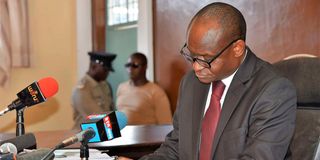
Dr Daniel Yumbya.
Photo credit: File | Nation Media Group
He signed the October 26, 2026 letters communicating their expulsion and removal from their respective leadership positions.
He is also accused by the applicants of engaging in partisan politics as a candidate for the Machakos Senate seat, contrary to Rule 1(c)(1) of the church's by-laws, which they say requires members engaging in politics to resign from the church.
The church, however, maintained that the five had been involved in activities intended to cause divisions within the institution.
Through its response, ABC said its 2026 Constitution provided a procedure for handling members accused of misconduct, including appearing before a Pastoral Care Committee.
The church argued that the five had been given an opportunity to defend themselves during the October 22 meeting but chose not to do so.
It further said the Governing Council met on October 26 and approved recommendations to expel them and remove them from leadership positions.
Internal religious matters
The church also argued that the dispute concerned internal religious matters and that the five should have pursued the available internal appeal process instead of going to court.
It maintained that allowing the five back into the church would threaten its stability and could lead to its disintegration.
But Justice Musyoka said the dispute raised serious questions about the rights of the expelled members to worship and associate with other congregants.
He observed that excluding them from the church denied them an opportunity to continue practising their faith in the religious environment they had chosen.
The judge also rejected the argument that the five could simply join other churches or establish their own congregations.
He said the loss of the particular religious experience offered by a church could not easily be measured or compensated through money.
The court further observed that excluding members from a place of worship raised wider public-interest concerns, particularly where questions remained about whether proper procedures had been followed.
The judge said the dispute should not send the message that minority voices could be silenced before the court had determined whether the process leading to their expulsion was fair.
He declined to make a final determination on whether the church's internal appeal process should first have been exhausted, saying the issue would be considered during the full hearing.
The judge also questioned the church's argument that the five were not legitimate members, noting that the decision to expel them was itself based on their membership.
The substantive case will be decided on January 29, 2027.