The High Court in Mombasa has blocked three organisations supporting the Lesbian, Gay, Bisexual, Transgender and Queer (LGBTQ) community in Kenya from joining a petition filed against alleged incitement to violence targeting persons identifying as members of the group.
The court noted that the application to join the dispute was not filed by the petitioner in the case but by a person who, for all intents and purposes, is a stranger to the matter before the court.
“While it is only the petitioner who could possibly apply for an order to introduce another person or entity into the proceedings as a petitioner, it was always open to the proposed interested parties to file their own application to be joined to the suit as interested parties,” the court said.
In a ruling delivered on February 20, the court argued that although the petitioner could apply to introduce another party into the proceedings, nothing prevented the proposed parties from taking the initiative and moving the court appropriately.
The court observed that none of the representatives of the parties sought to be introduced as the petitioner or as interested parties could purport to swear an affidavit in support of an application filed by the petitioner.
“To the extent they did so, the application is incompetent and fatally defective. For this reason, the application is hereby struck out,” the court said.
In this case, anti-LGBTQ activists and Nyali Member of Parliament Mohamed Ali have been accused of inciting members of the public to carry out extra-judicial killings or harm against persons identifying as members of the community.
Nyali MP Mohammed Ali.
Photo credit: File | Nation Media Group
In 2024, the High Court in Mombasa issued temporary orders barring incitement against the LGBTQ community and also restrained anti-LGBTQ activists from calling for the expulsion of LGBTQ-identifying persons from the country or the closure of organisations serving the community.
In its petition, the Centre for Minority Rights and Strategic Litigation (CMRSL), alongside Mr JM, who is an advocate for the health and human rights of LGBTQ persons, sex workers and people living with HIV, is also seeking a declaration that LGBTQ citizens are entitled to protection under the Constitution, their sexual or gender orientation notwithstanding.
The petitioners are also seeking an order prohibiting the anti-LGBTQ activists and Mr Ali from calling for extra-judicial killings or harm against persons identifying as members of the community.
They further seek a declaration that Mr Salim Said Athman Ahmed, the anti-LGBTQ movement and Mr Ali are in breach of the Constitution in relation to the anti-LGBTQ demonstrations. The case stems from a demonstration staged in Mombasa that allegedly called for violence against the group, their expulsion from the country and the closure of organisations offering services to or working for the welfare of the LGBTQ community.
In September 2024, an application was made seeking to enjoin three organisations as co-petitioners and as interested parties, respectively.
They include the Generation of Holistic Partners Network (GHPN), the Gay and Lesbian Coalition of Kenya and the Kenya Legal and Ethical Issues Network on HIV and AIDS (KELIN).
The application is supported by an affidavit sworn by Mr Ishmael Omumbwa Ondunyi, who describes himself as the co-chairman of GHPN and the Executive Director of PEMA Kenya, a constituent member of another party, also proposed to be included as the fourth interested party.
Mr Ondunyi describes the proposed GHPN as a Gay, Bisexual and other Men who have Sex with Men (GBMSM) HIV prevention network formed in 2014 and comprising 14 organisations across Kenya, with the main objective of reducing the incidence and impact of HIV.
The network was registered in 2023. Among its objectives, he states, is to monitor, reduce and combat stigma and discrimination affecting its members, which has impeded their access to healthcare services, including anti-retroviral drugs, HIV/AIDS counselling and related treatment.
The Gay and Lesbian Coalition of Kenya is described as an umbrella body of LGBTIQ+ led and serving organisations advocating for the rights, safety and wellbeing of LGBTQI+ persons in Kenya.
KELIN is described as a non-partisan organisation working to protect and promote health-related human rights, with particular focus on ensuring that persons living with HIV attain the highest attainable standard of health.
In his affidavit, Mr Ondunyi further avers that since March 2023, the respondents have organised what they termed “Anti-LGBTIQ+ demonstrations” across the country, allegedly inciting violence against members of the community and LGBTQ-led organisations.
He claims that as a result, some organisations were forced to close down. He cites incidents in which Mvita Clinic and HAPA Kenya clinics in Mombasa and Voi were allegedly raided and forcibly shut, disrupting access to essential health services such as anti-retroviral medication and HIV counselling.
According to the affidavit, the coalition intends to demonstrate how the alleged anti-LGBTIQ+ actions have directly affected the dignity, daily lives and fundamental rights of marginalised persons, exacerbating health risks, mental health challenges and social exclusion.
KELIN, on its part, argues that it has extensive experience advocating for the health rights of vulnerable and marginalised communities, particularly persons living with HIV and TB, and is therefore well placed to assist the court in understanding the broader public health implications of discrimination, stigma and anti-LGBTIQ+ actions on the right to health.
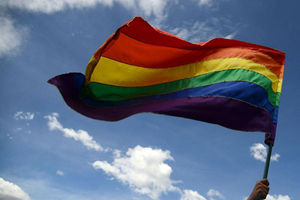
The LGBTQ flag.
Photo credit: Raul Arboleda | AFP
However, Mr Salim and Mr Ahmed, the respondents in the case, opposed the application, noting that there is no proof that the deponent of the affidavit filed in support of the application was duly authorised to swear the affidavit on behalf of the proposed petitioner.
“The affidavit has not established any nexus between the allegations and complaints contained in the petition and those made by the proposed petitioner and interested parties,” they said.
According to them, the demonstrations referred to were stopped even before the issuance of a court order and, in any event, had no adverse actions or consequences.
They stated that the demonstrations had been peaceful, with no incitement to violence of any kind, and that the protesters were merely exercising their constitutionally protected rights in a lawful manner.
“The allegations by the applicant are mere generalised allegations, not specifically defined or explained and are not supported by any form of proof,” they said.
The court agreed with the respondents, noting that the request to join the case should have been made by the petitioner and not by a stranger purportedly acting on behalf of the petitioner.
“Without the petitioner's affidavit, no application or proper application can be said to be before the court,” the court noted.
The judge further observed that it was always open to the proposed interested parties to file their own application to be joined to the suit as interested parties. While the petitioner could apply to introduce them into the proceedings, nothing prevented them from taking the initiative and moving the court appropriately.
The ruling means that the proposed parties have been locked out of the petition unless they choose to move the court appropriately to participate in the proceedings.