For Ibrahim Hussein, the journey to Nairobi’s historic award of the 2029 World Athletics Championships hosting rights was much like the marathons that defined his career -- long, demanding and requiring patience until the end.
Hussein, who was the chairman of the Nairobi 2029 World Athletics Championships Bid, was in hospital in Eldoret when World Athletics announced on Tuesday that Kenya had won the right to stage the championships, becoming the first African host in the history of the competition.
For Hussein, 67, the victory was the culmination of three years of work, following the disappointment of Kenya’s unsuccessful bid for the 2025 championships.
“The process was tedious, and it has been three tough years since we were appointed to work on the bid and I’m excited that we finally got it right,” the former Boston and New York Marathon champion said as he recuperated from a back procedure.
“We bid before and we lost narrowly. That was due to a lack of financial muscle and stadium, but with Afcon coming in and the facilities being upgraded and being modernized, we knew we had a better chance this time,” he said.
Kenya’s 2025 bid was beaten by Tokyo, with World Athletics citing the Japanese capital’s stronger facilities and overall readiness.
Chairman of the Nairobi 2029 World Athletics Championships Bid Ibrahim Hussein.
Photo credit: Nation
The experience, however, became an important lesson for the team when Kenya returned to the drawing board for the 2029 and 2031 championships.
This time, Hussein said, the bid was built around a different proposition, one backed by the Government, improving facilities and a more coordinated team that also included the veteran athletes.
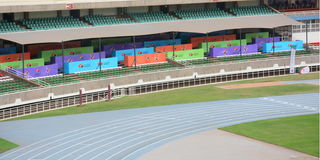
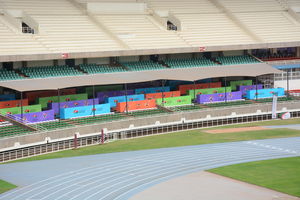
The refurbishment of Moi International Sports Centre, Kasarani, and Nyayo Stadium as part of preparations for the 2027 Africa Cup of Nations, coupled with a Sh25 billion government commitment, strengthened Nairobi’s case.
“We did it ourselves and the team was vibrant and we are glad we finally won the right to host the 2029 World Athletics Championships. I want to thank the President of Kenya, William Ruto, for the support because without the government guarantee, this would not have been possible.”
He also paid tribute to World Athletics president Sebastian Coe for his support for Kenya’s ambition to bring the sport’s biggest global event to Africa.
“I also want to thank Sebastian Coe for believing in Kenya, for believing that this global event can be hosted in Kenya and Africa as a whole has benefitted from this,” he said.
Behind the bid, Hussein said, was a team that worked largely away from the public spotlight because of World Athletics’ strict bidding regulations.
Athletics Kenya President Jack Tuwei (left) and part of the Kenyan delegation celebrate after Nairobi was named host of the 2029 World Athletics Championships in Budapest, Hungary on Tuesday.
Photo credit: Pool
“There were rules set, and we had to follow them. I was able to contain my group and follow the rules laid down by World Athletics; that’s why we didn’t talk much in the press,” he said.
The process involved Athletics Kenya, the Ministry of Youth Affairs, Creative Economy and Sports and the Nairobi County Government, with each playing a role in putting together the final proposal.
“A lot was happening behind the scenes. Teams from AK, the Sports Ministry, the County Government had to work together so that the process could meet all the requirements,” Hussein said.
The bid also used the voices of Kenya’s athletics legends. Videos featuring Olympic champions Kipchoge Keino, Charles Asati and Amos Biwott were among the elements presented to World Athletics.
“It was teamwork, and I must commend some of the media team that also helped in producing the video that backed our bid. This is a big win for Africa,” said Hussein.
The former accomplished road runner was particularly touched by the support from Ethiopia, Kenya’s traditional athletics rival, with legend Haile Gebrselassie and Great Ethiopian Run director Dagmawit Amare publicly backing Nairobi’s bid from Addis Ababa.
“Whenever we had queries, they would give all the countries guidance. They would ask tough questions. After submission, they came for a site visit, which they saw was true. Things we had not achieved, we told them it would be done,” he added.
The final decision came after Nairobi went head-to-head with three European bids: London, Rome and Munich, all cities with significant experience hosting major athletics championships.
“The other bids were very strong,” Hussein said.