The government’s decision in March to introduce cricket in secondary school games starting this year is music to the ears of the Cricket Kenya (CK) officials.
This is because, since 2023, CK has been pushing for the inclusion of cricket in the secondary school games calendar, with the federation’s officials stressing that it would go a long way in raising the standards of the sport in the country.
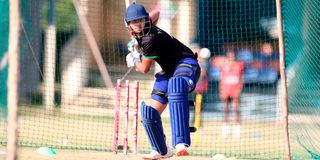
Ahead of the pilot phase of cricket competitions in the secondary school games at the national level in Kiambu County later this month, CK has moved to take the sport across the country by contracting 20 elite coaches to lead the programme.
But only six boys’ and six girls’ secondary schools have been selected by CK to feature in the pilot phase of the cricket competition at this year’s secondary schools' national games. Among the 20 elite coaches enlisted by CK to spearhead the spread of the game across the country are the Kenya national men’s under-19 cricket coach Josphat Irungu and former national team players David Asiji and Peter Ongondo.
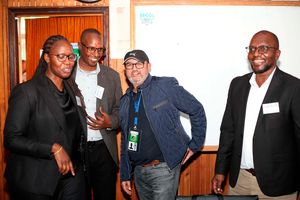
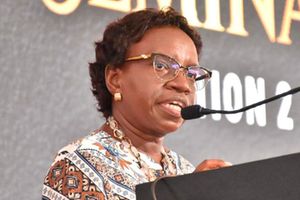
Cricket Kenya Chairman elect Bhavesh Gohil (in cap) and Vice Chairperson Pearlyne Omamo (left) being congratulated by International Cricket Council Regional Manager-Africa Justine Ligyalingi and Stephen Masale, Rwanda Cricket chairman, and ICC Director Development Africa after they where elected on April 19, 2026 at Ruaraka Sports Club.
Photo credit: Chris Omollo | Nation Media Group
“Building a cricketer takes time. If we are consistent with our programme, give it five years. You will start seeing some talents coming through,” Cricket Kenya’s Development Director Thomas Odoyo said.
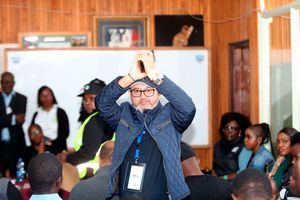
He spoke on Wednesday when a section of the 20 elite coaches received their kits for the exercise from CK chairman Bhavesh Gohil.
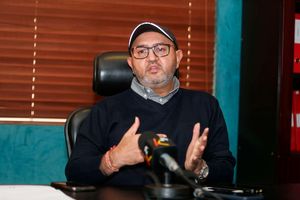
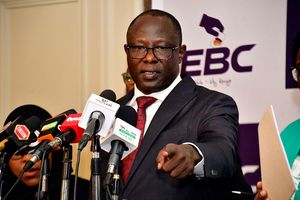
Cricket Kenya chairman Bhavesh Gohil.
Photo credit: Chris Omollo | Nation Media Group
Due to poor management and persistent leadership wrangles at CK, cricket development in the country has witnessed a steady decline, leading to persistent poor performance by the national teams.
From a high of reaching the semi-finals of the 2003 ICC Cricket World Cup in the longer version of the game, Kenya national men’s senior cricket team has experienced a drastic decline, losing its status as a powerhouse not only in Africa but also in the East Africa region. Noting that CK plans to increase the number of elite coaches overseeing the initiative when more resources become available, Odoyo said the 20 coaches will be in charge of various regions across the country.
Because Nairobi County hosts most cricket activities in the county, to start, five elite coaches will be stationed there. The initiative will see the elite coaches introduce the sports to at least six schools in every county.
Cricket Kenya’s Development Director Thomas Odoyo.
Photo credit: Chris Omollo | Nation Media Group
At least 20 interested teachers in each county will be trained in the fundamentals of the game and will, in turn, introduce the sport to learners in their respective schools.
According to the CK’s Development Director, the students will compete in a modified version of cricket played with a tennis ball and consisting of just five or six overs. Each team will comprise just six players.
“It (competing in five or six overs) is enough to get enough competition and generate enough interest for students to take it up to the next level,” Odoyo noted.
He added that due to the limited time available within the school timetable, the training in schools will mostly happen during the PE lessons.
After two or three months of training, the six schools in every county will meet for a mini-cricket tournament where promising talents will be selected for further nurturing by the federation.
Odoyo explained that the students who have been selected from the mini-cricket tournament will be introduced to softball and hardball cricket at the cricket development centres, which CK plans to establish across the country. Kakamega’s Masinde Muliro University of Science and Technology, Homa Bay High School, Nakuru Athletic Club and Kisaju in Kajiado County, Odoyo revealed, are some of the places CK has earmarked as the development centres.
In Nairobi, he said, the federation is in talks with several cricket clubs and schools to operate as the development centres.
“Those teachers are assisting us to develop the game in schools, then our coaches act as technical people,” he said.
“Once you pick a talent, you send them to the closest hub where the elite coaches will be in charge.”
Apart from the limited time available within the school timetable, he singled out a lack of resources as the other challenge the programme is facing. The federation provides the schools with sports equipment, which includes bats and balls.
“We have now put the gear in developing Kenya’s cricket,” he said.