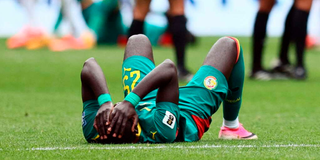
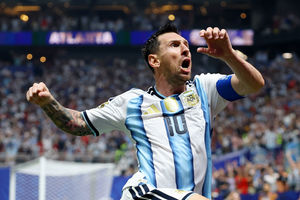
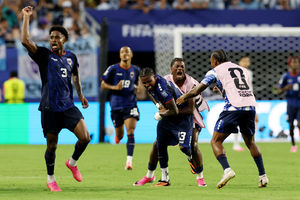
Huge excitement swept across the continent when nine of Africa’s ten teams reached the knockout stages of the 2026 Fifa World Cup.
Tunisia was the only team not to progress, having lost all their group stage matches. They lost 1–5 to Sweden, 0–4 to Japan, and 1–3 to the Netherlands as they crashed out of the tournament.
As the tournament reaches the final eight today, Morocco are the only African team left, with a quarter-final match against France today.
According to the latest Fifa rankings, France are the top team in the world. Morocco is the top rated team in Africa, and sixth in the world, according to Fifa.
Cape Verde's Vozinha shakes hands with Argentina's Lionel Messi after their Fifa World Cup 2026 Round of 32 match at Miami Stadium on July 3, 2026.
DR Congo, Senegal, Ivory Coast, Egypt, South Africa, Cape Verde, Algeria and Ghana all saw their campaigns end in the most agonising fashion.
This was not necessarily because the teams were outplayed, but because they missed crucial opportunities when it mattered most.
While there have been claims of poor refereeing, the pattern of how African teams were eliminated was strikingly similar: lapses in concentration, lost leads, and decisive late goals.
Fifa-accredited performance specialist Faisal Chibsah believes that African teams have made clear progress in their preparation.
"African teams have made real progress in their preparation. We start games stronger and more organised than ever. The next step should be mastering in-game management,” he said.
At the Round of 32 stage, South Africa were well matched with Canada for long periods, but conceded a heartbreaking winner in the 92nd minute, bringing an end to the 1996 African champions’ campaign.
Senegal suffered an even more dramatic collapse. Goals from Habib Diarra and Ismaila Sarr had given the Lions of Teranga a comfortable 2–0 lead against Belgium, but they then allowed the Europeans to score twice in the final five minutes and force extra time.
Then, another lapse at the end of the match proved costly, with Senegal conceding a penalty in the 120th minute and bowing out of the tournament. Even then, the penalty was highly controversial, with many feeling it was unfairly awarded.
As Chibsah explains, elite football increasingly demands constant tactical adjustments.
“Modern football changes every minute, and the best teams adapt in those moments,” he said.
The Ivory Coast also paid the price for their vulnerability towards the end of games. After losing to Germany in the group stage through a goal in stoppage time, the Elephants were punished again late in the knockout rounds when Erling Haaland's goal in the 86th minute sent the 2023 African champions home, as Norway progressed.
DR Congo led England for more than an hour before conceding twice in the final 15 minutes of their game.
Meanwhile, Cape Verde may have exceeded expectations by forcing the world champions, Argentina, into extra time, but their performance also showed just how close they were to producing one of the tournament’s biggest shocks before eventually losing 3–2.
For Chibsah, these defeats highlight the fine margins between competitive teams and genuine title contenders.
“Late goals and lost leads often come down to focus, fatigue, and squad depth. Sustaining quality and concentration for 90-plus minutes is the true test,” he noted. “Preparation gets you to the pitch; adaptability keeps you competitive until the final whistle.”
The next challenge is clear: African teams must learn not only how to compete, but also how to manage decisive moments, protect their lead and see the job through to the end.
Egyptian players remonstrate with referee Francois Letexier after Enzo Fernandez scored Argentina's their third goal in their Fifa World Cup 2026 Round of 16 match at Atlanta Stadium in Georgia on July 7, 2026.
Photo credit: Reuters
At the World Cup, playing well can take you far, but it is concentration, adaptability and game management that keep you there until the very end.
On Tuesday, Egypt were 2–0 up with 11 minutes left of their round of 16 clash against the holders, Argentina. They were agonisingly close to one of the greatest World Cup upsets, but then conceded three goals in the closing stages before they were eliminated.
Egypt coach Hossam Hassan however blamed refereeing errors for his country's heartbreaking elimination from the tournament.
"I'm going home and won't be watching any more games from the tournament," Hassan told reporters at a press conference after the match.
"What happened to us wasn't fair. We should have had a penalty, a goal was disallowed, and I don't know why it was disallowed."