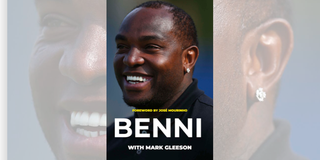
Harambee Stars coach Benni McCarthy shares his journey from the perilous Cape Flats to his childhood club, Manchester United, in his new autobiography, Benni: From Gangland to Greatness .
The book, co-authored with veteran South African journalist Mark Gleeson, reads much like he played, direct, emotional and unafraid of confrontation.
Best known as Bafana Bafana’s all-time leading scorer and a Uefa Champions League winner, McCarthy's book offers an unfiltered account of a career that spanned township pitches and European cathedrals of football. The memoir moves fluidly between triumph and turmoil, revisiting defining moments while settling a few old scores.
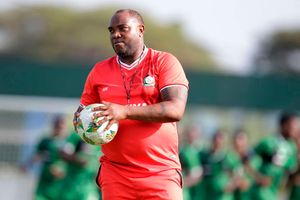
Retired South African player Benni McCarthy, who is also the head coach of the Kenyan national team during the interview.
Photo credit: Peter Dube | Nation Media Group
McCarthy is brutally honest about his experience at the 1998 Fifa World Cup, describing it as a “miserable experience” under coach Philippe Troussier.
“The whole tournament in France was largely a miserable experience for me when it was supposed to be a career highlight… I fantasised about punching Troussier. Mark Fish nearly did after a scarcely believable incident in training.”
The story of teammate Mark Fish standing up to the coach highlights the tension at camp and establishes the tone for a tournament that could have been historic but ended up leaving emotional scars. Yet France also delivered one of McCarthy’s most iconic moments, scoring South Africa’s first-ever World Cup finals goal. The night before that match, nerves kept him awake.
“I couldn’t sleep the night before, so I kept playing my song ‘Shibobo’, which I had recorded with TKZee. I was singing along to ‘Benni’s in the 18 area,” he writes.
The goal, immortalised by the hit single, cemented his place in national folklore.
Culture clashes, controversy
McCarthy revisits the 1998 Africa Cup of Nations held in Burkina Faso, recalling his discomfort with the use of “muti” within the team camp.
“We hadn’t had any of that muti nonsense before… For the game, our socks had been soaked in some substance, and we had to wear them like that. To me, it was such an unnecessary distraction,” he writes.
His reflections are not dismissive of tradition, but they underscore his belief in preparation over superstition, a recurring theme in the book.
“I was hated for a while by many for taking this stand… I was no villain, rather a victim.”
The emotional peak of the memoir centres on his omission from the 2010 Fifa World Cup squad on home soil.
“I felt it was such a cowardly thing to do… I could live with those explanations… but saying that I had been womanising?”
It’s a passage written not with bitterness, but with lingering hurt.
One of the book’s strongest chapters details his relationship with José Mourinho, who pens the foreword. McCarthy paints Mourinho as meticulous and deeply invested.
“He was asking me an avalanche of questions… At first, I was suspicious… Is he a policeman? Did I do something wrong?”
The contrast with previous coaching experiences is stark, and McCarthy credits Mourinho’s engagement as transformative. Later, during his coaching stint at Manchester United, he found an unexpected ally in Cristiano Ronaldo.
“Cristiano Ronaldo was happy to see me, and that helped me immensely… If ‘Ronnie’ was happy to see this guy and approved of him, then he must be okay.”
The cover of page of Benni McCarthy's memoir. The book was was launched in Johannesburg on March 4, 2026.
But not all Manchester memories are warm. He recalls a falling-out with his fellow countryman Quinton Fortune after a perceived snub.
“I lost a lot of love for Manchester United… It left me bemused that someone I’d known since I was 10 didn’t want to exchange pleasantries.”
McCarthy’s competitive edge remains evident in his recollection of remarks by Kaizer Chiefs football administrator Bobby Motaung, which pushed him toward the club’s sworn rivals, Orlando Pirates.
“Chiefs sign big fish, not fish that cannot swim anymore… If you want to be disrespectful, then I’ll show you who cannot swim anymore.”
The coaching chapters are equally candid, particularly his dismissal at AmaZulu FC.
“It was a crushing blow… devastating. But it also came with a sense of relief because my working conditions had become strained.”
“Mandela joked it was only because he was with Benni McCarthy… I felt like I was his son… I still get goosebumps when I think about it”
Benni also touches on his arrival to take charge of Harambee Stars, and how Kenya Football Federation vice president McDonald Mariga persuaded him to spearhead the project.
Benni McCarthy when he was unveiled as new Harambee Stars coach at Serena Hotel in Nairobi on March 3, 2025.
Photo credit: Chris Omollo | Nation Media Group
“I felt like a pop star all over again when I arrived in Nairobi to take over as Kenya’s coach in February 2025. It was quite a frenzied welcome and an elaborate unveiling ceremony, which was broadcast not only around Kenya but across the whole continent.”
He admits that Kenya hosting the 2027 Afcon alongside Uganda and Tanzania was a major factor in his decision to accept the job.
“But for the 2027 Cup of Nations, I want to have a team that doesn't just tick boxes, I want a competitive team.”
In these pages, the bravado softens. The superstar becomes a young man humbled in the presence of greatness.
Benni: From Gangland to Greatness is not a sanitised sports memoir. It is bold, reflective and unapologetically honest. McCarthy does not shy away from his flaws, nor does he dilute his grievances.
What emerges is a portrait of a former footballer driven as much by pride as by passion, a man who thrived on proving doubters wrong and who now uses the written word to reclaim his narrative.