The High Court has allowed the Ethics and Anti-Corruption Commission (EACC) to press ahead with a suit seeking to recover more than Sh220 million allegedly lost in the controversial procurement of sports facilities for the 2018 African Nations Championship (CHAN).
The ruling is a blow to Gregori International, the contractor at the centre of the dispute, and five others who had asked the Anti-Corruption and Economic Crimes Court to throw out the case before it could be heard.
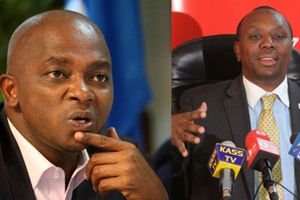
The suit, filed in 2025, names former Sports Principal Secretary Kirimi Peter Kaberia, former Football Kenya Federation (FKF) president Nicholas Mwendwa, John Ruga, Haron Komen Chebet, Isaac Okoth Omogi and contractor Gregori International as defendants.
The Principal Secretary, State Department for Sports, is listed as an interested party.
In a ruling delivered on July 31 2026, Justice Rose Ougo dismissed an application by Gregori International seeking to strike out the case before trial, ruling that the allegations of corruption and loss of public funds deserve a full hearing.
At the centre of the dispute is 2017-2018 tender for the design, rehabilitation and installation of sports facilities ahead of CHAN 2018.
EACC says its investigations found that Gregori International was not registered or accredited by the National Construction Authority when it won the Sh995 million tender and only became registered after the contract had been signed. The commission claims the company colluded with public officials to manipulate the procurement process, leading to the unlawful payment of Sh220.4 million in public funds.
The contractor sought to block the case arguing that it was filed too late and that the issues had already been determined in an earlier commercial dispute in which it secured a partial judgment against the Ministry of Sports.
Other defendants backed the application, saying the anti-graft agency was attempting to open the same dispute afresh.
However, Justice Ougo held that EACC’s case is fundamentally different because it seeks to recover public money allegedly lost through corruption rather than determine contractual rights.
The judge ruled that allegations of fraudulent procurement, abuse of office and unlawful payments were never determined in the commercial proceedings and should be tested through evidence at trial.
FKF President Nick Mwendwa (right) address a press conference flanked by Sports PS Kirimi Kaberia in Nairobi on September 25, 2017.
Photo credit: Chris Omollo | Nation Media Group
The judge dismissed their application, saying the case raises weighty allegations of corruption and misuse of public funds that deserve a full hearing rather than being struck out at a preliminary stage.
EACC claims investigations uncovered widespread irregularities in the award of the Sh995 million contract.
The commission alleges Gregori International was not registered or accredited by the National Construction Authority when it won the tender and only became registered after the contract had already been signed.
The commission further alleges that public officials conspired with the company to manipulate the procurement process, resulting in the unlawful payment of Sh220.4 million from public coffers. It wants the money recovered through the civil suit.
Gregori International fought back, arguing that the case had been filed too late and should never have been brought because similar issues had already been determined in an earlier commercial dispute involving the Ministry of Sports.
The company maintained that the dispute had already been settled in a commercial case where it obtained a partial judgment against the government after accusing the ministry of breaching the contract.
Allegations of corruption
The commission argued that while the commercial case focused on contractual rights, its own case seeks to recover public money allegedly lost through corruption and fraudulent procurement.
It also maintained that, although it participated in the earlier proceedings as an interested party, it could not pursue an independent recovery claim in that case.
Justice Ougo agreed that the anti-graft agency was exercising its constitutional mandate to investigate corruption and recover public assets.
“The proceedings before court are not based on an ordinary contractual dispute,” the judge said, adding that they concern allegations that public property was lost through corruption.
The judge held that whether the suit falls within the exceptions provided under the law cannot be decided before evidence is heard.
“The court can’t determine at this stage whether the claim was time-barred without hearing evidence on the alleged corrupt procurement, investigations and recovery process,” the judge said.
On the argument that the matter had already been decided elsewhere, the court ruled that the commercial dispute and the anti-corruption case deal with different questions.
While the commercial case centred on alleged breach of contract, the present suit raises allegations of corruption, abuse of office, unlawful payments and fraudulent procurement that were never determined in the earlier proceedings.
The judge further held that EACC cannot be treated as the Attorney General simply because both are public institutions.
According to the ruling, the Attorney General represents the government in civil litigation while EACC exercises an independent constitutional mandate to investigate corruption and recover public assets.
Justice Ougo also dismissed claims that EACC had abused the court process by filing the recovery suit after Gregori International had obtained a partial judgment in the commercial case.
The judge noted that allegations of corruption involving public procurement raise significant public interest issues that should be determined through evidence at trial.
“The present suit cannot be described as hopeless,” the court ruled, saying the allegations require full interrogation,” the judge ruled.