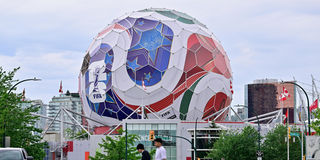
When the first Fifa World Cup was held in Uruguay in 1930, featuring 13 teams – seven from South America, four from Europe, and two from North America, nobody would have imagined that 96 years later the tournament would become so colossal.
Fifa has touted the 2026 World Cup as the biggest and most inclusive. The football showpiece will feature a record 48 teams playing in 104 matches held in 16 venues across three countries, USA, Canada and Mexico. Plenty has been said about USA being an inappropriate host because of the country’s current immigration and travel policies that have made it difficult for fans to travel to “the land of the free and home of the brave”, directly contradicting Fifa’s claim of the tournament’s inclusivity. Stories of players, journalists, a referee and fans being denied entry to the US have dominated headlines.
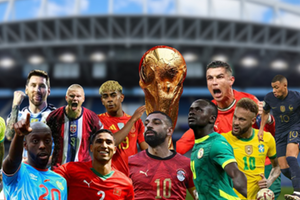
And despite the furore over the astronomically high entry fees, about 6.5 million tickets are expected to be sold, making this tournament the most attended in history, surpassing the 3.5 million record registered in the 1994 edition that was, incidentally, hosted by USA. Yes, this is jogo bonito – the beautiful game, and excitement is hitting fever pitch as 48 nations, including a record 10 from Africa, begin their campaign to become champions of the world.
Because of the expanded format, teams have been placed in 12 groups of four. The top two teams in each group, together with the six best third-placed nations, will advance to the newly introduced round of 32 that will kick off the pressure cooker knock-out phase. The eventual champion will play eight matches over 39 days. Famous Germany-based octopus Paul, now deceased, correctly predicted all seven matches of Germany’s national team, and Spain’s victory in the 2010 Fifa World Cup.
Now, Opta supercomputer projections have Spain as the most likely to be crowned champions in 2026 at 16.1 percent, followed closely by France (13 per cent), England (11.2 per cent) and Argentina (10.4 per cent). Reigning European champions Spain are ranked second in the world by Fifa and have easily the most exciting teenage attacker in world football, Lamine Yamal, midfield master, 2024 Ballon d’Or winner Rodri assisted by the dynamic Pedri.
France are the top ranked team by Fifa in the world, and most consistent in recent years with two World Cup final appearances, winning the tournament in 2018. Les Bleus possess perhaps one of the most potent looking attack line that has Ousmane Dembele, Desire Doue, Jean-Philippe Mateta, Michael Olise, Bradley Barcola and World Cup 2022 top scorer and 2018 best player Kylian Mbappe. Their coach, Didier Deschamps, will be looking to become only the second person (as a player or coach) in history to win three World Cup titles after Brazilian great Pele.
England had a flawless qualifying campaign under Thomas Tuchel and have talismanic goal scorer Harry Kane hungry for global glory. The English have left nothing to chance and have been preparing for the anticipated brutally high temperatures in the tournament.
Argentina, led by an aging Lionel Messi, will be hoping to become only the third country in history to retain their World Cup crown after Brazil 1958-62 and Italy 1934-1938.
Only eight teams have won the World Cup before and record champions Brazil, who last triumphed 24 years ago, will feel they are destined for a record extending sixth title led by the impeccable Carlos Ancelloti and two of the world’s best forwards – Vinicius Junior and Raphinha. Interestingly, Opta has predicted a 35.9 per cent chance of a new country being crowned champions for the first time. Championship trophy-shy Portugal, the Netherlands and Belgium will be heartened by this. Norway and the world’s best striker, Erling Haaland, may fancy their chances of going deep in the tournament.
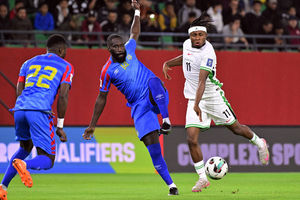
Four years ago, Africa celebrated placing a nation in the semi-finals for the first time but even with 10 nations in the Americas, a repeat looks unlikely. Africa’s top-ranked teams Morocco and Senegal must first worry how they will get out of their respective groups.
There will be 27 straight days of nonstop football action as teams jostle for supremacy before the first rest day on July 8. They will then plunge into the quarterfinals and beyond. What is certain, as history shows us, is that the champions will almost certainly come from Europe or South America.