Three matches. Zero wins. Seven goals conceded. No goal scored. Those numbers tell only part of the Harambee Starlets' difficult Women's Africa Cup of Nations (Wafcon) campaign.
The team’s disappointing showing has left Kenyan football lovers asking a difficult question: Were the Starlets simply outclassed by Africa's elite, or were they set up to fail long before they kicked a ball in Morocco?
While head coach Beldine Odemba points to lessons in preparation, tactics and international exposure, Football Kenya Federation (FKF) president Hussein Mohammed says rebuilding a competitive national team takes years of sustained investment. But the Women's Representative at FKF’s National Executive Council, Kerubo Momanyi, argues the team never received the technical preparation required to compete, and that the federation prioritised logistics over football development. Together, their accounts paint a picture of a campaign whose shortcomings began long before the opening whistle.
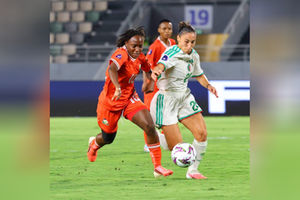
Harambe Starlets forward Marion Serenge (left) and Algeria midfielder Amira Ould tussle for the ball during Group A match of the 2026 Women Africa Cup of Nations played at Olympic Stadium in Rabat on August 3, 2026.
Photo credit: Pool
“It is very unfair to give people beef and expect them to make a fish stew,” Kerubo told Nation Sport yesterday, revealing that the much-publicised training camp in France did not serve its original purpose. “There was no need to take girls to France if they were not going to get any technical support. We keep setting our people up for failure because we don't give them adequate resources to prepare. Then we expect them to give us results,” she said.
As part of their preparations, Starlets travelled to France on July 15 where they were to enter a high performance camp in Miramas. There, they were to play friendlies against Olympique Lyon and Marseille, and to receive technical collaboration with the French Federation, as well as exposure to scouts.
Nation Sport can now reveal that as soon as the team reached France, there was a base switch to Aix-en-Provence, about 50 kilometres from Miramas, where the team eventually settled for a week. The switch was necessitated by the fact that the federation could not access the facilities in Miramas as had been anticipated. The change in venues eventually messed up the whole programme for Starlets, as none of the planned friendly matches materialised.
On her part, Beldine described the campaign as a painful but necessary learning experience. And although the team benefited from participating in the Fifa Women's Series earlier this year and later faced Zambia in preparation, Odemba says more quality friendlies before the tournament could have significantly improved Kenya's competitiveness.
"If we were able to engage in friendlies before the tournament, it would have made a bigger difference," she said. "We were hoping that we would do better. There have been a lot of lessons, from preparation to tactical approaches, to playing against different qualities of players and understanding the level of this competition.”
Even before the Starlets arrived in France for their pre-tournament camp, preparations had been overshadowed by uncertainty. Days before departure, the players staged a go-slow at the Football Kenya Federation secretariat over delayed allowances, refusing to travel until they received assurances that the payments would be honoured. Although the impasse was eventually resolved, the episode exposed the administrative distractions surrounding the team and fuelled questions about whether Kenya had created the stable, high-performance environment needed to compete with Africa's best.
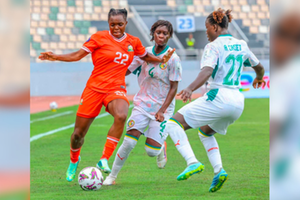
Starlets were put in a tough Group A together with hosts Morocco, Senegal and Algeria, all heavyweights in continental football. Their outing against the hosts, where they lost 4-0, exposed the team’s weaknesses in terms of defense, while they simply lacked attacking flair in their 1-0 loss to Senegal. Against Algeria, Starlets were unable to counter the opposing team’s momentum and ended up losing 2-0.
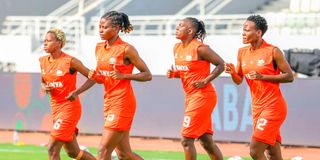
Kenya's Harambee Starlets.
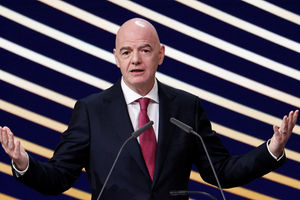
FKF president Hussein Mohammed, who watched all three matches in Morocco, defended the federation's preparations.
"We put all the necessary plans in place. We provided the team with everything they requested, put in a lot of effort to prepare them, paid all their allowances and even promised them bonuses. As a federation, we played our part in preparing the team." However, Nation Sport has established that not all allowances had been paid.
In his review, Hussein admitted the federation was disappointed by the results. But, he said Starlets' campaign must be judged within the broader context of rebuilding the national team after years away from elite continental competition.
"We are not happy with this performance, but we must also accept that we are not yet at that level."
His comments point to perhaps the biggest question emerging from Kenya's Wafcon campaign: Is poor performance simply the result of a difficult tournament, or does it reflect deeper systemic weaknesses that have accumulated over many years?
"We have only been in office for one and a half years. Football is built over 10 to 15 years. You cannot build a competitive team within such a short period. We must invest heavily in our structures, in our technical benches, in player development, our youth programmes and our leagues and competitions.”
Hussein said the federation is planning a review of the technical department, with insiders saying that coach Beldine’s job may be on the line.
"We are evaluating all our engagements with our coaches. We shall be making significant decisions in the coming weeks,” Hussein said. Whether those changes translate into improved performances remains to be seen.