Your son has a higher chance of featuring at the Fifa World Cup if he was born in the first quarter of a year. Those born in the last quarter of the year have the least chance of making Fifa World Cup squads. Players born in January, February, and March have accounted for the highest percentage of players at each Fifa World Cup since 2010. On the flip side, including this year’s tournament, footballers born in October, November, and December have been outnumbered by those born in other quarters of the year in six of the last seven World Cups. The exception was the 2010 Fifa World Cup held in South Africa.
At this year’s World Cup, 359 of the 1246 players who will be showcasing their talents in Canada, Mexico, and the United States were born in January (119), February (124), or March (116). That is 107 more than those born in October (88), November (80), and December (84).
Figures for other months are as follows: April (95), May (113), June (124), July (107), August (104), and September (92). Evidently, February, despite having fewer days than other months, boasts the most birthdays at the 2026 Fifa World Cup together with June.
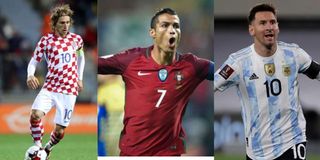
Coincidentally, Cristiano Ronaldo and Lionel Messi, football’s biggest stars of the last 20 years, were born in February and June respectively. The duo, together with Croatian midfielder Luka Modric and Mexican goalkeeper Guillermo Ochoa, will be appearing at a record sixth Fifa World Cup. Modric was born in September. Together with July and August babies, the cohort of footballers born in the third quarter of year provided the majority of players to Fifa World Cup in 2002 and 2006.
Most of the footballers in that cohort – including legendary names like Ruud van Nistelrooij (born in July), Thierry Henry (born in August), and Ronaldo (born in September) – were born in the 1970s or early 1980s. They were possibly least affected by relative age effect, a phenomenon where individuals born earlier in a defined selection period (such as an academic, calendar, or sporting year) gain an advantage over those born later in the same period.
Even though Fifa had introduced youth tournaments in the late 1970s, it was not until the 1990s and 2000s that youth football became more structured and competitive as investment in football academies skyrocketed. With increased focus on youth football by clubs and national teams, cut-off birth dates to make youth teams and tournament squads started to determine selection of players, leading to some players benefiting from the relative age effect.
Since January 1 is the standard cut-off birth date for most youth tournaments, footballers born close to that date ended up dominating youth teams and later tournament squads. Still, being born early in the year does not guarantee football stardom when late bloomers catch up. A good number of the hyped stars of this year’s World Cup were born in the middle of the year or later. They include England’s Jude Bellingham (June), Brazilian Vinicius Jr (July), Norwegian Erling Haaland (July) Lamine Yamal of Spain (July), Morocco captain Achraf Hakimi (November), and Frenchman Rayan Cherki (August) and his December-born compatriots, Kylian Mbappe and Michael Olise.
Additionally, players born in the first quarter of the year rarely dominate individual awards at the Fifa World Cup and even the Ballon d’or, serving evidence that quantity does not mean quality. Romario, in 1994, is the last Fifa World Cup golden ball winner born in January. Since then the award has gone to May (Diego Forlan), June (Lionel Messi, Oliver Kahn, and Zinedine Zidane), and September (Luka Modric and Ronaldo) babies.
The birth date head start also does not matter when it comes to winning the golden boot at the Fifa World Cup. Davor Suker, in 1998, remains the last January-born player to win the award. Since then he has been succeeded by those born in December (Kylian Mbappe), June (Miroslav Klose), July (Harry Kane and James Rodriguez), and September (Ronaldo and Thomas Mueller).
Yet, for goalkeepers, being born early in the year matters a lot. Only one winner of the golden glove award – Emiliano Martinez in 2022 – was born later than June. If anything, only a paltry 19 out of 145 of goalkeepers at the 2026 Fifa World Cup were born in October, November, or December. At Qatar 2022, the figure was slightly lower, 18 out of 99. The same can be said to be true for the World Cup Young Player award, which has been won by players born in January, February, or March at six of the last 10 World Cups. The winner of the award at the last World Cup, Argentine Enzo Fernandez, was born in January.
Scotland and tournament co-hosts Canada also make a strong argument for late bloomers. The two teams have most of their players born in the last three months of the year, 10 and nine respectively. For Scotland in particular, six of their 10 most-capped players at this year’s World Cup were born in October, November, or December. That includes their goalkeeper Craig Gordon (December), and midfielders Scott McTominay (December) and John McGinn (October). Other outliers include Saudi Arabia (three), Iran (five), Norway (five), Ghana (five), DR Congo, and Curucao (five) who have fewer players born in the first three months of the year than other quarters.
Still, it is not just at the Fifa World Cup where being born late in the year may have a disadvantage for an athlete. At the two Olympic Games, athletes born in October, November, and December won fewer medals (525 at Tokyo 2020 and 505 at Paris 2024) than those born in the other period of the years. Those born in April, May, or June dominated, winning 633 medals in Tokyo and 595 in Paris.
If you intend to have a football star in your house, this year’s World Cup is full of late night and early morning kick offs that can make a maternity visit in March or April next year possible if you watch matches with your partner. For instance, Divock Origi, the son of former Harambee Stars Mike Okoth who played for Belgium at Brazil 2014, was born nine months after Brazil won the World Cup in 1994. This year’s World Cup has 47 players born nine months after a World Cup. That includes French midfielder N’Golo Kante, who was born in March 1991.