Hello

Your subscription is almost coming to an end. Don’t miss out on the great content on Nation.Africa

Ready to continue your informative journey with us?

Hello

Your premium access has ended, but the best of Nation.Africa is still within reach. Renew now to unlock exclusive stories and in-depth features.

Reclaim your full access. Click below to renew.

Coaches
Caption for the landscape image:

Which local coach can claim glory in Morocco?

Scroll down to read the article

From left: Egypt coach Hossam Hassan, Morocco coach Walid Regragui and Sudan coach Kwesi Appiah.


Photo credit: Pool

In Marrakech

For decades, the dugout of the Africa Cup of Nations (Afcon) was viewed as the exclusive domain of the globe-trotting European manager.

The prevailing narrative suggested that while Africa produced some of the world’s most exciting players, it lacked the tactical sophistication and leadership to nurture its own elite coaches.

This perception often overshadowed the brilliance and potential of homegrown tacticians, relegating them to secondary roles behind their foreign counterparts.

However, at the 2025 Afcon in Morocco, that tired script has been torn up. In a historic shift, 14 out of the 24 participating nations were led by African head coaches.

This is not merely a statistical quirk, but it is the culmination of a movement sparked by pioneers who proved that homegrown “cultural intelligence” is the ultimate tactical advantage.

At the heart of this revolution stands Egypt’s Hassan Shehata, whose unprecedented success has inspired generations and shifted the power balance at Afcon and beyond.

While Shehata’s triumphs are legendary, the groundwork for African coaching excellence was laid by pioneers like Ghana’s Charles Gyamfi, who led the Black Stars to three Afcon victories in 1963, 1965, and 1982, and South Africa’s Clive Barker, who famously clinched the title in 1996.

These trailblazers proved that African coaches could build winning teams, but Shehata’s treble run redefined the benchmark for sustained dominance.

Emerse Fae

Ivory Coast coach Emerse Fae.

Photo credit: Reuters

Stephen Keshi of Nigeria, winning Afcon as player and then coach in 2013, further showcased the unique leadership and tactical flexibility that homegrown coaches could bring.

Most recently, Djamel Belmadi, Aliou Cisse and Emerse Faè guided Algeria, Senegal and the Cote d’Ivoire to the coveted title.

But the actual turning point, the ‘Shehata Era’, redefined the very meaning of coaching excellence in Africa. Between 2006 and 2010, Egypt’s Shehata accomplished a historic feat – three consecutive Afcon titles, an achievement unmatched in the modern era. Shehata’s blueprint was revolutionary.

He eschewed reliance on foreign-based superstars, instead forging a dynasty through tactical intelligence, squad harmony, and a profound understanding of the local players’ mentality.

His Egyptian side not only triumphed but also set a new benchmark for performance, proving to federations and fans alike that African coaches could achieve the highest level of success with homegrown squads.

Shehata didn’t just compete with global rivals, he systematically dismantled their systems and raised the standard for all who followed.

Hossam Hassan

Egypt coach Hossam Hassan.

Photo credit: Reuters

Shehata’s formula, rooted in deep cultural knowledge, nurturing domestic talent, and maintaining team unity, has resonated across the continent.

It dismantled the long-held belief that only foreign coaches possessed the tactical acumen to win at the highest levels, inspiring a new generation to pursue coaching with ambition and confidence.

Today’s crop of African coaches are the direct heir to Shehata’s legacy, blending data-driven modern tactics with an unshakeable sense of national identity. Their rise marks a new chapter in Afcon history, one in which homegrown brilliance stands shoulder to shoulder with foreign pedigrees and often surpasses them.

African coaching excellence

Morocco’s Walid Regragui is celebrated as the World Cup sensation and the face of contemporary African coaching excellence. After guiding the Atlas Lions to a historic World Cup semi-final, Regragui is now expected to bring that same tactical acumen to Afcon, challenging and redefining the rigid structures often associated with foreign managers.

The defending champion, Faé is a symbol of the new era. Faé’s dramatic mid-tournament takeover in 2023 proved that an African coach, drawing upon emotional intelligence as much as tactical acumen, can achieve what foreign predecessors could not.

“It’s a great honour, especially since young African coaches in Europe face significant challenges. Leading a national team is a heavy responsibility. Too often, we are relegated to assistant roles or youth teams, but when senior positions arise, it becomes complicated,” Faé said.

“Having the opportunity to coach Côte d’Ivoire is a point of pride for me, especially as my assistant is also a young coach with limited experience before this tournament. Yet, we were given our chance, and we seized it. I’m happy to show young African coaches and players that when you have a dream, you must believe in it from start to finish.”

Nigeria’s Éric Chelle is a Malian carving his niche among African giants. He blends international exposure with a deep understanding of local football realities. On the other hand, Kwesi Appiah, in charge of Sudan, and Botswana’s Morena Ramoreboli.

While the local contingent is stronger than ever, the foreign contingent still exerts considerable influence. Afcon 2025 offers a fascinating clash of philosophies as African tacticians, emboldened by the legacy of Shehata and other pioneers, match wits with seasoned European and South American professionals. It’s a global chess match, one that tests not only tactical depth but also cultural knowledge and leadership.

Kwesi Appiah

Ghanaian national Kwesi Appiah is the head coach of Sudan.

Photo credit: File | AFP

This year, the ratio of 14 local coaches to 10 foreign coaches signals that African federations are finally backing their own. The shift is not just about statistics; it’s about faith in identity and history, and the belief that former national team stars bring more than technical knowledge. They bring a strong sense of national identity that cannot be imported.

The story of 2025 afcon is not just about the players on the pitch but also about the masterminds on the touchline. From the dusty pitches of local football to the continent’s grandest stage, African coaches have finally reached the head of the table.

Today’s African coaches hold international qualifications, but their roots and inspiration lie in a deep understanding of their national football identities.

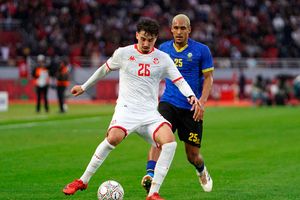
Ten local coaches have entered the round of 16 -- Fae, Regragui, Chelle, Appiah, Hossam Hassam of Egypt, Pape Thiaw of Senegal, Cameroon’s David Pagou, Sami Trabelsi of Tunisia, Burkina Faso’s Brama Traore, and Mozambique’s Chiquinho Conde.

The odds are in favour of another local coach bagging Africa’s biggest football crown. The question is, who will it be?