The African continent, the world’s last major populated landmass without a permanent fixture on the Formula 1 calendar, is on the cusp of ending a three-decade drought.
The roar of F1 engines, last heard in South Africa in 1993, is being eagerly anticipated, but the return is anything but a certainty. A high-stakes contest is underway, pitting the historic, ready-made circuit of Kyalami in South Africa against the ambitious, innovative greenfield project near Kigali in Rwanda.
This battle for the coveted African Grand Prix slot in the 24-event F1 calendar is not just a sporting contest; it is a geopolitical and economic race for continental supremacy, global exposure, and affirmation.
Formula 1 CEO Stefano Domenicali has confirmed that the sport remains committed to adding Africa to its calendar.
“We are missing one continent, and we want to connect also to that,” Domenicali said.
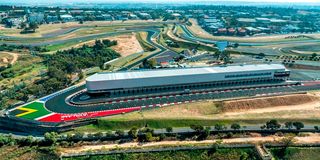
Kyalami Formula One race Circuit in South Africa.
Photo credit: Courtesy
This sentiment is echoed by the sport’s biggest stars, including seven-time world champion Lewis Hamilton, a long-time advocate for an African race, and reigning champion Max Verstappen, who has expressed excitement about the prospect. The key, however, is finding the “right plan.”
That plan is being fiercely debated between two vastly different proposals – the heritage and existing infrastructure of South Africa, and Rwanda’s futuristic, state-backed vision.
South Africa’s bid, centred on the Kyalami Grand Prix Circuit north of Johannesburg, is a story rich in motorsport history and a testament to private sector dedication. Kyalami has hosted 21 South African Grand Prix races, with the final event being the dramatic 1993 showdown where Alain Prost (Williams) held off Ayrton Senna (McLaren) in a race only seven drivers finished. For many F1 enthusiasts, Kyalami is regarded as the “home of African motorsport.”
The most recent and significant breakthrough came when the South African Cabinet approved the bid to host the Formula 1 Grand Prix for a three-year period commencing in 2027. This government endorsement was the crucial green light required to move the project from aspiration to active development.
Crucially, the government has anchored its approval on a non-negotiable financial condition. The bid must be funded entirely by the South African private sector, not by the government.
Minister in the Presidency Khumbudzo Ntshavheni explicitly stated in Parliament that the government would not pay for the event, citing other “more urgent priorities.” This fiscal necessity has spurred a significant corporate mobilisation led by South African Sports, Arts and Culture Minister Gayton McKenzie. He has been in talks with at least six major companies, including MTN, MultiChoice, and Heineken, to secure a collective pledge of Sh12.915 billion ($100 million).
This substantial fund is earmarked to cover the mandatory hosting fees paid to Formula One Management (FOM). While race hosting fees vary widely, from around Sh3.3 billion ($25 million) for traditional European races like Monza to Sh6.43 billion to Sh7.74 billion ($50–$60 million) for newer, oil-rich venues like Saudi Arabia and Qatar, the Sh12.915 billion ($100 million) target suggests a conservative annual fee of roughly Sh4.3 billion ($33.3 million) for the three-year contract, placing Kyalami in the competitive mid-range of F1 costs. At the moment, the cheapest ticket to a Formula One race costs Sh25,830 ($200), while the most expensive ticket could an average of Sh129,150 ($1,000).
Minister McKenzie passionately argued that the country “cannot afford not to” host F1, pointing to the success of the 2010 Fifa World Cup in affirming South Africa’s global position. The bid, if successful, is viewed as an “affirmation of South Africa as an important world actor” and a major contributor to job creation and economic development. The recent Formula E race in Cape Town, which generated over R1 billion in economic impact, serves as a powerful local precursor for the much larger economic boost an F1 race would provide.
Despite its history, Kyalami is currently certified as FIA Grade 2, which makes it ineligible to host F1 races. A central part of the bid hinges on returning the circuit to the highest safety standard: FIA Grade 1.
The Fédération Internationale de l’Automobile (FIA) approved the final design proposals for the necessary upgrades in June, giving Kyalami a three-year window to complete the works by the 2027 deadline. The circuit owner has engaged renowned UK engineering consultancy Apex Circuit Design, the firm behind the Miami Grand Prix street circuit, to develop the roadmap.
Kyalami Formula One race Circuit in South Africa.
Photo credit: Courtesy
Circuit owner Toby Venter, who acquired Kyalami in 2014 with a commitment to restoring it as a “beacon for motorsport across the African continent,” stated, “The FIA’s acceptance of our Grade 1 design is a major step forward in that journey.”
The proposed upgrade is defined as a “light-touch” project that will not alter the circuit’s 4.522km layout. The focus is strictly on modern safety enhancements, particularly enhancing run-off areas, upgrading barrier systems and debris fencing and modifying kerbs and drainage.
Once these capital works are completed and inspected, Kyalami will become Africa's only FIA Grade 1 circuit, capable of hosting F1 and MotoGP events.
In direct competition with South Africa’s heritage-focused bid is Rwanda’s visionary project. While lacking motorsport history, Rwanda is offering an innovative, forward-looking proposition that blends motorsport with sustainability and the country’s unique topography.
President Paul Kagame formally announced Rwanda’s bid and has the public backing of FIA President Mohammed Ben Sulayem, who claimed, “Africa deserves an F1 event and Rwanda is the best place.”
The proposed circuit, designed by former F1 driver Alexander Wurz, is set to be constructed approximately 25km south of the capital, Kigali, near the new Bugesera International Airport. The track is designed to embrace Rwanda’s nickname, “the land of a thousand hills,” promising a fast, flowing layout with dramatic elevation changes that wind through forests and around a picturesque lake. Red Bull Racing’s Max Verstappen described the initial design as ‘amazing,’ and Ferrari’s Charles Leclerc highlighted its potential for overtaking.
Constructing a new Grade 1 circuit is a gargantuan undertaking. Estimates suggest the project could cost Rwanda over Sh34.87 billion ($270 million or £218m) for design and construction, plus potential annual maintenance fees of Sh2.39 billin ($18.5 million) and an additional Sh3.87 billion ($30 million) for associated infrastructure like grandstands and paddocks. Some estimates have even placed the total investment close to Sh129 billion ($1 billion). Rwanda's bid is part of a larger strategy to position the country as a global sports hub, and to accelerate its economic transformation. Hosting F1 would be another step in boosting a thriving tourism sector, which generated over Sh80 billion ($620 million) in 2023. Christian Gakwaya, president of the Rwanda Automobile Club, said the bid is about “Rwanda's growth, people and place on the world stage.”
A key pillar of the bid is its commitment to sustainability, aligning perfectly with F1’s goal of reaching net-zero emissions by 2030. Rwanda’s national ban on single-use plastics and focus on renewable energy are presented as strong environmental credentials.
However, Rwanda’s ambitious F1 project is heavily clouded by geopolitical and human rights concerns. The country’s bold investment in global sports, including “Visit Rwanda” sponsorship deals with football giants like Arsenal, Paris St-Germain, and Bayern Munich (estimated to cost a total of Sh20.79 billion or $161 million), has faced accusations of ‘sportswashing.’
Critics, notably Human Rights Watch (HRW), allege that the government uses these high-profile events and sponsorships to distract from what they describe as an ‘abysmal track record’ on human rights, including suppressing freedom of expression and targeting critics. HRW Director Lewis Mudge claimed that F1 would be ignoring its own due diligence processes if it awards Rwanda the race.
Adding to the complexity are the grave accusations regarding Rwanda’s involvement in the conflict in the neighbouring Democratic Republic of Congo (DRC). The United Nations and the DRC have accused Rwanda of stoking, funding, and arming the M23 rebel group. The humanitarian impact of the renewed conflict is catastrophic: The fighting has forced over 1.7 million people to flee their homes. The M23 has been accused of committing severe human rights abuses, including summary executions, gang rape, and the forced recruitment of civilians. The violence has exacerbated a health disaster, with cholera spreading rapidly in camps for displaced people outside the key humanitarian hub of Goma.
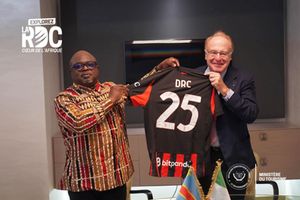
The DRC has publicly urged F1 to end talks with Rwanda over the race. When questioned about the allegations, FIA President Ben Sulayem dismissed the ‘sportswashing’.
“I honestly don’t care about what they say. I believe that what we are doing is right,” he said.
As the clock ticks toward the 2027 target, both South Africa and Rwanda face substantial hurdles in their pursuit of the coveted Grand Prix slot. The decision ultimately rests with Formula One Management (FOM), which must weigh the commercial and logistical benefits against the geopolitical and human rights implications.