I arrived in Norway in December 1991 as a UNHCR quota refugee, having fled Kenya three years earlier. Police came looking for me at my law office in Nakuru in September 1988.
Thanks to a colleague’s warning, I escaped, spent the night in Nairobi and crossed into Tanzania the following day. In Dar es Salaam, I was granted asylum on condition of resettlement to another country.
Attempts to move me to the US, Ghana and Belize fell through. However, the US process was halted due to the Gulf War. Eventually, Norway lifted its freeze on quota refugees and I was accepted.
Norway had become a haven for Kenyan exiles, including Koigi wa Wamwere, in the 1980s. Shortly after my arrival, I met Raila Odinga at a gathering hosted by fellow refugee Mohamed Komeja. Odinga had arrived a week earlier, also fleeing political persecution. When we were introduced, he looked at me and said: “It is you.”
That stirred deep memories – his detention without trial, my escape and the meeting we were meant to have in Nairobi before things changed.
Back in Kenya, I was part of the Kenya Patriotic Front, founded by Wamwere. We had planned to work with Odinga. A colleague had gone to his office to arrange our meeting, unaware that the Special Branch Police were about to raid it.
Odinga was arrested and detained. My colleague was arrested and later sentenced to five years in prison.
Others in our network were also taken into custody. I fled on learning that they were coming for me.
Odinga and I met regularly in downtown Oslo. Our early conversations were reflections – on exile, injustice and the fragile hope of change. Later, our focus shifted to Kenya’s political future. The repeal of Section 2A of the constitution had opened the door to multi-party democracy, but unity among the opposition was elusive. Jaramogi Oginga Odinga and Kenneth Matiba led rival factions of Ford, while Mwai Kibaki’s Democratic Party added further fragmentation.
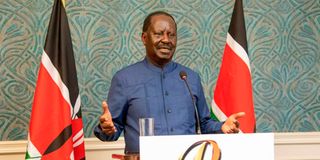
Dr Stephen Kabera Karanja.
Photo credit: Pool
We believed only a united Ford could defeat President Moi and Kanu. Odinga was committed to healing the rift and returning to Kenya to work for unity. We met one last time on the eve of his departure. He asked if I planned to return. I said I would go back and contribute if unity prevailed. If the split persisted, the opposition would lose, I said.
Sadly, Ford fractured into Ford Kenya under Jaramogi and Ford Asili under Matiba. With the opposition divided, Moi retained power in 1992 and 1997. It wasn’t until 2002 that the opposition united and Kenya saw a peaceful transition.
Despite his sacrifices, Odinga never became president. Whether his victories were stolen is for history to judge. I believe 2013 could have been his moment – had the 2002 unity endured and alliances held.
After Odinga left Norway, we met only once more before the 2002 elections. At a gathering of Kenyans in Norway, he assured me the opposition would remain united. Our earlier meetings had been mostly one-on-one, sometimes joined by my friend Kuria wa Murimi. Odinga was always engaging, thoughtful and open to differing views. He listened deeply and was willing to adjust his stance.
I was deeply saddened to learn of his passing. Raila Odinga was not just a towering figure in Kenyan and African politics – he was a symbol of resilience and a visionary who never wavered in pursuit of justice. Odinga’s legacy will live on through his tireless fight for democracy, equity and constitutional reform.
My heartfelt condolences go out to Mama Ida Odinga, the entire Odinga family, his allies and the people of Kenya who mourn a man who gave so much of himself.
Raila Odinga will be remembered as one of Kenya’s most consequential opposition leaders. He played his part with courage and conviction. Now that he has bowed out and the curtain has fallen, may his soul rest in eternal peace.