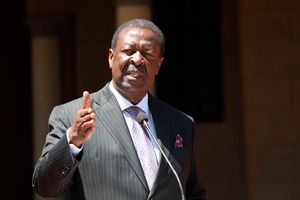
It is happening again. Kenyans are once more being drawn into a foreign war — not because the conflict is theirs, not because the cause is theirs, but because poverty, desperation and broken opportunity at home have made them vulnerable to recruiters selling danger as employment.
This time the war is in Ukraine. But the pattern is old. Painfully old.
Long before the stories now emerging of Kenyans ending up on the frontlines of a European conflict, Britain had already created the model during the colonial era.
Thousands of Africans from Kenya were recruited, conscripted or coerced into imperial wars that were never truly their own. Some fought as soldiers. Many more served as carriers and porters, hauling food, ammunition and supplies through impossible terrain under brutal conditions. Large numbers never came back. Their families were left with silence, rumours and grief.
Uniforms have changed. Recruiters have changed. The flags have changed. But the logic remains hauntingly familiar: foreign wars continue to feed on African hardship.
That is why reports about Kenyans in Russian war with Ukraine should disturb us beyond the immediate tragedy. They are not simply about men seeking work abroad and finding themselves trapped in a battlefield. They are about history repeating itself through new methods. They are about the old colonial habit of using African bodies to fight other people’s wars. And they are about a country producing so much frustration and hopelessness among its young men that a distant war can start to look like an opportunity.
That should shame us all – that we are sending young girls as domestic slaves in Arab countries, and young men are heading to the war frontlines in search of livelihood.
The Russian war mimics what happened during the First World War when East Africa became one of the theatres of imperial conflict. British forces deployed vast numbers of African carriers in military campaigns across what are now Kenya, Tanzania and neighbouring territories. These men, recruited by chiefs as agents, were made to carry loads across long distances, through forests, swamps and open savannah, in punishing heat and disease-ridden conditions. Many died not in glorious battle but from exhaustion, hunger, sickness and neglect.
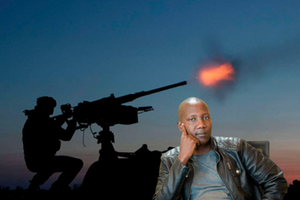
Clinton Nyapara Mogesa who has been fighting in the Russia-Ukraine war.
Photo credit: Pool
Regrettably, history has opted to forget those who died on the march in a war generally presented in history books as European, yet Africa paid heavily for it.
The Second World War brought another round of sacrifice. Kenyans were recruited to serve in imperial campaigns in places such as Burma and Ethiopia. They fought under British command, defended British interests and bled for a colonial government that denied them equality at home. When they returned, they did not come back to honour, gratitude and fairness. They came back to a system still built on racial hierarchy.
Many found their pay inferior to that of white soldiers. Many found that the land question had worsened. Many discovered that the empire which had demanded their loyalty would not recognise their humanity on equal terms. While British soldiers were given free land to settle in Kenya, Africans lost theirs. Families today are crying out because the bodies of Kenyans killed in the Russian war have not been returned home, and that pain carries a grim historical echo.
Even in the European wars of the colonial era, death did not bring equality to Africans. One of the most damning revelations from historians is the way African war dead were treated in comparison with Europeans. In the archives of the Commonwealth War Graves Commission lies a chilling letter from the early 1920s, setting out the colonial logic with brutal clarity: Africans who had served Britain would, in many cases, not be honoured with individual headstones, but only with collective memorials in “some suitable locality” chosen by the colonial government.
In plain terms, African soldiers and labourers who died for the empire were not considered worthy of the same dignity in death as white men. You only need to walk through Commonwealth war cemeteries to see the evidence for yourself. Africans are missing not because they did not die, but because they were deliberately written out, denied names, denied markers, and denied the full remembrance granted to others.
Historians have called this “morbid apartheid”, and rightly so.
As it is happening in the Russian frontlines, Africans are good enough to fight and die, but not important enough to be interred properly. Some who died in the Second World War were buried in so-called “native cemeteries”, separate from Europeans. Later, some of those cemeteries were considered unmaintainable and abandoned. As a result, graves disappeared and names were moved to collective memorials. What we have today are dead segregated in life and service, and segregated in memory.
Charles Waithaka, a Kenyan national who died in the Russia–Ukraine war on December 25, 2025, is pictured in military attire.
Photo credit: Pool | Nation
That history matters now because Kenyan families are once again facing the possibility that sons and brothers are vanishing in a distant conflict, buried without dignity, without certainty and without closure. The leader of majority, Kimani Ichungwah says that more than 1,000 Kenyans have been recruited and he blames recruiters and government officials.
What he has not accepted is that we have desperate youth who are so vulnerable that war looks like an ordinary job. For too long, the export of labour has been presented as a success story without enough attention to the dangers surrounding it. Young people are constantly told to seek opportunities abroad. For many, that is sensible. But once a society normalises escape as the route to survival, it becomes easier for criminal networks, traffickers and military recruiters to prey on the vulnerable.
During colonial days, coercion drove Africans into imperial campaigns. Now, poverty, joblessness, false promises and shady networks do the work. The form has changed from direct empire to indirect recruitment. But the outcome is recognisable. If a young Kenyan man cannot find dignified work at home, if he sees no future beyond debt and frustration, if he is promised money, movement or purpose abroad, then the decision to go is made within conditions already rigged against him. This is not the freedom of equal alternatives. It is the freedom of desperation.
It was only last year that Kenya was forced to rescue its citizens from scam compounds in parts of Southeast Asia, including Myanmar. There, they were lured by promises of jobs and decent pay, only to find themselves trapped in brutal cybercrime operations run under inhuman conditions.
Many were forced to send thousands of messages and emails from fake social media profiles, posing as wealthy American investors in order to swindle US real estate agents into cryptocurrency scams. What awaited them was not employment, but violence, coercion and captivity. Whether on a battlefield or in a scam centre, the pattern is disturbingly similar: Kenyan vulnerability has become a commodity in transnational systems of profit and power.
Russia is not Myanmar. War is not cyber-slavery. But the route by which people end up in both places is similar enough to be alarming: false hope built on hardship.
That is why this moment demands moral clarity. Africans should not be used in wars that do not concern them.
This does not mean Africa should be indifferent to global events. Of course not. What happens in Europe, Asia or the Middle East can affect us economically, diplomatically and politically. We live in an interconnected world. But there is a profound difference between caring about a conflict and supplying bodies for it. There is a difference between understanding international affairs and sending poor young men to die in them.
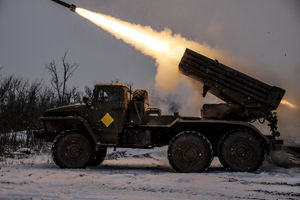
The war in Ukraine is rooted in European history, Russian imperial ambition, Western strategy and the security order of that region. It is not an African war. Kenyan youth should not become cannon fodder in it merely because unemployment at home makes them vulnerable.
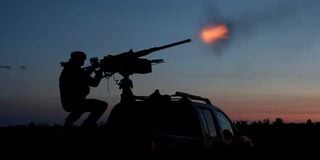
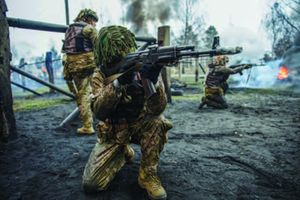
Some Kenyans have been recruited to fight for Russia in Ukraine.
Photo credit: Pool
We should be blunt about this. Foreign powers have long understood that African poverty can be mined. In the colonial period, empire extracted labour, land and blood. In our own time, the methods are more market-driven, more informal and more deniable, but no less predatory.
Recruiters do not need to drag chains across villages anymore. They only need to find young men failed by their own country and convince them that death abroad pays better than life at home. That is not mobility. It is exploitation. And governments that fail to act become part of the problem.
John Kamau is a PhD candidate in History, University of Toronto. Email: [email protected] ; X: @johnkamau1