By 1988, Henry Kinyua was widely regarded as one of Kenya’s finest coffee managers. That same year, however, he was forced out as managing director of the farmers-owned Kenya Planters Co-operative Union (KPCU), in a takeover engineered from President Daniel Moi’s State House.
At the time, the KPCU managing director automatically served as chairman of the Coffee Board of Kenya, making the office one of the most influential in the country’s agriculture sector.
When President Moi ordered an investigation into KPCU in 1990, the probe reportedly uncovered underhand dealings between some of his allies and KPCU managers that had taken root after Kinyua’s departure. Yet the report was quietly shelved. By then, anger within the union had already boiled over.
There had been the controversial purchase of a giant mill, court cases – filed by Kariuki Muiruri - over emerging misappropriation of farmers’ money, and even a notorious boardroom confrontation in which a member allegedly whipped out a pistol.
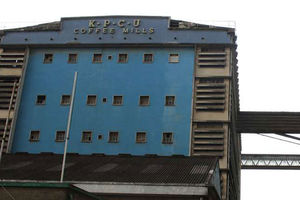
Insiders say that it is Mr Abraham Mwangi who built the coffee networks that finally brought the industry into a halt and compromised bodies, such as the Coffee Board of Kenya, which were set up to regulate the industry.
Photo credit: File | Nation Media Group
It was in this atmosphere that Abraham Mwangi, a Murang’a-born but Kitale-based coffee dealer, captured the chairmanship of KPCU after he was backed by influential State House allies, among them the powerful Nandi Kanu chairman Ezekiel Barngetuny. Mwangi rose swiftly to the centre of the coffee industry’s power structure and left a trail of destruction. Audited reports later suggested that in embezzlement of funds and the corruption of senior officials, Mwangi stood in a class of his own.
After Mwangi took over, KPCU was forced to take loans it did not require, as it became a playground for politicians who were raiding its coffers. Agriculture Minister Simeon Nyachae later acknowledged in Parliament that by 1992, prominent individuals had looted Sh700 million from the farmers’ organisation and that the union owed Sh844 million. Before that, the body was always turning profits.
Pundits say that the same danger now shadows Nairobi Hospital , which is at the centre of a similar takeover. What appears on the surface as a governance dispute can quickly become a struggle for institutional control unless they learn the deeper lesson of KPCU.
KPCU was never an obscure society on the margins of the economy. It sat at the centre of one of Kenya’s most lucrative export sectors. For decades, it was the principal miller and marketer in the coffee chain, handling the produce of thousands of farmers and commanding enormous influence over prices, processing and access to markets. In the years when coffee earnings boomed, KPCU became not just a commercial body, but a power centre. And in Kenya, power centres seldom remain untouched for long.
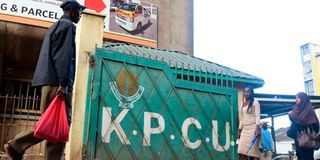
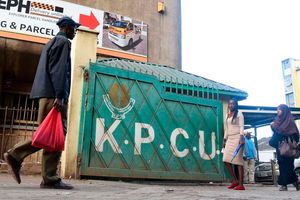
Kenya Planters Cooperative Union headquarters in Nairobi. The agency will adopt technology to simplify loan applications.
Photo credit: File | Nation Media Group
Long before KPCU was brought to its knees, two other giant farmer institutions, the Kenya Farmers Association (KFA) and the Kenya Cooperative Creameries (KCC), faced similar tests.
During its heyday, KFA was among the most influential farmer organisations in the country. For decades, it supplied fertiliser, machinery, fuel and grain handling services. It was no ordinary lobby group. It owned vast assets, served thousands of members and had a footprint across large parts of the agricultural economy. In many respects, KFA was a state within a state.
Kenya Farmers Association branch in Eldoret.
Photo credit: File | Nation Media Group
But by the early years of the Moi era, KFA had become politically inconvenient. It was seen as too independent, too tied to the Jomo Kenyatta-era establishment, and too powerful to remain outside the new patronage order. In 1984, the government sponsored the creation of a rival body, the Kenya Grain Growers Cooperative Union (KGGCU). Officially, the new outfit was presented as a competitor. In practice, it was a political instrument built to displace KFA and bring valuable agricultural networks under tighter State-friendly control.
The symbolism was unmistakable. President Moi reportedly became member number one of KGGCU. Within months, the government ordered KFA to hand over its operations and assets to the new body.
The absurd imbalance was plain to all. A union with barely a few million shillings in capital was suddenly stepping into the shoes of an institution with assets worth hundreds of millions. On paper, KGGCU was most closely associated with Alfrick arap Birgen as chief executive, while politically it operated under figures aligned with State House.
The effects were corrosive. Once a strong and relatively autonomous institution was weakened, the grain trade moved further into the orbit of politics. The issue was never simply who bought or sold grain. It was who controlled the channels through which farmers survived, how favours were distributed, and how economic dependence could be translated into political obedience. By the time KFA was revived again, after the death of KGGCU, it had a debt of close to Sh1 billion and has been selling its assets to offset.
The next was KCC. Founded in 1925, KCC became the backbone of the dairy industry. It linked smallholder farmers to urban markets, stabilised prices and created a dependable route through which milk could move from the countryside to processors and consumers. Across central Kenya, the Rift Valley and other milk-producing areas, KCC was not just a company. It was a guarantee that dairy farming could sustain rural life.
The entrance to the New Kenya Cooperative Creameries (KCC) Eldoret Factory in Uasin Gishu County on November 18, 2025.
Photo credit: Jared Nyataya | Nation Media Group
By the 1980s, dairy production had expanded sharply, and KCC should have been one of the great beneficiaries of that growth. But prosperity often invites predators. In 1989, its leadership was reportedly reshuffled from above, and the institution began to acquire the habits of a patronage machine.
Political interference deepened. Commercial discipline weakened. Decisions were no longer driven by what made sense for farmers or for the dairy economy, but by the demands of networks feeding off the institution.
By the time the dairy sector was liberalised in the 1990s, KCC was already bleeding from within. Years of unnecessary procurement, mounting inefficiencies and heavy legacy debts — including those linked to Moi-era school milk programmes — had badly weakened the institution. Political interference only deepened the crisis, not least with President Moi’s appointment of his son, Raymond Moi, to the KCC leadership.
By then, many farmers had already lost faith in it, which owed them millions of shillings in unpaid dues. Burdened by overstaffing, debt, waste and patronage, the once-dominant dairy processor could no longer function with the discipline or speed of a commercial enterprise.
Losses climbed into the billions, farmers went unpaid, milk was poured away, and factories either cut intake or ground to a halt. In the end, KCC slid into receivership, leaving behind unpaid creditors, shattered livelihoods and the ruin of what had once been one of Kenya’s proudest farmer institutions.
But the receivership saw President Moi buy KCC through a proxy in an embarrassing saga that emerged after he had left power. The government of Mwai Kibaki was forced to compensate the “new” owners in order to get KCC back to the farmers. It had then lost most of its market to private entities.
In all three cases, the crisis did not merely happen and then invite intervention. Rather, intervention often deepened the crisis until the takeover became easier to justify. The institution is first presented as chaotic. Then outsiders arrive to “restore order.” New boards are installed. New legal and administrative arrangements are introduced. Control shifts quietly, often irreversibly. What follows is not recovery but repurposing.
KPCU, KFA and KCC were once among the strongest pillars of Kenya’s productive economy. Each served a real constituency. Each held strategic assets. Each linked ordinary producers to national markets. And each, in the end, became a cautionary tale of what happens when government-linked interests stop regulating institutions from a distance and begin occupying them from within.
In all these, an old Kenyan pattern has emerged. An institution is allowed to drift into turmoil, or is pushed there by internal sabotage and external pressure. The noise of scandal and dysfunction then creates a public appetite for intervention. At that point, actors with political muscle move in, claiming to save what they have often helped destabilise.
The tragedy is that once capture is complete, the original institution may never fully recover. It can be broken, repackaged, renamed, or revived in another form, but its autonomy is gone. KPCU was one such opening. KFA was another.
KCC was perhaps the most painful of them all. Together, they reveal a truth Kenya has ignored at great cost: when crisis becomes a route to capture, ruin is never far behind.