Some do it for the money, others to acquire ingredients for traditional “medicine” aligned to their superstitious beliefs.
Some want to own exotic animals as pets, others to use their hides or carcasses for decorations or trophies.
The arrest of two Belgians and a Vietnamese and a Kenyan on allegations of attempting to smuggle 5,000 live garden ants has corroborated the shifting trends in the international black market wildlife trophy sector.
Court records show that smugglers have diversified from the usual elephant tusks and rhino horns, into smaller wildlife trophies that are popular in Asia and Europe, but also seemingly easier to conceal.
The 5,000 ants had been packed in test tubes, which were customised in a way that would allow the wildlife to survive for months and during transport.
Whichever cup of tea preferred by these people, local and abroad, they have contributed to the decline of rare plant and animal species that often attract some of the millions of tourists flocking Kenya.
In one case, Bavon Mukoko Lilungu and Wambua Mbithi were at the Jomo Kenyatta International Airport (JKIA) cargo section on June 7, 2017 attempting to send a box to South Korea.
On one of the websites -- antderground.com - a queen ant of the garden ant species is sold at a discounted price of 180 Euros (about Sh26, 500).
Photo credit: Pool
The two declared that the 100kg package contained giraffe and elephant carvings. The package bore Kenya Revenue Authority (KRA) stamps indicating that tax had been paid.
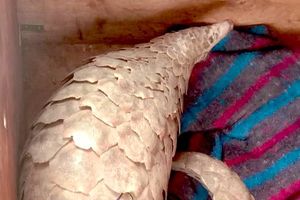
But when authorities did a check, they found that the consignment being sent to Seoul was 100kg of pangolin scales.
They were both convicted for dealing in wildlife trophies, false customs declarations and forging the KRA stamps. Each of them were fined 1.14 million, failure to which would lead to them serving two-and-a-half years in prison.
Aside from pointing at one of the global destinations for pangolin scales, the case also showed how high demand and prices for the product in the black market has led to the flaky mammal joining the list of critically endangered species.
Going by the court papers, a kilo of pangolin scales averaged Sh60,000 on the black market.
One year after Lilungu and Mbithi were arrested, Mwajego Ngomango Mwanzaje was also found with 2.75 kgs of pangolin scales. This time, authorities said that the product’s black market rate was Sh1.4 million per kilo.
Mwanzaje was sentenced to seven years in prison despite pleading for leniency on account of terminal illness.
Vietnamese national Duh Hung Nyugen and Kenyan Dennis Ng'ang'a look on during the hearing of their case after they pleaded guilty to illegal possession and trafficking of garden ants, in Nairobi.
Photo credit: Reuters
“Many across Kenya, including local community members, are not aware of the existence of pangolins; they have never seen them and therefore are ignorant about their importance or conservation plight. Due to misinformation and lack of public awareness, there have been instances of pangolin persecution (killed in most cases) simply because people had never come across the animal before,” the Kenya Wildlife Service says in its recovery and action plan for pangolins.
But some who know of pangolins, and the value of their scales on the black market, it has been worth the prosecution risk to capture the critically endangered mammals.
A pangolin feeding on termites. Pangolins are sold in the black market, especially in the Asian countries, as they are associated with mystical powers.
Photo credit: Roslan Rashman | AFP
For Ezekiel Karim Kilumile, the product was 201 dried butterflies and guinea fowl skin, with a street value of Sh60,000 based on assertions by prosecutors.
Court papers show that he smuggled them from Tanzania and crossed into Kenya through the Lunga Lunga border in Kwale County.
Kilumile was initially fined Sh21 million, or 12 years in prison after pleading guilty. His appeal saw the sentence reduced to a Sh300,000 fine, or three years in prison. He completed the prison term in 2022.
It is unclear whether the wildlife trophies were to remain in Kenya, or be transported to another country.
But it showed that Kenya has clientele for the black market products, or is a transit point to other destinations.
Makupa Ndege in Voi served a two-year prison term starting 2016 after being found with a monitor lizard’s tail and convicted.
Pangolin scales are popular in Asia for traditional medicines and rituals. Some also use them for adornments and decorating furniture and other items.
On June 19, 2023 the Kiambu High Court cured a judicial anomaly involving an aloe vera consignment with a black market value of Sh4.5 million.
Magistrate Boaz Ombewa had convicted Judith Wangui Kamau and Joseph Kamau Wanjau for dealing in wildlife trophies. The two had been arrested with five tonnes of aloe vera.
Mr Ombewa sentenced the two to 12 months’ probation, but still ordered that the aloe vera be released to them.
Justice Dorah Chepkwony allowed the appeal by the Office of the Director of Public Prosecutions against release of the aloe vera, and instead ordered that it be surrendered to the Kenya Wildlife Service.
In another case against Madi Athman Madi and Harun Saef Kale, KWS officers acting on intelligence about fishermen allegedly poaching sea turtles on Kui Island, arrested the two on June 27, 2018.
The shell weighed five kilos, and was about 90 centimetres long.
Madi and Kale were the main suspects. That morning, the two said, there were eight boats on the island including theirs. All the others had left when KWS officers arrived.
The magistrate’s court found them guilty on account of KWS officers stating that the two fishermen were the only people at the scene hence had to be the poachers.
On appeal, the High court held that there was no direct evidence, and that fishermen from any of the other seven boats could have been the culprits. Madi and Kale were released.
A cooking pan led the authorities to suspect that Madi and Kale had extracted turtle oil from the carcass. The oil was later proved to have been from vegetables.
The court records in many cases show how intelligence officers have been critical in combating the wildlife trophy market.
Mwangangi Mutambuki was arrested in Kyumvi, Machakos County on February 13, 2018 with leopard hides and elephant tusks after intelligence officers tipped off police that someone was moving the wildlife trophy to Nairobi, from Kitui via Machakos.
A National Museums of Kenya expert confirmed that the leopard skins had been preserved, indicating that this was part of an organized racket dealing in the trophies.
On May 12, 2022 the Machakos High Court upheld the Sh600,000 fine imposed on Mutambaki, which had a two-year prison term in the event of default.