Judicial Service Commission (JSC) Vice Chairperson Isaac Ruto is under growing pressure after petitions filed in Parliament, and the court accused him of violating constitutional requirements for political neutrality by openly associating with the ruling United Democratic Alliance (UDA).
The legal dispute centres on his right to political association and calls for his exclusion from upcoming Supreme Court and High Court judges' interviews, as well as his ouster from office.
The controversy erupted after photographs showed Mr Ruto attending UDA’s National Governing Council meeting at State House on January 26, chaired by President William Ruto . Widely circulated images depicted him seated among senior UDA officials, adorned in party regalia.
Within days, lawyer Eric Muriuki Mwirigi filed a petition in the National Assembly seeking Mr Ruto’s removal under Article 251 of the Constitution, citing "serious constitutional violations and gross misconduct."
Simultaneously, a High Court petition was filed seeking urgent orders barring him from participating in judicial interviews.
The controversy has thrust the JSC, an institution designed to insulate the Judiciary from partisan politics, into an uncomfortable national spotlight at a time when it is recruiting judges for superior courts.
Petitions contend that Mr Ruto’s presence at a high-level political event undermines the commission’s perceived impartiality.
The parliamentary petition asserts his actions fostered perceptions that judicial appointments could be swayed by political bias, exposing the Judiciary to "national shame, embarrassment, ridicule, and disrepute."
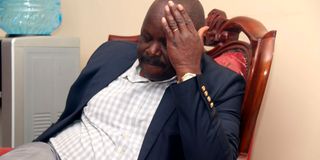
Judicial Service Commission vice-chairperson Isaac Ruto.
Photo credit: File | Nation Media Group
In separate court filings, the petitioner warns that allowing Mr Ruto to sit in interviews for judges while the allegations remain unresolved risks irreparable institutional damage.
The papers argue that once judges are appointed, the process cannot easily be undone, and public confidence in their independence would be permanently dented.
"There is a real apprehension that if the first respondent (Ruto) proceeds with the interviews scheduled for February 4, 2026, the same will be a mockery of the constitutional imperatives of impartiality and political neutrality of holders of offices in Independent constitutional commissions, specifically the Judicial Service Commission," says the petitioner.
Mr Ruto was appointed by President Ruto to the JSC on June 15, 2023. Later, fellow commissioners unanimously elected him vice chairperson, elevating him to the second most powerful position within the body.
Before joining the JSC, Mr Ruto was a seasoned politician. He previously served as Chepalungu MP, Bomet Governor, and Council of Governors chairman.
Under the Constitution, commissioners serve a single, non-renewable term of five years, a design meant to insulate them from political pressure and personal career calculations while in office.
The dispute reignites debates over balancing individual political rights with the neutrality demanded of independent constitutional officeholders.
Governance expert and lawyer Javas Bigambo says the issue goes to the heart of leadership and integrity requirements under Chapter Six of the Constitution.
“A member of such an esteemed body is expected to demonstrate political neutrality and represent all Kenyans,” Mr Bigambo says.
While Article 38 of the Constitution guarantees the right to belong to a political party, Mr Bigambo notes that the exercise of that right by holders of sensitive offices must be restrained.
“Judges vote, but their political choices are secret. That secrecy enhances impartiality. In Mr Ruto’s case, the impartiality and reasonableness test may already be failing,” he says.
Bomet Governor Hillary Barchok (centre), former Kanu Secretary General Nick Salat (right) and former Bomet Governor Isaac Ruto (left) at the United Democratic Alliance party consultative forum on January 7, 2025 at Bomet IAAF stadium.
Photo credit: Vitalis Kimutai | Nation Media Group
The law underpinning the petitions for the removal of a member of JSC is extensive. Section 18 of the Judicial Service Act requires commissioners to relinquish office in political parties, while the Leadership and Integrity Act and the Conflict of Interest Act prohibit conduct that compromises, or appears to compromise, political neutrality.
The parliamentary petition contends Mr Ruto’s attendance at UDA’s apex meeting constituted a prohibited association, regardless of formal membership.
Criticism has also come from within the legal fraternity and civil society. The Kenyan Section of the International Commission of Jurists (ICJ) warned that such conduct is inconsistent with the Constitution and ethical obligations attached to membership of the commission.
"Members of the JSC occupy a uniquely sensitive constitutional position. They are entrusted with core responsibilities including judicial appointments and discipline, and must not only be independent in fact, but must also be seen to be independent," said ICJ Kenya chairperson Christine Alai.
"Public association with partisan political activity is fundamentally incompatible with this sacred responsibility and erodes the fragile public trust upon which the Judiciary’s legitimacy depends," she added.
Former JSC vice chairman Macharia Njeru.
Former JSC vice chairman Macharia Njeru, who is also a lawyer, has written to Chief Justice Martha Koome urging her to place the matter before the full commission.
For now, Mr Ruto remains in office, even though the petitions have placed him under intense scrutiny.
At the time of publishing this article, Mr Ruto had not responded to repeated phone calls and text messages seeking his comment on the allegations.
He described Mr Ruto’s alleged conduct as unprecedented and warned that it posed a serious threat to judicial independence.
Mr Njeru has called on Mr Rutto to recuse himself from the upcoming judicial interviews and ultimately resign in order to protect the credibility of the Judiciary.
The JSC has so far kept its distance from the dispute, with its Spokesperson Sophia Wanuna saying the commission could not comment because the matter had not yet been formally raised before it.
The unfolding saga mirrors past controversies at JSC, such as Winnie Guchu’s 2017 resignation to serve in the then-ruling Jubilee Party's Secretariat, which was spearheading reelection of retired President Uhuru Kenyatta.
Critics similarly warned that visible political affiliations risk eroding public trust in independent institutions.
Removal of a JSC commissioner is, however, a high bar.
Article 251 requires a petition to be considered by the National Assembly, which may recommend suspension and advise the President to appoint a tribunal to investigate the alleged misconduct.
Only after such a process can removal occur, reflecting constitutional safeguards against arbitrary interference.