The past few weeks have been marked by a disturbing wave of student unrest, including institutional arson, spontaneous strikes and widespread destruction of property across secondary schools.
These incidents have left a trail of disruption, fear and uncertainty, quickly evolving into one of the most significant educational crises in recent years.
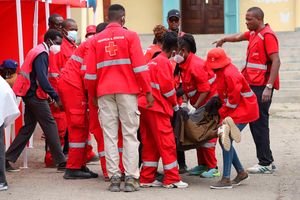
The Utumishi Academy fire tragedy offers a stark illustration of these realities. While senior government officials, including Education Cabinet Secretary Julius Ogamba and Interior Cabinet Secretary Kipchumba Murkomen, promptly visited the scene and addressed the public, the initial hours were characterised by anxiety and confusion as parents and the public desperately sought accurate information regarding casualties and survivors.
Social media further amplified speculation, exposing how rapidly misinformation fills the gap when official communication is delayed. Student unrest is not a new phenomenon in Kenya.
Traditional explanations, such as poor living conditions and disciplinary challenges, remain relevant.
However, emerging factors are increasingly shaping the nature of unrest in schools. These include the influence of technology and social media, mental health concerns, peer pressure, congestion in boarding schools, economic pressures affecting families, strained student-teacher relationships, and the evolving generational dynamics of Gen Z and Alpha learners.
Yet amid attempts to understand these causes, little attention has been paid to the role of crisis communication within Kenya’s education landscape. From a crisis communication perspective, school unrest is seldom isolated or entirely unpredictable.
More often, it emerges from unresolved issues that accumulate over time before manifesting as full-blown crises. This reality calls for a shift beyond disciplinary measures towards a more strategic approach that prioritises communication before, during and after crises.
In many cases, school administrators operate reactively, responding only after disruptions occur instead of identifying concerns beforehand.
When communication eventually takes place, it is often delayed, fragmented or inconsistent, creating information gaps that heighten uncertainty among stakeholders. The deeper challenge may not be the unrest itself but the communication structures within schools.
Many institutions continue to rely on top-down systems that limit meaningful engagement between students and teachers, making early detection of dissatisfaction difficult.
Consequently, students often feel unheard while administrators remain unaware of brewing grievances until they escalate into crises. This is compounded by the absence of structured crisis communication plans, which undermine an institution’s ability to communicate effectively during emergencies.
By the time unrest erupts, school management is left reacting to situations that could have been anticipated and mitigated through adequate preparedness.
This reflects a long-standing managerial insight attributed to Niccolò Machiavelli in The Prince, where he argues that leadership is most clearly tested not in moments of stability but in times of crisis. His assertion that wise leaders should anticipate challenges before they escalate resonates strongly within the context of Kenyan secondary schools.
Unfortunately, communication often begins only after a crisis has emerged, even though preparedness should form the foundation of effective crisis management.
Reforms aimed at addressing student unrest should therefore place crisis communication preparedness at the centre of school management.
This can be achieved by strengthening student leadership structures, creating regular platforms for engagement, and investing in crisis communication training for teachers and school administrators.
Schools should also develop clear communication protocols for engaging stakeholders, particularly students and parents. In an era defined by rapid technological advancement, including AI, integrating technology into crisis communication strategies is no longer optional.
Digital platforms can facilitate timely dissemination of accurate information while minimising misinformation.
Equally important are feedback mechanisms that allow students to safely express concerns before they escalate into crises. As access to secondary education continues to expand, pressures on infrastructure, administration and student welfare will inevitably increase. Without stronger communication frameworks, the risk of recurring unrest will remain high.
The question is no longer whether another crisis will occur, but whether schools are prepared to communicate effectively before the next one emerges.
Ultimately, the stability of Kenya’s schools will depend not only on discipline and security measures, but also on the ability to listen, engage and communicate with students.