One was trained in computer programming and had worked in the hotel industry, while the other operated heavy machinery and was involved in major infrastructure projects, including the Standard Gauge Railway. Yet their professional lives took a dramatic turn when both became key figures in Paul Mackenzie's religious movement, eventually emerging as enforcers in the deadly Shakahola settlement. Smart Deri Mwakalama, Mackenzie's deputy and logistics chief, and Steven Sanga Muye, the settlement's head of security, will each serve 160 years in prison for their roles in the murder of 191 people, including 190 children, in Shakahola Forest.
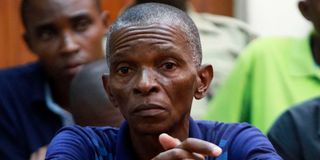
Smart Deri Mwakalama with 29 other accused persons in a court session.
Photo credit: Kevin Odit | Nation
Their journeys into the movement reveal a striking contrast between the skills and occupations they had pursued before joining Good News International Ministries and the responsibilities they assumed within Mackenzie's inner circle. One became the preacher's second-in-command, while the other was entrusted with security and enforcing discipline among followers. Mwakalama's association with Mackenzie dates back nearly three decades, long before the Shakahola tragedy brought his name into public attention. Born in 1974, Mwakalama grew up in Kwa Chocha, Malindi, in a Christian family affiliated with the Anglican Church. He initially worked as a hotel receptionist before venturing into a small-scale business dealing in paint. In 1997, he obtained a certificate in computer programming from Oshwal College in Nairobi. He would later hone is skills over the years. It was also around this period that his association with Mackenzie began. While working in the hotel industry in Malindi, he became acquainted with the preacher and gradually immersed himself in his religious teachings. Over the years, Mwakalama rose through the ranks to become Good News International Ministries' secretary and second-in-command. His family described him as a highly ranked figure in the movement's leadership. His responsibilities in Shakahola went well beyond church administration. He became part of the machinery that maintained Mackenzie's control over the settlement, transporting followers, relaying instructions from the preacher, apprehending those who attempted to escape and supervising burials. Court evidence also linked him to the assault of a victim who testified during the trial. His influence within the movement extended to his own family. He relocated to Shakahola with his wife, Mary Kadzo Kahindi, and their six children, whose whereabouts remain unknown. The children were last traced to the forest.
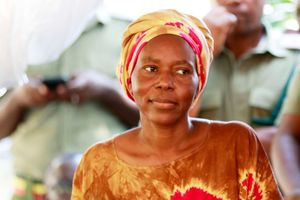
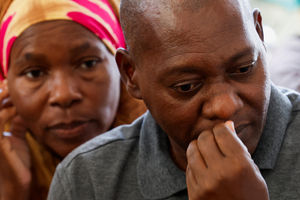
Mary Kadzo Kahindi, wife of Paul Mackenzie's second-in-command, Smart Mwakalama, listens to his sentence before the High Court in Mombasa on November 6, 2026.
Photo credit: Kevin Odit | Nation
His mother had raised concerns about the movement and attempted to rescue her grandchildren, but her efforts were frustrated as Mwakalama concealed them from her, including by taking them into Shakahola. Even after his arrest, Mwakalama remained attached to the religious convictions that had drawn him into Mackenzie's movement. The probation assessment noted that he did not appear to appreciate the gravity of the charges and their consequences and remained determined to return to Shakahola. Unlike Mwakalama, whose relationship with Mackenzie stretched back to the 1990s, Sanga's entry into the movement came much later, after he had tried his hand at several occupations. Also known as Steve or Steve wa Mtwapa, Sanga, 37, was born and raised in Dindiri, Kilifi County, as the seventh-born in a family of nine children. His father was a maintenance officer with the Kenya Power and Lighting Company before retiring, while his mother engaged in subsistence farming. After completing his secondary education at Khalpanjo Peremji Petel Secondary School in Mtwapa in 2011, Sanga worked as a boda boda rider to support himself. He later enrolled for a plant operations course at the Institute of Applied Technology in Kiserian, Nairobi, which opened the way for employment with different companies. Among his assignments was work as a plant operator for Mombasa Cement on the Mavueni-Kaloleni road project. He also worked on the Standard Gauge Railway project, which was completed in 2017.
His religious journey began around 2015 or 2016, when he joined Ebeneza Church in Mtomondoni, Mtwapa, a branch of Good News International Ministries. He had turned to religion while seeking divine intervention to overcome alcoholism and drug abuse. His involvement eventually took him from Mtwapa to Shakahola, where he assumed responsibility as head of security in Mackenzie's settlement. In that position, Sanga became part of the enforcement structure that maintained order and obedience among followers. Court evidence linked him to the assault of three witnesses, identified as SBB, PW6 and PW1. He also dug graves and participated in the reburial of children belonging to former General Service Unit (GSU) officer Isaac Ngala. The two men thus occupied different but complementary positions in Mackenzie's hierarchy. While Mwakalama handled logistics, communication and the enforcement of the preacher's instructions, Sanga was responsible for security and discipline within the settlement.
Their professional qualifications and working lives before Shakahola stand in sharp contrast to the roles they assumed in the forest. Mwakalama's training in computer programming and experience in hospitality, alongside Sanga's background in plant operations and infrastructure projects, belonged to a different world from the system of control and extreme religious practices they helped sustain. Despite his involvement in the church, Sanga maintained that he knew nothing about the Shakahola activities, according to the probation assessment.
The court found that Mwakalama was the second-in-command in GNI and the Shakahola settlement, making him a principal organiser and planner of the criminal enterprise.
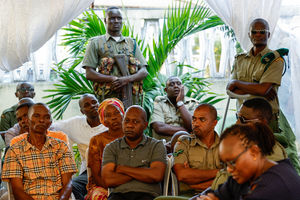
Pastor Paul Mackenzie (right) with Smart Deri Mwakalama (left) with 29 other accused persons who are charged with the murder of 191 Children in the Shakahola Massacre listen attentively to the prosecution witness Jimmy Mwavita Mganga, in this photo taken on 6th October 2025.
Photo credit: Kevin Odit| Nation Media Group

Justice Diana Kavedza said Mwakalama played a central role in transporting followers to Shakahola and relaying Mackenzie's instructions to congregants through elders appointed in the 12 villages established in the forest. "Mwakalama actively participated in enforcing the compulsory fast, including assaulting children who attempted to escape, digging graves and supervising the burial of victims," said the judge Sanga who was in charge of security at the settlement, was also assigned a significant role in enforcing Mackenzie's instructions. The court found that Sanga summoned followers to meetings and participated in assaulting those who resisted the orders or attempted to escape from the forest. He was also involved in obstructing rescue operations and was identified at burial sites during the interment of victims. Regarding Mackenzie, the court found that he bore the greatest criminal responsibility as the overall leader of GNI and the Shakahola settlement. Justice Kavedza said he orchestrated the movement of followers into the wilderness and presided over meetings where he issued the central directive requiring followers to fast to death, explicitly targeting children as the first victims. He also presided over the burials, which he referred to as weddings, and issued instructions to village elders through Mwakalama. The court further found that he ordered the use of violence against children who resisted, attempted to end the fast or tried to escape from the forest. In the end, the court found that Mackenzie bore primary criminal responsibility for orchestrating and directing the killings, Mwakalama played a central role in planning, organising and implementing the criminal enterprise, while Sanga was responsible for security operations, enforcing compliance through violence, and obstructing attempts to rescue followers.