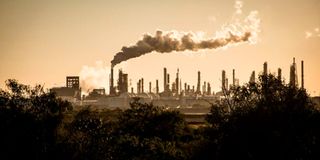
For too long, the world has watched global climate diplomacy grind into the sand. At last year’s COP30 summit in Brazil, countries spent weeks negotiating, only for the final agreement to omit even a mention of fossil fuels, the root cause of the crisis we face today.
That failure did not happen by accident. A small group of powerful petrostates blocked progress, and the result has been paralysis at precisely the moment when urgency is greatest.
But history rarely moves in straight lines. When one path is blocked, another opens.
Later this week, in Santa Marta, Colombia, something different is taking shape. Eighty-five countries, frustrated by deadlock but determined to act, are coming together to forge a new path beyond fossil fuels. The climate cavalry is coming.
What makes this moment remarkable is not just the number of countries involved, but their collective weight. Together, these nations represent one of the most powerful economic blocs on Earth; larger, in combined terms, than any single country.
That matters because climate action is no longer just about diplomacy; it is about markets, investment, and the direction of the global economy. If this coalition chooses to shift its purchasing power, its finance, and its industrial strategy away from fossil fuels, it can send a signal that reshapes the entire system.
We have seen this dynamic before. Progress in international cooperation often begins with a smaller group willing to move first. The Montreal Protocol, initially driven by a relatively small group of industrialised countries, aimed to phase out ozone-depleting substances. It gained momentum as evidence mounted and alternatives became viable.
Over time, it achieved near-universal ratification and is widely seen as the most successful environmental treaty. Trade agreements, debt relief initiatives, and even public health breakthroughs have followed a similar pattern: a critical mass acts, and the rest of the world follows. Santa Marta has the potential to do the same for fossil fuels.
Crucially, this conference is not bound by the same rules that have stymied progress at UN COP summits. It is designed to operate outside the consensus model that has allowed obstruction to thrive, enabling countries that are ready to act to move forward together. That shift, from unanimity to momentum, could prove decisive.
And the timing could not be more important. The current geopolitical turmoil, including conflicts that have driven up oil and gas prices, has exposed the fragility of economies built on fossil fuels. Countries are feeling the consequences not only in energy bills but also in food prices, inflation, and economic instability.
In this context, transitioning away from fossil fuels is not just a climate imperative but also an economic and security necessity.
Santa Marta offers a chance to turn that recognition into action. The focus will be practical: how to finance the energy transition, how to support developing countries, and how to ensure that the shift is fair and inclusive.
That emphasis on implementation is critical. For too long, climate discussions have been dominated by abstract targets. What is needed now are concrete pathways towards policies, investments, and partnerships that make change real.
By bringing together countries from across the global north and south, including major economies such as the UK, Germany, Brazil, and Mexico, this coalition reflects a growing alignment on the importance of a fossil fuel phase-out. It also sends the strongest signal yet that these countries are not going to stand by and let Donald Trump and his petro-state allies burn the world to a crisp.
Change rarely begins with everyone. It begins with enough. If Santa Marta succeeds in setting out a credible roadmap and in aligning economic incentives with climate goals, it could trigger a snowball effect. Investors will follow opportunity, markets will respond to signals, and countries currently sitting on the sidelines may find themselves drawn into a new consensus.
The truth is that the world does not need permission from those who would delay progress, but leadership from those ready to move. After years of stalled talks and missed opportunities, this gathering represents two things that are rare in the climate debate; fresh thinking and a new frontier. It is also a reminder that multilateralism is not broken, but evolving.
If this coalition can harness its collective power, it may start to break the fossil fuel deadlock. The cavalry may not arrive all at once, but in Santa Marta, it might just be starting to gather.