Premium
Will leaders pay price for Kenya’s third liberation?
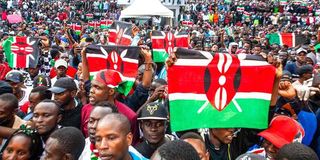
Participants during the Shujaaz Memorial concert held on July 7, 2024 at Uhuru Park in Nairobi.

Kenya’s political landscape is jagged and unforgiving, and this is unlikely to change in the foreseeable future if the ruling class continues to act the same way while expecting different results.
True transformation requires a revolutionary spirit and a radically different mindset.
Any leader worth their salt must be willing to break the invisible ethnic pacts that stitch together fragile nations, ready to shatter entrenched power-sharing traditions and prepared to sacrifice their career, freedom and even their life.


Kenyans consistently demonstrate a yearning for radical change, yet remain hindered by socio-cultural traditions, rigid political ideologies and the pervasive politics of self-preservation.
Social media spaces are saturated with revolutionary messages and persistent demands: Why can’t Kenya have progressive, decisive and uncompromising leaders like Ibrahim Traoré, Thomas Sankara, or Patrice Lumumba?
Kenya’s Gen Z and current radicals envision a bold, uncompromising leader who would stand up to Western powers, dismantle old systems, restore national dignity, and finally lift Kenya from its knees.
But do we truly understand what it takes to be that daring? Real change never comes without resistance, and leaders capable of effecting such change are rare. Overhauling an entire system is a formidable task—it is not achieved by simply venting frustrations online.
History shows that every empire that dragged itself from weakness to greatness did so through leaders willing to make extraordinary sacrifices.
At just 37, Captain Ibrahim Traoré became Burkina Faso’s youngest head of state after seizing power in a 2022 coup.
He captured the hearts of millions, especially the restless youth, with his anti-imperialist resolve, military grit, economic nationalism and unapologetic cultural conservatism. Like Thomas Sankara before him, Traoré’s image in his red beret blazes across Africa’s consciousness-a Che Guevara for a continent suffocating under neo-colonial chains.
His first act of rebellion was both simple and seismic: he expelled French troops from Burkina Faso. He rejected IMF and World Bank loans, denouncing them as tools of modern colonialism.
But revolution is never clean. Accusations of forced conscription, human rights abuses and indiscriminate killings now surround his name.
Here lies the uncomfortable truth: it is the democratisation of nations like Kenya, Uganda, Nigeria and Ghana that makes it nearly impossible for any leader to do what Traoré has done.
Democracy in Africa is not just about ballots—it is about ethnic compromises, fragile coalitions and maintaining peace among tribal giants vying for supremacy.
Democracy has become both our crown and cage, forcing leaders to be survivors, pleasers, tribal negotiators and political gymnasts before they become builders. When democracy hinders the real change we crave, we must find new ways forward.
So, who among our leaders would dare tear up these unspoken agreements? Who would challenge global financiers, or trade the comfort of privilege for a bloody seat in history?
Mr Toroitich is a communication lecturer and researcher. [email protected]