G7 diplomacy meaningless without results
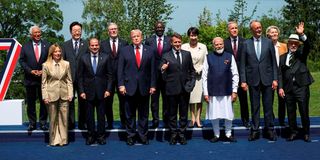
Kenya's President William Ruto with other Presidents and Heads of State pose for a group photo during the G7 summit, in Evian-les-Bains, France, June 16, 2026.

Last week, President William Ruto sat at one of the world’s most powerful tables in Évian-les-Bains, France, joining G7 leaders including Emmanuel Macron, Donald Trump, Keir Starmer and Friedrich Merz.
He told them Africa would be central to the future global economy and spoke of risk-sharing tools and trillions in African pension funds for development. He returned home with assurances of progress. Back in Nairobi, matatu fares had risen again.
This is not a contradiction we can afford to ignore. Kenya has attended three G7 summits since 2017, each time arriving as a celebrated guest, speaking boldly for Africa, and returning with promises of reform. Each time, living costs have continued to rise. The question is what Kenyans are getting in return.


Fairness matters. Kenya’s participation in the 2026 G7 summit was substantive. France, for the first time, brought partner countries — including Kenya, India, Brazil, South Korea and Egypt — into core discussions. This shift matters: Africa moved from being discussed to helping shape decisions.
The summit produced concrete outcomes. Leaders backed reforms to global finance to lower borrowing costs for developing countries through guarantees and risk-sharing instruments. Investment initiatives such as the Global Gateway and PGII were expanded. African countries were urged to add value to minerals rather than export raw materials. Funding was mobilised for health emergencies, including Ebola response cooperation. Frameworks on debt, AI governance and anti-trafficking were advanced. Without this, agreements risk remaining declaratory rather than developmental.
But a gap remains between summit communiqués and Kenyan reality. Protests in 2024 over a Finance Bill forced a Cabinet dissolution, driven by inflation, debt and rising cost of living. More recently, demonstrations over fuel prices and a US-backed Ebola quarantine facility highlighted tensions between global commitments and domestic accountability. These protests reflect the same citizens Kenya represents abroad.
Ultimately, diplomacy must be judged not by communiqués but by outcomes felt in markets, hospitals and households. If global commitments are real, they must reduce borrowing costs, stabilise prices and improve services. If they do not, then participation in elite forums risks becoming symbolic rather than transformative.
There is a structural gap: Kenya’s diplomacy lacks a clear bridge between global commitments and domestic outcomes. A summit communiqué means little to citizens unless it translates into measurable change. Parliament should receive formal reports after major summits detailing commitments, timelines and responsible ministries.
International advocacy must be matched with transparent fiscal discipline at home. Citizens should also be consulted before Kenya commits to major diplomatic agreements affecting national resources or territory.
Public trust depends on this chain of accountability being visible and enforceable. Kenya’s G7 seat is a public asset requiring accountability. Leaders must explain what was secured in Évian, on what terms, and how it will benefit citizens.
Without transparency and feedback, global diplomacy risks becoming performance disconnected from daily life. The bridge between the summit table and the street must be built for Kenya’s credibility to hold. That is the test of modern diplomacy. Not prestige alone.
Follow our WhatsApp channel for breaking news updates and more stories like this.
Saruni Lemargeroi, Nairobi


