On my first visit to America, the humble tipper knocked me over. Ours are one design: the tipper bringing your sand is the same design, only smaller, as the one that hauls clinker 900 kilometres. Theirs are purpose-built; on one outing you can count five or six types.
Republicans are as impressed by their country as I was by its tippers, but they have badly misunderstood the world. Nobody out there loves America for its exceptionalism. The trader in Kariobangi and the nurse in Kinshasa do not lie awake pondering the brilliance of the Founding Fathers.
Gratitude for last year’s aid goes off faster than milk, that rarest of commodities which, the government says, is flying off the shelves because Affordable Housing labourers are quaffing it by the bucket. People bend the knee when America calls because it feeds them today. Stop, and see how quickly they quit picking your calls.
Washington refused to learn that lesson. On Tuesday, voters taught them a masterclass. Republicans did not just lose Congress; they had their backsides handed to them, proper. Susan Collins, about as permanent as the Capitol dome, lost. Kansas! Kansas elected its first Democratic senator in nearly a century, a Methodist pastor; some voters were clearly praying for deliverance.
Republicans put a revolver to their heads when they turned against aid. Let me speak boldly for USAID. Yes, there were silly grants, and consultants here who drove bigger cars than the ministers they advised. Critics who said aid breeds dependency were not wrong. But throwing out the baby, the bathwater and the bathtub is something else. A Lancet study last year estimated USAID programmes prevented more than 91 million deaths over two decades, 30 million of them children, and that the cuts could cause over 14 million more deaths by 2030.
Then there is the Ebola mess. The Bundibugyo outbreak that began in Ituri in May is among the largest ever, with more than 9,700 confirmed cases and some 4,700 deaths in Congo by late October, and no approved vaccine. Washington insists its Ebola work survived. Perhaps. On October 3, a man travelled from Congo via Uganda to Nairobi Hospital. Within three weeks Kenya had nine cases, including health workers who nursed him. Viruses don’t apply for visas. The labs, clinicians and sample couriers in Goma were not just charity; they were also America’s first line of defence, stationed cheaply abroad. That line is gone.
USAID’s replacement, the “America First Global Health Strategy”, holds one respectable idea: African governments must pay more for their own health care. They should; a country that can afford convoys of V8s for county officials can afford antiretrovirals.
Kenya signed first: about $1.6 billion from Washington, $850 million from us, plus a data-sharing deal so broad the High Court blocked the handover of Kenyans’ medical records. The New York Times reported that a $1 billion package for Zambia was explicitly linked to its minerals. Health aid for your cobalt and your citizens’ blood samples – that’s complicated business.
So is trade. The African Growth and Opportunity Act, which built Kenya’s apparel industry and its jobs for tens of thousands of young women, has been switched off and on like a Kenya Power transformer in a thunderstorm. Washington also wants Nairobi to cut tariffs on American farm produce and scrap rules protecting our farmers. When the elephant asks the chicken to remove its fence, for the chicken’s own good, that is hardly fair trade.
None of this provokes riots. It breeds something worse: a quiet, polite resentment that surfaces years later in UN votes, port concessions and contracts signed in Beijing. This year, for the first time, Pew found people across the countries it polled viewed China more favourably than America. Even Kenyans and Nigerians are cooling.
The Chinese, perhaps the least generous folk on the planet (I exaggerate a little), are rolling out the red carpet, hammer and sickle on it, for poor countries’ presidents. As one plane lands with leaders for sumptuous lunches, another takes off with Chinese technicians to map mineral zones and design railways to carry them away.
In January, after leaving the World Health Organization, Washington quit 66 international organisations, 31 of them UN bodies. Some were useless; every family has a cousin who attends every funeral for the food. But many give poor countries a seat at the table. When the biggest guest walks out, the table does not disappear. Somebody else takes the head chair.
Finally, the military adventurism: Venezuela in January, then Iran, a war with no clear definition of victory. The Washington think-tank CSIS estimates America has fired about 80 per cent of its THAAD interceptors and 65 per cent of its Patriots. The UN warns the war could push more than 30 million people back into poverty. A superpower that empties its magazines on a war it had won without firing a shot has told every rival how long it can keep shooting.
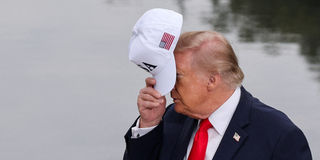
Donald Trump has the skills, the charm, and the appetite for hard work to rebuild America’s standing, not just in wealthy Europe, but among the world’s poor majority. He needn’t spend much. He just needs to return to the room, and when he does, we’ll be there, holding out the chair for him.