Every year, before a COP, I return to the same question because many people want to know: why do we still gather? It’s because multilateralism and global collaboration remain our best bet at ensuring all voices are heard; it’s part of our acknowledgement that “united we rise and divided we fall”, and it’s a reminder of that beautiful Southern African concept of “Ubuntu”, our shared humanity.
There was a time when “climate denial” and “climate deception” were the chief drivers of climate inaction. Yet even then, people kept showing up, and history shows that showing up works. In 1987, governments agreed to the Montreal Protocol to protect the ozone layer. It became the first UN treaty ratified by every country, and the ozone layer is now recovering.
In 1992, the Earth Summit in Rio created the climate convention that gave us the platform that brings us together in Antalya, Turkiye. After the heartbreak of Copenhagen in 2009, many declared multilateralism finished, yet in 2015 nearly 200 countries signed the Paris Agreement and committed to pursue 1.5°C.
In Dubai in 2023, the world named the need to transition away from fossil fuels, language once unthinkable. Beyond climate, the same spirit eradicated smallpox and delivered the High Seas Treaty.
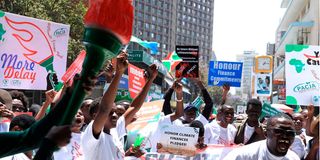
Today, when the science is so clear, it is the crafty mastery of “delay” that we must face head-on. Every effort to defer meaningful action must be met with something stronger. We must begin to surface new platforms for global cooperation, new pressure, new ways of holding each other to our word. That is why I draw such strength from the Global Ethical Stocktake, which keeps reminding us that inaction is a moral choice.
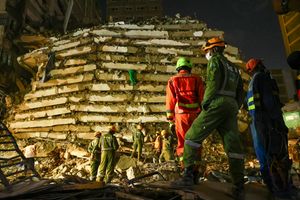
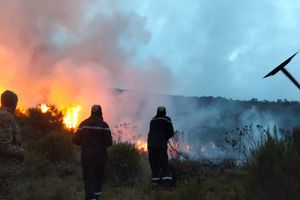
The truth is that the evidence is all around us: every heavy downpour, every flood, every drought that feeds the fires and then the famine, is a verdict delivered in real time. We really cannot wait. COP31 opens on November 9 and runs through the 20th, with Türkiye hosting and Australia leading the negotiations, an unusual partnership for an unusual moment.
The leaders' summit on November 11 and 12 will set the tone. The work ahead will consider how we are doing against the NDCs we set ourselves, and how the Global Implementation Accelerator launched in Belém can help countries deliver. In Antalya, Türkiye, heads of state and government, climate negotiators, diplomats, civil society representatives, international organisations and policymakers will gather under the following core principles: Dialogue, Consensus, and Action. Dialogue to build understanding, consensus to create shared responsibility, and action to transform commitments into real solutions. For Africa, these principles must translate into tangible outcomes that respond to the continent’s priorities.
One of the most pressing priorities is adaptation. I hope we will see the Global Goal on Adaptation and its Belém indicators become real measures of resilience, and decide how the pledge to triple adaptation finance by 2035 will actually be met. For Africa, COP31 is a question of whether the promises made in Belém will ever reach the communities dealing with a fast-changing climate.
The African Group of Negotiators has been clear that delivery is the measure of success, and what is decided this month will determine whether Africa's COP next year in Addis Ababa will advance hope or remain the home of broken promises.
It is a well-known fact that Africa is the continent that is most vulnerable to climate change despite being responsible for just 4 percent of global carbon emissions. Across Africa, droughts, floods and extreme heat have threatened food production, water supplies, infrastructure and urban economies. These experiences remind us that adaptation cannot be treated as an afterthought.
The reality is that financing these investments remains a major challenge. African countries need greater access to adaptation finance that does not add unsustainable debt burdens. At COP30 in Belém, countries committed to tripling adaptation finance by 2035. COP31 must help turn this commitment into a clear pathway for delivery, ensuring that finance reaches the countries and communities facing the greatest climate risks.
Food security is another area where climate action and economic resilience must come together. In Kenya, as much as 40 percent of food is lost or wasted, representing an estimated Sh72 billion in economic losses. Much of this happens because farmers and traders lack adequate storage, cold chains, reliable transport and appropriate handling facilities.
This represents wasted resources, lost incomes for farmers, higher food prices for consumers and unnecessary greenhouse gas emissions. The COP31 Presidency’s zero-waste agenda offers an opportunity to secure practical commitments to address these gaps.
Ms Mathai is the MD for Africa & Global Partnerships at the World Resources Institute and Chair of Wangari Maathai Foundation